If you're thinking about adding a UV sterilizer to your recirculating aquaculture system (RAS), your first question probably isn't how the lamp produces UV light. It's more practical: Which pathogens can it help keep under control? And could fish still get sick after you install one?
Here's the short answer: UV can help reduce the viability of certain microorganisms in water that actually passes through the unit, and it may reduce some opportunities for waterborne transmission. It cannot disinfect an entire fish farm or guarantee that fish won't get sick. We first look at where the pathogen might be coming from and whether that water goes through the UV unit. Then we consider water quality, flow and the evidence for the particular pathogen you're concerned about.
UV Treats Water Passing Through the Unit, Not the Whole Farm
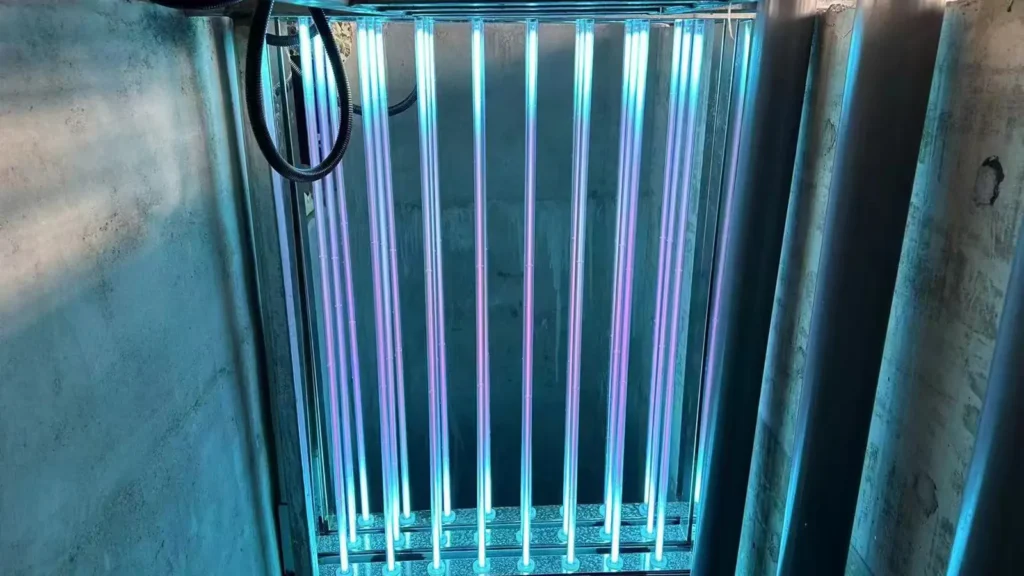
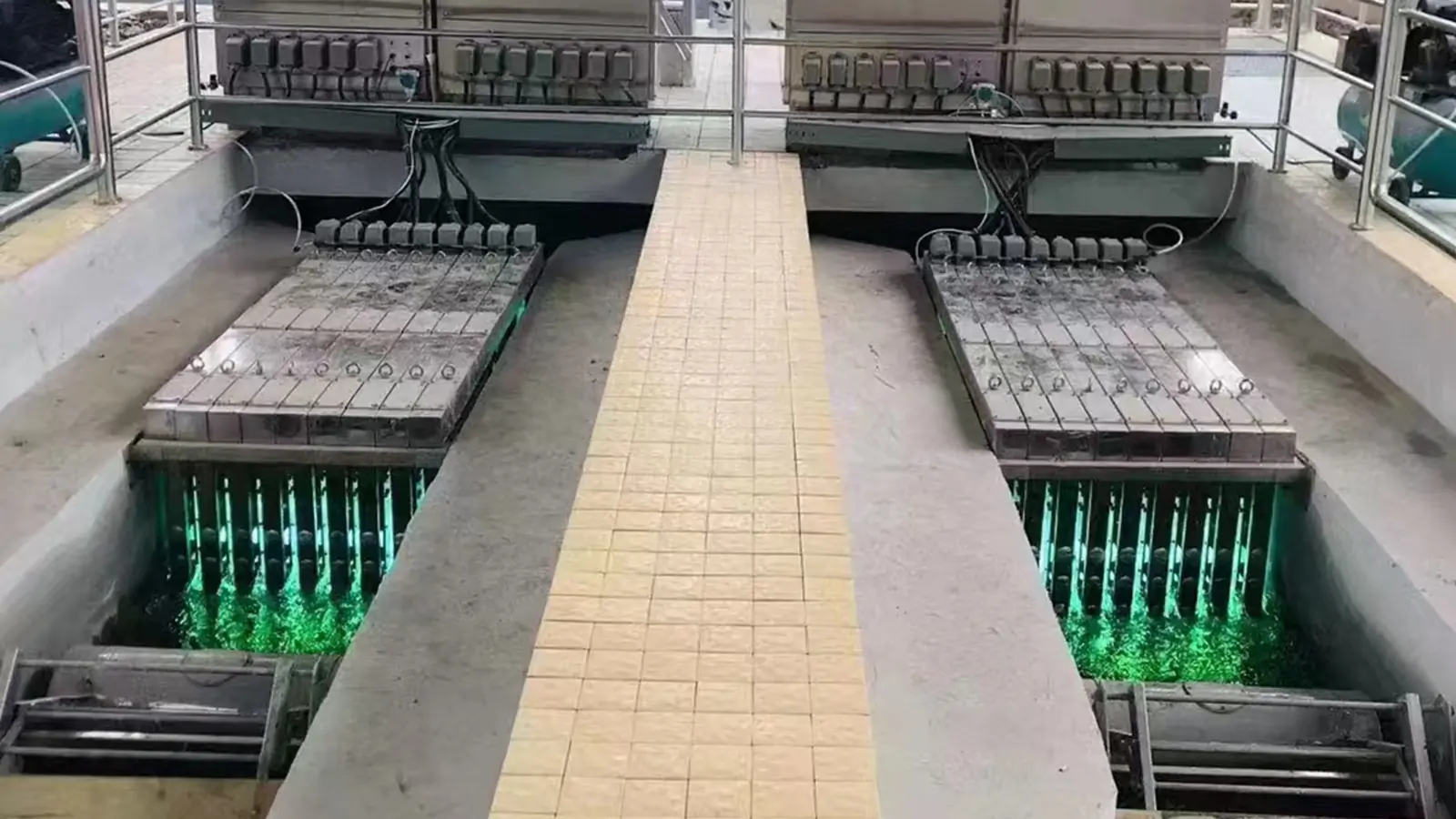
Imagine water leaving your fish tanks, passing through the treatment system and then entering a UV unit. Some UV-C-sensitive microorganisms in that water may be inactivated if they receive sufficient exposure. The important points are that the water actually passes through the unit and that the organisms receive enough effective exposure.
But pathogens don't exist only in the water column. They may arrive with infected fish or remain on tank walls, in biofilms and settled solids, on nets and hoses, or in transport water. Sharing equipment between tanks creates another possible route. Fish in the same tank can also transmit pathogens directly to one another without those pathogens ever passing through your UV unit.
That's why, when someone asks us, “If the water keeps going through UV, why did we still see a disease problem?”, we wouldn't automatically conclude that the UV unit failed. We'd first ask whether the infection was spreading somewhere the unit couldn't reach. Think of UV as one barrier in the water circuit—not a barrier that covers fish, people, tools and every surface on the farm.
Can UV Control Bacteria, Viruses and Parasites?
It's not as simple as saying UV works on bacteria but not on viruses, or vice versa. The response to UV-C depends on the organism, sometimes the particular strain, its life stage or physical state, and the exposure it actually receives.
For bacteria, UV may inactivate susceptible organisms suspended in water that passes through the reactor under suitable conditions. But bacteria shielded by particles or attached to tank walls, biofilms or tools are a different matter. We can't assume an inline UV unit has treated those surfaces.
For viruses, a smaller particle doesn't automatically mean a given UV setting will work. Different viruses have different sensitivities. To discuss how well a system might control one, we need to know which virus you're concerned about, what the supporting evidence says and how the UV equipment would actually operate.
For parasites, their life cycle matters. Some stages may be attached to fish or elsewhere in the system, while others may enter the water. UV can only potentially affect susceptible stages that actually pass through the treatment unit and receive appropriate exposure. We wouldn't use a single laboratory dose to promise protection against every parasitic disease.
| What you're worried about | Where UV may help | What you shouldn't expect it to do |
|---|---|---|
| Certain free-floating bacteria in water | Reduce viable bacteria in the treated flow when exposure is effective | Remove every bacterium from fish, tank walls or biofilms |
| Specific waterborne viruses | Provide a water-treatment barrier when the target virus, its sensitivity and operating conditions are understood | Prevent every viral infection or inactivate every virus |
| Waterborne stages of some parasites | Potentially reduce risks associated with susceptible stages passing through the unit | Treat parasites already on fish or eliminate every stage of their life cycle |
| Contamination introduced by nets, transport water or movement between tanks | Reduce some organisms if that contamination enters the treated water flow | Replace equipment hygiene, quarantine or good practices between tanks |
This table is about transmission routes and practical limits, not a ranking of inactivation rates.
What Can a Study on Fish-Associated Flavobacteria Teach Us?
You might reasonably ask, “If UV can treat bacteria in the water, why not just use one standard disinfection dose for all of them?”
A 2023 study looked at UV exposure in fish- and fish-farm-associated flavobacteria and related bacteria. The researchers exposed different isolates under laboratory conditions and found that UV affected their viability, but sensitivity could vary considerably, even among isolates of the same bacterial species.
That's an important reminder when you're choosing equipment. A study showing that UV affects a particular bacterium does not mean the same result—or a particular exposure value—will apply to every fish farm, water quality condition or UV model. A laboratory suspension is not the same as recirculating farm water containing feed fines, mucus and other organic matter.
We mention this research to explain why the target pathogen matters. It is not a claim that a YUTANK UV model has been tested against those isolates, and it does not establish a fixed dose for any fish disease.
Treating Incoming Water and Treating Recirculating Water Aren't Quite the Same Job
If your farm uses river water, lake water or another source that needs treatment, we'd first ask: Could incoming water introduce pathogens before it reaches the fish? With appropriate pretreatment and verified operating conditions, UV may form part of the biosecurity measures on that incoming-water line.
If you're running an existing RAS and want to add UV to the return-water circuit, the question is a little different: Can we reduce some of the microorganisms circulating in water between tanks and treatment equipment? That may lower some opportunities for waterborne transmission. It doesn't mean infected fish will stop shedding pathogens or that transmission already happening inside a tank will immediately stop.
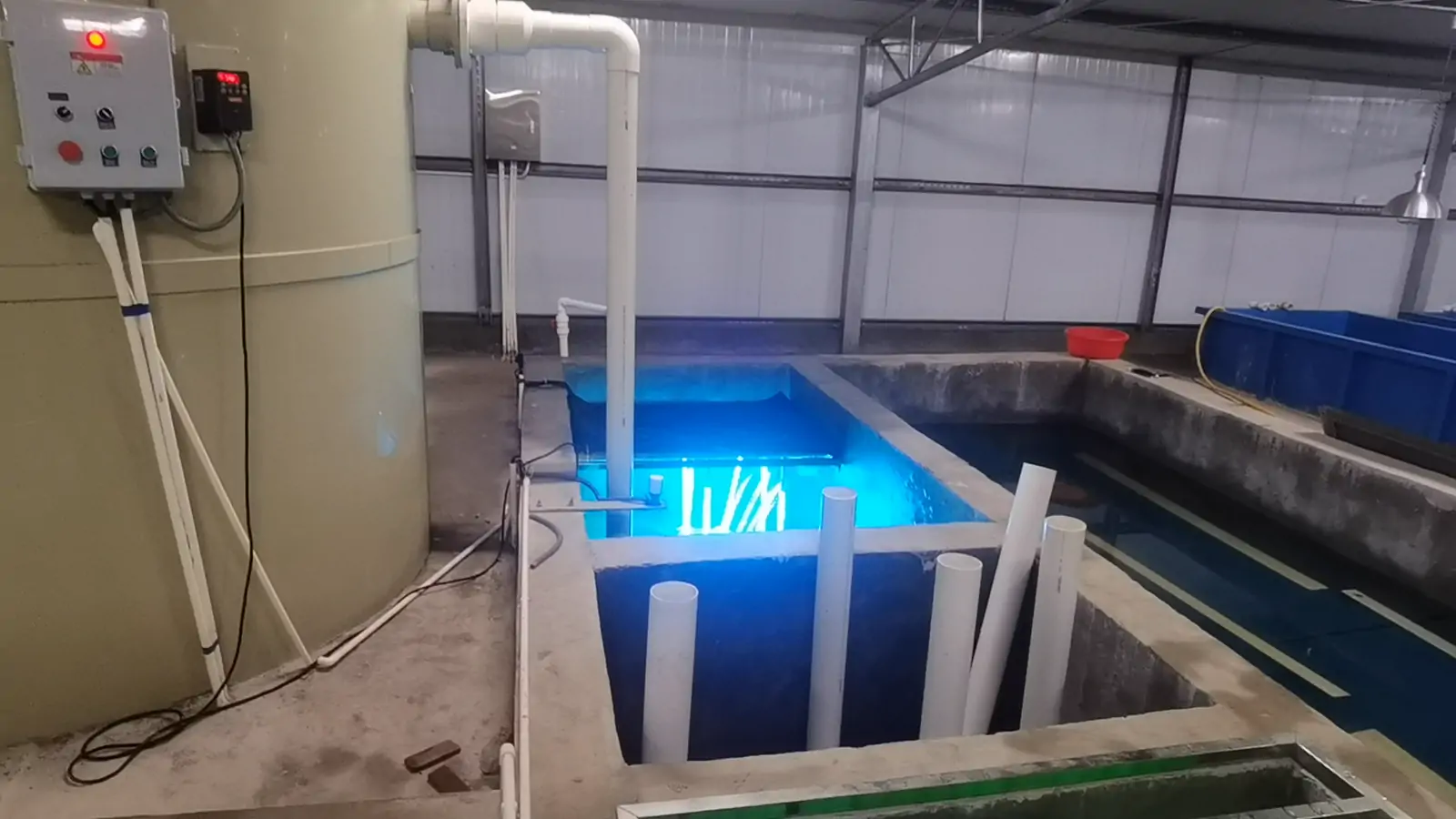
So we wouldn't decide between a main line, a side stream or a dedicated incoming-water line simply by asking which piece of equipment the UV unit should follow. We'd first establish which route you're trying to protect, then look at upstream solids removal, water quality, actual flow and the UV unit's operating requirements.
The UV Lamp Is On. Why Might Pathogen Control Still Be Limited?
It's easy to see a lit lamp and water flowing through a pipe and assume disinfection is taken care of. But a working lamp is only part of the picture. It doesn't tell us whether the target organism received enough effective UV exposure.
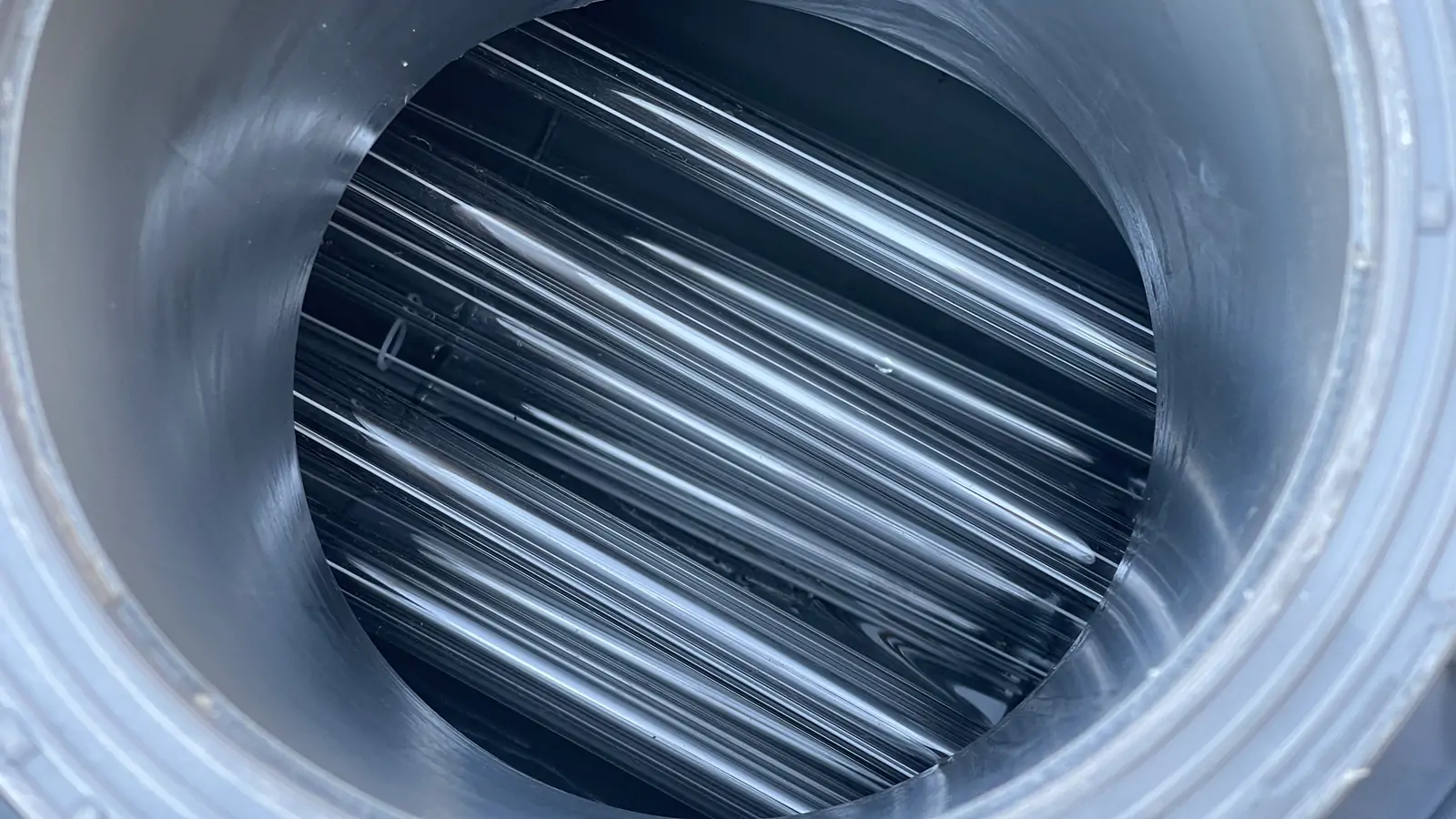
Here are a few things we'd look at:
- Is anything shielding the organisms? Suspended particles and organic matter can interfere with UV exposure. Water that looks clear to the eye doesn't replace information about UV transmittance (UVT).
- Is the water flowing under suitable conditions? Flow rate, reactor design and the actual flow path affect exposure. Lamp wattage alone doesn't tell us what inactivation performance to expect.
- What condition are the lamp and quartz sleeve in? Declining lamp output or deposits on the sleeve can reduce the UV energy reaching the water.
- Which pathogen are we trying to control? If you know the target, we can look for relevant evidence and operating conditions. We can't transfer one conclusion to every strain, virus or parasite life stage.
Our aquaculture UV sterilizers are available in different nominal flow configurations. A stated treatment flow is not the same thing as a validated inactivation claim against a specific pathogen. If you're worried about a particular disease, the conversation needs to include that pathogen and your water conditions—not just the biggest flow figure in a model range.
If Fish Are Already Sick, Why Isn't UV Enough?
If something is already wrong in one tank, UV may still help treat part of the water passing through it, but it isn't a treatment for infected fish. Pathogens may remain on fish, in settled material or on contact surfaces. Some transmission may also continue directly between fish.
This is where we look at UV as one part of a broader fish-health and biosecurity plan. Quarantine for new stock, hygiene of tools shared between tanks, suitable solids removal and routine observation of fish and water conditions all matter in their own right. If you suspect disease, a qualified fish-health professional should assess the signs and any necessary testing. A blog post—and a UV unit—cannot replace a diagnosis or treatment plan.
Your biofilter still needs to manage ammonia and related water-quality concerns, while mechanical filtration still needs to remove solids it is designed to capture. UV adds a targeted microbial-control barrier alongside those measures; it doesn't replace them. We've already covered the basic UV-C mechanism in our guide to how UV sterilization works in aquaculture, so we won't repeat the lamp and DNA/RNA explanation here.
Thinking of Adding UV to Your Farm? Here's Where We'd Start
The first thing we'd ask is: Are you trying to keep pathogens out through incoming water, or are you concerned about possible spread between tanks in your recirculating system? Your answer changes whether we focus on incoming-water treatment, return-water treatment, or operating practices between tanks.
Then we'd talk about where the water comes from, what solids-removal equipment you already have, approximately how much water needs treatment, and whether you have relevant water-quality or pathogen-testing information. You don't need a complete laboratory report just to start talking through the system layout. But if the goal is a specific, measurable reduction of a particular pathogen, that claim needs appropriate evidence and verification.
We're not here to tell you UV can prevent every fish disease. We'd rather help you work out where an additional water-treatment barrier makes sense, which risks it may reduce, and which risks still need other controls.
Frequently Asked Questions (FAQ)
Can UV prevent columnaris and other bacterial fish diseases?
Not as a guarantee. Research on fish-associated flavobacteria shows that some isolates respond to UV under laboratory conditions, but sensitivity can differ between strains. Reducing some viable bacteria in treated water does not prove that an outbreak will be prevented at a particular farm.
Can UV inactivate every virus in RAS water?
We can't make that claim. Virus type and sensitivity, water quality and the actual exposure conditions all matter. Without evidence for the target virus and operating conditions, a blanket inactivation promise would be misleading.
Can UV control parasites already living on fish?
An inline water-treatment UV unit does not directly irradiate parasites on the fish. For parasite stages that enter the water, any potential benefit needs to be evaluated for the specific organism, stage and treatment conditions.
Can pathogens still spread between tanks after the water passes through UV?
Yes. UV cannot guarantee that every pathogen has been inactivated. Fish, shared tools, untreated branches and other contact routes may still spread contamination.
Does a lit UV lamp mean the disinfection is working as intended?
Not necessarily. You also need to consider incoming water quality, UVT, flow, reactor condition and the exposure requirements of the pathogen you're trying to control.
If we install UV, do we still need to quarantine new fish and clean our nets?
Yes. Quarantine and tool hygiene address pathways that waterline UV cannot fully cover. They work alongside UV; they aren't replaced by it.
References
- UF/IFAS Extension. Fish Health Management Considerations in Recirculating Aquaculture Systems—Part 2: Pathogens. Background on pathogen reservoirs, transmission pathways and the limits of UV for transmission within a tank.
- Knupp et al. (2023). Ultraviolet light differentially reduces viability of fish- and fish farm-associated flavobacteria. North American Journal of Aquaculture, 85(4), 311–323. Laboratory evidence of differences in UV sensitivity between bacterial isolates.
- Bartkova et al. (2026). Assessment of water prophylaxis and biosafety in finfish aquaculture—current and emerging technologies. Frontiers in Microbiology. Review context on UV, solids management, monitoring and broader biosecurity.
Let's Talk About the Biosecurity Barrier Your Farm Needs
If you're planning a new RAS or considering UV for an existing system, tell us what you're farming, where your water comes from, how your current water circuit is arranged and what risks concern you most. Get in touch with YUTANK. We can start by working out which transmission routes you want to address, then discuss whether UV belongs in your system.