

UV sterilization in aquaculture is a water disinfection process that exposes flowing water to ultraviolet-C (UV-C) light to inactivate microorganisms.
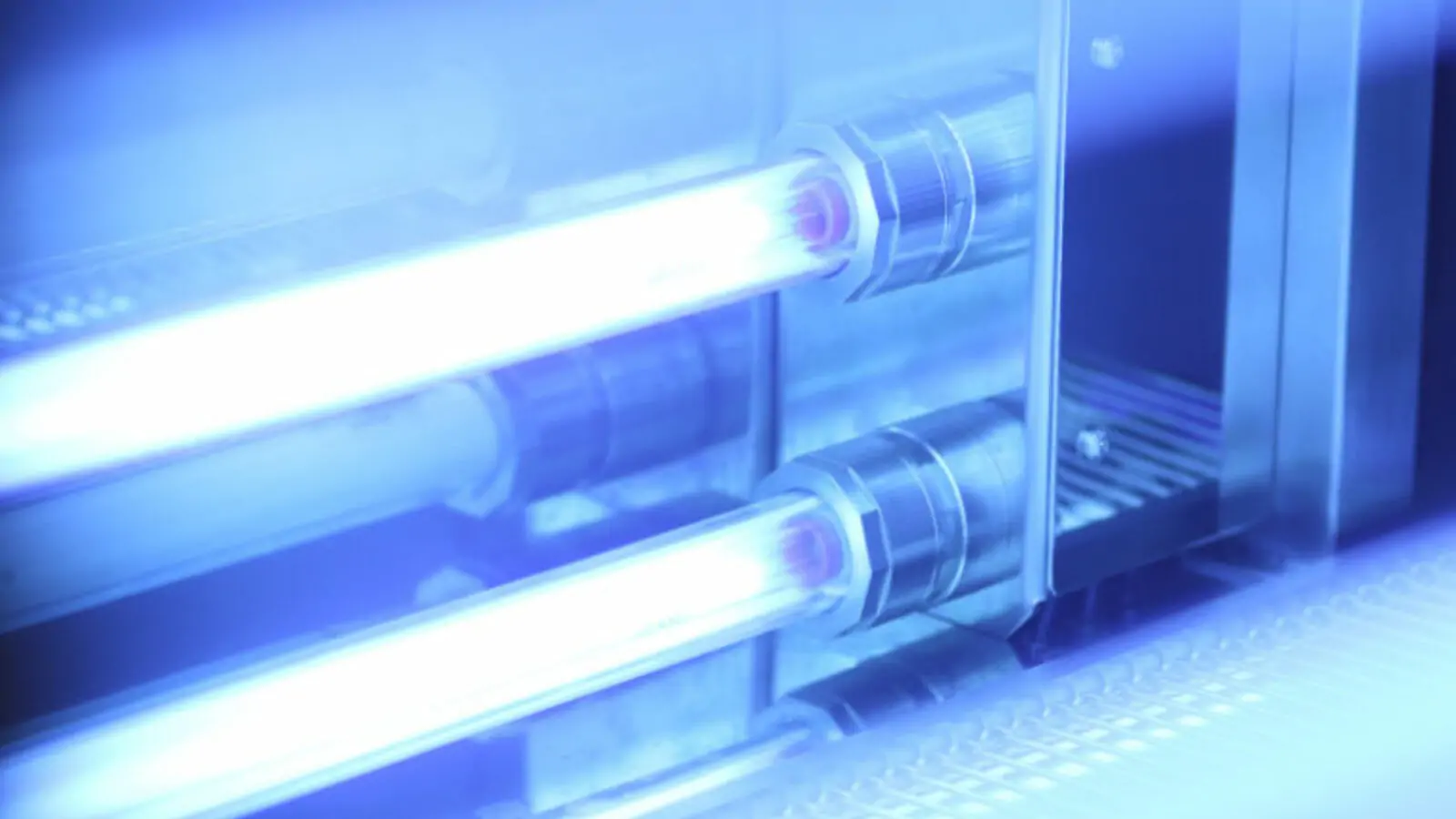
In an aquaculture UV sterilizer, water passes through a UV reactor containing UV lamps protected by quartz sleeves. UV-C radiation—commonly produced near 254 nm—passes through the water and is absorbed by susceptible microorganisms.
The UV energy damages their DNA or RNA and interferes with replication. Unlike filtration, UV does not physically remove microorganisms from the water. Instead, it reduces their ability to reproduce.
In a recirculating aquaculture system (RAS), UV sterilization is therefore a microbial-control stage, not a replacement for mechanical filtration or biological filtration.
What Is UV Sterilization in Aquaculture?
An aquaculture UV sterilizer is an inline water-disinfection reactor that exposes circulating water to germicidal UV-C radiation.
Its primary function is microbial control.
Unlike a drum filter, UV does not remove suspended solids. Unlike a biofilter, it does not convert ammonia or nitrite. Instead, it acts on microorganisms that pass through the irradiation zone.
In a RAS, different treatment stages perform different functions:
| Water-Treatment Function | Typical RAS Process |
|---|---|
| Remove suspended solids | Mechanical filtration |
| Convert ammonia and nitrite | Biological filtration |
| Remove excess CO₂ | Degassing |
| Increase dissolved oxygen | Oxygenation |
| Reduce viable microorganisms in flowing water | UV sterilization |
UV should therefore be understood as one treatment barrier within a complete RAS, rather than a complete water-treatment system by itself.
Why Is UV-C Used for Water Disinfection?
Ultraviolet radiation is divided into different wavelength ranges. For water disinfection, the most relevant region is UV-C.
UV-C radiation can be absorbed by nucleic acids inside microorganisms. When sufficient UV energy reaches a susceptible organism, it causes photochemical damage to DNA or RNA.
This damage interferes with normal replication.
That is why UV treatment is more accurately described as microbial inactivation rather than simply “removal.”
The microorganism may still physically remain in the water after treatment, but its ability to reproduce can be significantly reduced.
The basic difference is:
Filtration
Water → Physical barrier → Particles retained
UV sterilization
Water → UV-C exposure → DNA/RNA damage → Replication disrupted
Why Is Approximately 254 nm Used in UV Sterilizers?
Many conventional UV water-treatment systems use low-pressure mercury lamps that produce strong UV-C output at approximately 253.7–254 nm.
This wavelength is effective for microbial inactivation because nucleic acids absorb UV energy in this region.
The basic process is:
UV lamp → ~254 nm UV-C → microorganism → nucleic-acid absorption → genetic damage → reduced replication
However, wavelength alone does not determine disinfection performance.
A UV lamp can produce the correct wavelength while still delivering inadequate treatment if:
- water moves through the reactor too quickly;
- insufficient UV energy reaches the microorganism;
- the water absorbs too much UV;
- suspended material shields microorganisms;
- the target organism requires a higher UV dose.
For this reason, UV system performance depends on more than lamp wattage or wavelength.
Important design factors include:
- UV dose;
- flow rate;
- UV transmittance;
- target microorganism;
- reactor operating conditions.
These factors are covered separately in the Aquaculture UV Sterilizer Sizing Guide and the UVT, Flow Rate and Water Quality Guide.

How Does an Aquaculture UV Sterilizer Work?
The UV sterilization process can be understood in six steps.
1. Pre-Treated Water Approaches the UV Reactor
In a RAS, water usually passes through other treatment stages before reaching the UV unit.
Removing suspended solids before UV treatment is important because particles and other substances in the water can interfere with the transmission of UV-C radiation.
UV therefore works best when appropriately conditioned water reaches the reactor.
2. Water Enters the UV Reactor
Aquaculture water enters an enclosed UV reactor.
Inside the reactor are one or more UV lamps. These lamps are normally protected from direct water contact by transparent quartz sleeves.
The quartz sleeve:
- protects the lamp;
- allows UV-C radiation to pass into the surrounding water.
3. UV-C Passes Through the Water
As water flows through the reactor, microorganisms suspended in the water enter the UV exposure zone.
UV-C radiation travels:
Lamp → Quartz Sleeve → Water → Microorganisms
The amount of UV energy that reaches microorganisms depends on operating conditions inside the reactor.
4. Microorganisms Absorb UV Energy
When sufficient UV-C energy reaches a susceptible microorganism, its nucleic acids absorb the radiation.
This produces photochemical damage to DNA and/or RNA.
5. Replication Is Disrupted
UV exposure → DNA/RNA damage → replication disrupted → microorganism inactivated
Different microorganisms have different UV sensitivities, so the same UV dose does not necessarily produce the same level of inactivation for every organism.
6. Treated Water Continues Through the RAS
After passing through the UV reactor, treated water continues through the circulation system and ultimately returns to the culture tanks or the next treatment stage.
UV treatment therefore operates continuously as part of the RAS water-treatment loop.

What Happens to Microorganisms During UV Exposure?
A common misunderstanding is that UV works like a filter that physically captures bacteria.
It does not.
| Before UV Exposure | During UV Exposure | After Adequate UV Exposure |
|---|---|---|
| Microorganism is carried in water | UV-C reaches the organism | Genetic material is damaged |
| Organism may be able to replicate | DNA/RNA absorbs UV energy | Replication capability is reduced |
| Organism remains suspended | Photochemical damage occurs | Organism may still remain physically in the water |
Exactly how much UV exposure is needed depends on the target microorganism.
Where Does UV Sterilization Fit Into a RAS?
There is no single universal equipment sequence for every RAS because actual placement depends on the system design and disinfection objective.
A simplified treatment sequence can look like:
Fish Tanks → Mechanical Filtration → Biological Filtration → Degassing → UV Sterilization → Return Water
The key engineering principle is that UV normally benefits from receiving water that has already undergone appropriate upstream treatment.
Mechanical filtration, for example, removes suspended solids before the water reaches the UV reactor.
Engineering Insight
Clear-looking water does not automatically mean ideal UV treatment conditions.
UV performance depends on how much UV-C radiation can actually reach microorganisms, not simply how clear the water appears to the human eye.
This is why parameters such as UV transmittance, suspended solids and flow rate matter when a UV sterilizer is sized.
What UV Sterilization Does and Does Not Do
| Question | UV Sterilization |
|---|---|
| Does it physically remove fish solids? | No |
| Does it convert ammonia and nitrite? | No |
| Does it remove dissolved CO₂? | No |
| Does it add oxygen to the water? | No |
| Does it expose microorganisms to UV-C? | Yes |
| Can it reduce viable microorganisms passing through the reactor? | Yes, when adequate UV exposure is delivered |
UV therefore complements other RAS treatment processes rather than replacing them.
For example, biological filtration remains necessary for ammonia and nitrite conversion even when UV sterilization is installed.
Documented RAS Application: UV at Abha
The 2,500 m³ Tilapia RAS Project in Abha, Saudi Arabia has a recorded System Water Volume of 2,500 m³ and 36 culture tanks. Its published equipment list includes:
| Confirmed Equipment | Quantity |
|---|---|
| UV Sterilizers | 6 |
The project record confirms UV equipment within the RAS. It does not provide validated UV dose, UV transmittance or pathogen-inactivation results. Equipment count alone does not establish a disinfection performance target.
Common Misconceptions About UV Sterilization
“UV removes microorganisms from the water.”
Not necessarily.
UV primarily works through inactivation. Microorganisms may remain physically present even after UV exposure has damaged their ability to replicate.
“If the UV lamp is on, the water is adequately disinfected.”
Not necessarily.
A functioning lamp only confirms that UV is being generated.
Actual treatment depends on factors such as:
- UV dose;
- flow;
- UV transmittance;
- reactor conditions;
- target microorganism.
“A stronger UV lamp automatically means better treatment.”
Not by itself.
Lamp power is only one part of UV system performance. Reactor design, flow and water quality also affect how much useful UV energy reaches microorganisms.
“UV can replace the biofilter.”
No.
The two systems perform different functions.
A biofilter supports ammonia and nitrite conversion, while UV is used for microbial disinfection.
Frequently Asked Questions
What is a UV sterilizer in aquaculture?
A UV sterilizer is an inline water-disinfection reactor that exposes aquaculture water to UV-C radiation. The UV energy damages genetic material in susceptible microorganisms and reduces their ability to replicate.
How does a UV sterilizer work in RAS?
Water flows through a UV reactor containing UV lamps protected by quartz sleeves. UV-C radiation passes through the quartz and water, reaches microorganisms and damages their DNA or RNA before the treated water continues through the RAS.
What wavelength is used for UV water disinfection?
Many conventional low-pressure UV systems operate near 253.7–254 nm in the UV-C region.
Does UV physically remove bacteria from water?
No. UV is a disinfection process rather than a physical filtration process. It inactivates microorganisms instead of screening them from the water.
What microorganisms can UV inactivate?
UV-C can inactivate different types of microorganisms, but their sensitivity and required UV dose vary.
Where should a UV sterilizer be installed in RAS?
UV is commonly installed after appropriate upstream water treatment so relatively well-conditioned water enters the reactor. Exact placement depends on system design and the disinfection objective.
How do you size an aquaculture UV sterilizer?
UV sizing depends on factors such as flow rate, target microorganism, required UV dose, UV transmittance and reactor operating conditions.
Does water clarity affect UV treatment?
Yes, but visual clarity alone is not enough to evaluate UV performance. UV transmittance at the relevant wavelength is the more useful technical parameter.
Looking for an Aquaculture UV Sterilizer?
Understanding the UV-C working principle is only the first step.
A commercial UV system should be selected according to the required water flow and disinfection objective rather than lamp wattage alone.
→ Explore YUTANK Aquaculture UV Sterilizer
References
- Zhu, S., Saucier, B.B., Chen, S. & Durfey, J.E. — Evaluation of UV Disinfection Performance in Recirculating Systems. International Journal of Recirculating Aquaculture, 2002.
- University of Florida IFAS Extension — Fish Health Management Considerations in Recirculating Aquaculture Systems—Part 3: General Recommendations and Problem-Solving Approaches.
- University of Florida IFAS — Exploring Recirculating Aquaculture Systems.
- Norwegian University of Science and Technology (NTNU) — Basics of Recirculating Aquaculture Systems (RAS).
See a documented project application: 3,800 m³ Largemouth Bass RAS Project.