

A recirculating aquaculture system (RAS) needs to manage carbon dioxide (CO₂) because fish and biological processes continuously add it to the water. As the same water circulates through the farm, dissolved CO₂ can build up unless the treatment process provides sufficient gas removal. Good dissolved oxygen (DO) readings do not, by themselves, tell you whether CO₂ is under control.
If you are planning or upgrading a RAS, we would look at CO₂ management alongside oxygen supply, water chemistry and production load. The aim is not simply to add another tower to the equipment list. It is to make sure the circulating water provides suitable conditions for the animals you intend to raise.
Where Does CO₂ Come From in a RAS?
Fish release CO₂ through respiration. Microorganisms also contribute to the CO₂ balance as organic material is broken down and biological treatment takes place. Depending on its source, incoming water may carry dissolved CO₂ too.
In a flow-through farm, much of the used water leaves the site. A RAS reuses a large proportion of that water, so the gases produced along the way have to be managed within the treatment loop. Recirculation moves CO₂ around the system; it does not automatically remove it.
This is why we would review the production plan rather than estimate CO₂ needs from total tank volume alone. Two systems with similar water volume can operate with different fish biomass, feeding loads and biological activity. Their CO₂ management needs may therefore differ.
Why Do We Need to Remove Excess CO₂ From RAS Water?
CO₂ is a normal product of respiration. The problem is excessive dissolved CO₂ in the water surrounding the fish, especially when exposure continues over time.
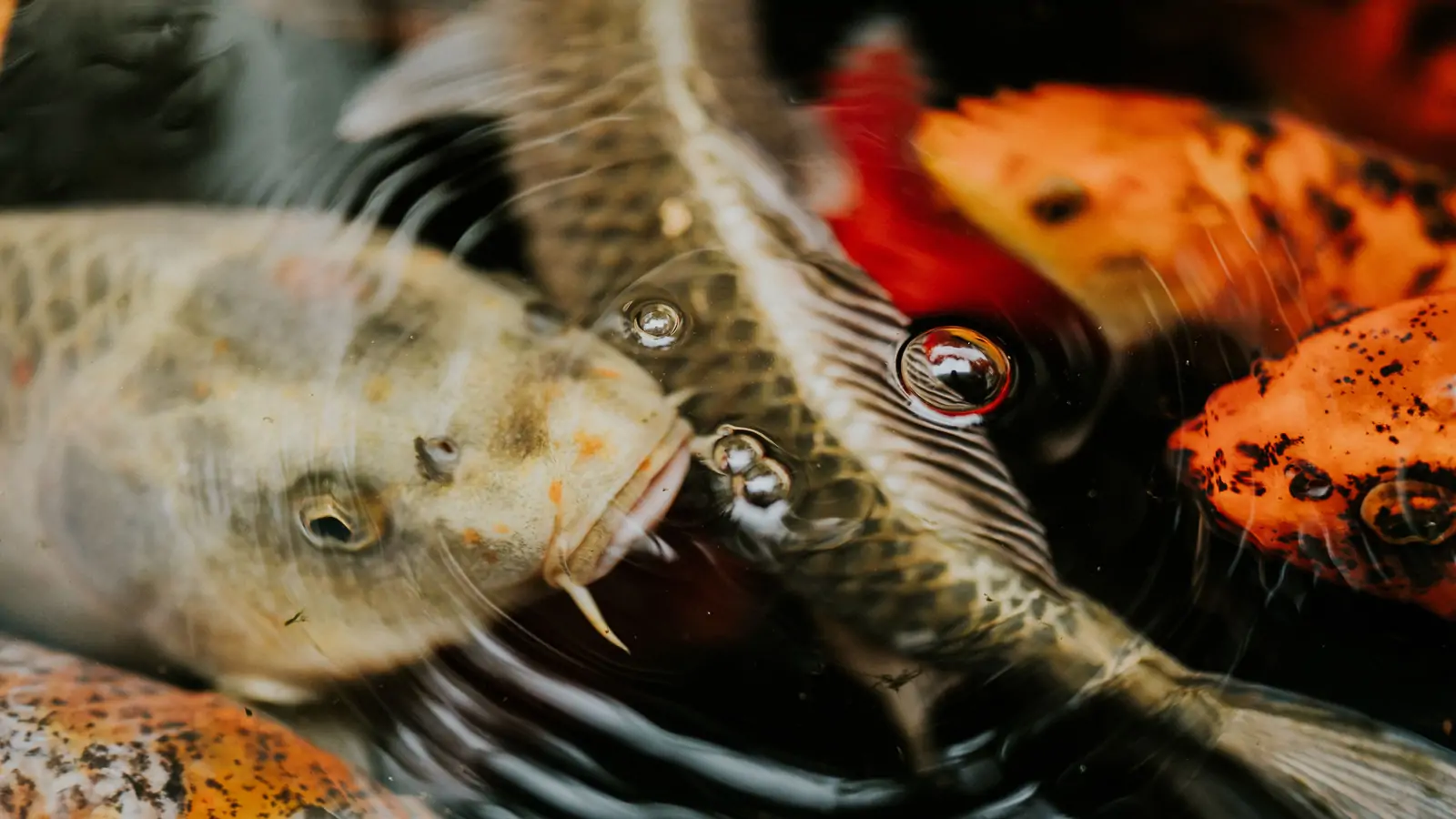
Fish release CO₂ through their gills. When dissolved CO₂ rises in the surrounding water, the driving force for that gas to leave the fish becomes smaller. Prolonged exposure can place a greater burden on acid–base regulation and may affect oxygen transport. Studies of some cultured fish species have also reported effects on growth, health and welfare. The aim is to remove excess CO₂ so the water remains suitable for the fish—not to eliminate all CO₂ from the system.
That does not mean one CO₂ value is safe for every farm, or that any change in fish behaviour proves a CO₂ problem. Sensitivity can differ with species, life stage, exposure period and the surrounding water conditions. If a farm is reviewing an unexplained performance or water-quality issue, CO₂ belongs in the assessment alongside DO, temperature, pH and other relevant parameters—not as a diagnosis on its own.
Can Dissolved Oxygen Be Normal While CO₂ Is Too High?
Yes. This is one of the most important distinctions in RAS gas management.
Adding oxygen addresses the oxygen available in the water. Removing CO₂ addresses an unwanted respiratory gas already dissolved in that water. An oxygen cone or another oxygenation unit may maintain the target DO while CO₂ removal remains inadequate.
| Water-quality task | What we are trying to manage | Why the other task does not replace it |
|---|---|---|
| Oxygenation | Supply enough dissolved O₂ for fish and biological processes | Adding oxygen alone does not guarantee dissolved CO₂ leaves the water |
| CO₂ removal | Transfer excess dissolved CO₂ out of the circulating water | Removing CO₂ does not, by itself, guarantee the system meets its oxygen demand |
Some aeration or gas-contact equipment can affect both O₂ and CO₂ under suitable conditions. The important point is to confirm what each stage is designed to achieve, rather than assume that a strong DO reading settles the entire gas-management question.
For the oxygen side of the discussion, see our guide to oxygenation in RAS.
How Are CO₂, pH and Alkalinity Connected?
CO₂ is also part of the water’s carbonate chemistry. When dissolved CO₂ changes, the balance among CO₂, bicarbonate and other carbonate species can change, affecting pH. Alkalinity influences how strongly the water resists changes in pH.
So a pH reading is useful, but it is not a stand-alone CO₂ measurement. Water with different alkalinity or salinity can show different pH behaviour at different CO₂ levels. A pH value that looks acceptable does not automatically confirm that dissolved CO₂ is suitable for the fish.
When we review a project, we would therefore consider measured or appropriately assessed CO₂ together with pH, alkalinity, temperature and water type. This matters particularly when operators have adjusted buffering or alkalinity and are trying to interpret a change in pH.
Some farms can provide pH, carbonate hardness (KH) and water temperature, but do not yet have a reliable dissolved CO₂ measurement. Those readings are useful and, under suitable assumptions, can support a CO₂ estimate. But that estimate depends on measurement accuracy, whether carbonate-system assumptions apply and the influence of other acid–base components in the water. A calculated estimate should not be presented as a directly measured CO₂ concentration.
The goal is not to choose a tower based on pH alone. It is to understand what is actually happening in the circulating water.
When Should a RAS Project Review CO₂ Management?
A new RAS should consider gas removal as part of its process design. An existing farm may need another look when production conditions change.
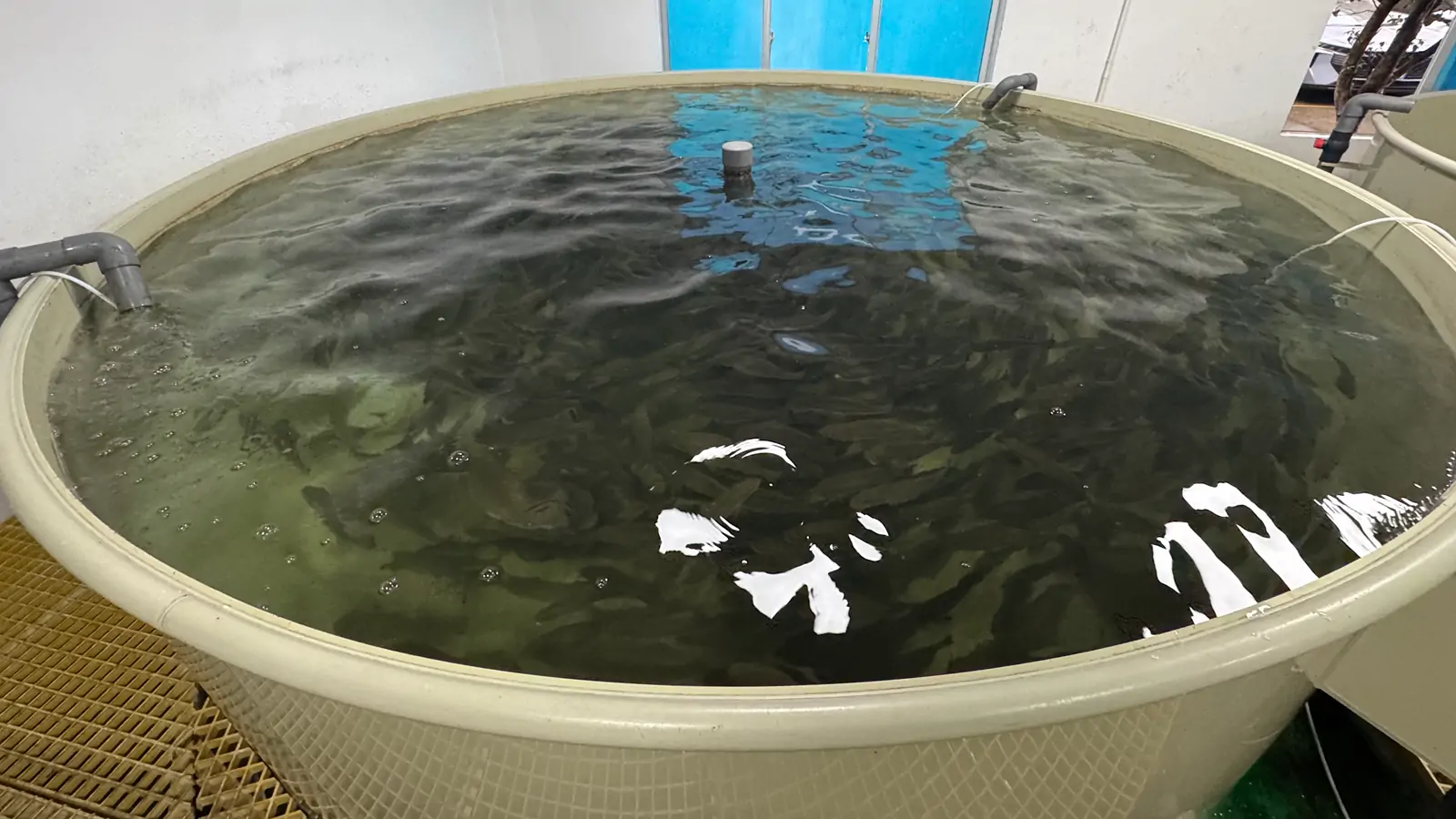
For example, increasing biomass or feeding can change the respiratory and biological load even if the culture tanks stay the same size. Expanding an existing system can also change flow distribution and how much water actually passes through gas treatment. A different water source or operating strategy may introduce other conditions that need to be checked.
A situation that deserves attention is when DO is being maintained but the farm still has unresolved water-quality or fish-performance concerns. CO₂ is one possible factor to investigate—not the only explanation. It should be checked using appropriate measurements rather than inferred from symptoms or water appearance.
We would also look at how the system behaves at higher production loads, during maintenance and when individual treatment units are unavailable. An average-flow equipment list does not show whether gas management has been considered under all relevant operating conditions.
Does Every RAS Need a Dedicated Degassing Tower?
Not necessarily. Every RAS needs to consider CO₂ management, but that does not mean every system needs its own packed degassing tower. The real question is whether the treatment process can keep removing enough CO₂ under the farm’s operating load—not whether a tower appears on the equipment list.
When might a separate tower be unnecessary?
A system with relatively modest biomass and feed loading may already have enough CO₂ removal through air-based aeration, cascades or other gas–water contact stages. The same can apply to an existing farm: if its current equipment has demonstrated adequate CO₂ control during operation, we can evaluate whether that arrangement can continue to serve the project instead of automatically adding another unit.

For example, a RAS may already have a moving bed biofilm reactor (MBBR) with continuous aeration. That air normally serves the biofilm’s oxygen needs and keeps the carriers moving; it may also strip some CO₂ through gas–water contact. But airflow alone does not tell us whether the MBBR can remove the excess CO₂ produced by the whole system. We would check the operating load, the actual gas-contact conditions and CO₂ measurements before deciding whether those existing stages are sufficient.
But a small system, the presence of aeration or a good DO reading is not sufficient proof. We still need to consider the species and the expected peak biomass and feed load, then measure or reliably assess dissolved CO₂ under representative operating conditions. A setup that works today may not be enough after stocking or feeding increases.
When should we evaluate dedicated CO₂ removal?
Dedicated gas removal deserves closer attention in systems with high biomass and feeding, limited water exchange, or little effective contact with fresh air. This is especially important where pure oxygen maintains DO but the process provides relatively little CO₂ stripping. If CO₂ measurements are already too high and the existing gas-exchange stages cannot address the load, we would assess how to improve CO₂ removal, including whether a packed degassing tower is appropriate.
So not installing a separate tower is different from ignoring CO₂ or leaving it without a removal path. We make that decision from the expected peak production load, the effectiveness of the existing gas exchange and actual CO₂ conditions—not tank size or oxygen equipment alone.
How Does CO₂ Removal Fit Into RAS Treatment?
CO₂ removal is a gas-transfer task. Water needs suitable contact with a gas phase, and the released CO₂ must have a route out of the treatment equipment. If a dedicated tower is the right choice, the next step is to make sure it fits the circulation loop and works with the other treatment stages.
Our packed degassing towers distribute water from the upper section across packing media. The water flows downward while released gas is extracted at the top, with a natural air inlet near the upper section. The packing creates gas–water contact; it does not absorb CO₂ like a chemical cartridge. We explain the equipment steps in our separate guide, How Does an Aquaculture Degassing Tower Work?.
Here the more useful project question is how that gas-removal stage fits the circulation system. We need to consider how much water passes through it, where the treated water goes next, and how the gas-management and oxygen-supply stages work together. The exact treatment sequence depends on the design; we should not treat one process diagram as universal.
What Should Be Checked Before Choosing Degassing Capacity?
A nominal tower flow rate tells us about a model range, but not by itself how much CO₂ a specific project needs to remove. The gas load and the operating conditions matter as well.
We would start with the culture species and production stage, then look at expected peak biomass and feeding, water temperature, recirculation and the proposed water-quality targets. Where available, reliable CO₂ measurements at relevant positions in the system are much more informative than guessing from DO or pH alone.
Some customers already know their daily feed input, circulation flow, pH and alkalinity, and may even have a preferred tower diameter or packing depth, but cannot yet measure CO₂ reliably. We can still begin by reviewing the existing water route, possible installation points and what needs to be measured next. To support a stated removal performance—especially a target outlet CO₂ concentration or removal percentage—we first need to establish the CO₂ entering the proposed treatment stage, the required outlet condition and the flow and operating conditions behind those values. A preliminary tower size is a starting point for discussion, not a substitute for engineering design.
The site layout also matters. A packed tower needs appropriate water connections, levels, gas extraction and a suitable exhaust path, as well as access for operation and maintenance. These interfaces belong in the RAS design, not just on the equipment quotation.
Our aquaculture degassing tower range includes standard models with different nominal flows. Before narrowing a model choice, the intended treatment flow and CO₂ removal duty need checking against the actual application. We would not derive a guaranteed CO₂ reduction or a tower count from the model name alone.
How Would We Start a CO₂ Review With You?
You do not need a completed engineering package to begin. Tell us what you are raising, whether the project is new or already operating, and what you know about its water circulation and water-quality conditions. If some information is missing, we can identify what would make the next design discussion more useful.
| Useful starting information | Why it helps |
|---|---|
| Species, life stage and planned production load | Gives context for respiratory load and suitable water-quality conditions |
| Approximate biomass and feeding plan | Helps frame the expected biological load |
| Circulation flow and existing treatment layout | Shows where and how gas treatment could connect |
| Available CO₂, DO, pH, alkalinity and temperature results | Helps distinguish CO₂ from other water-quality issues; mark methods and sample positions where known |
| Building, water-level and exhaust constraints | Helps assess whether a proposed degassing arrangement can be installed and maintained |
A Documented Project Application
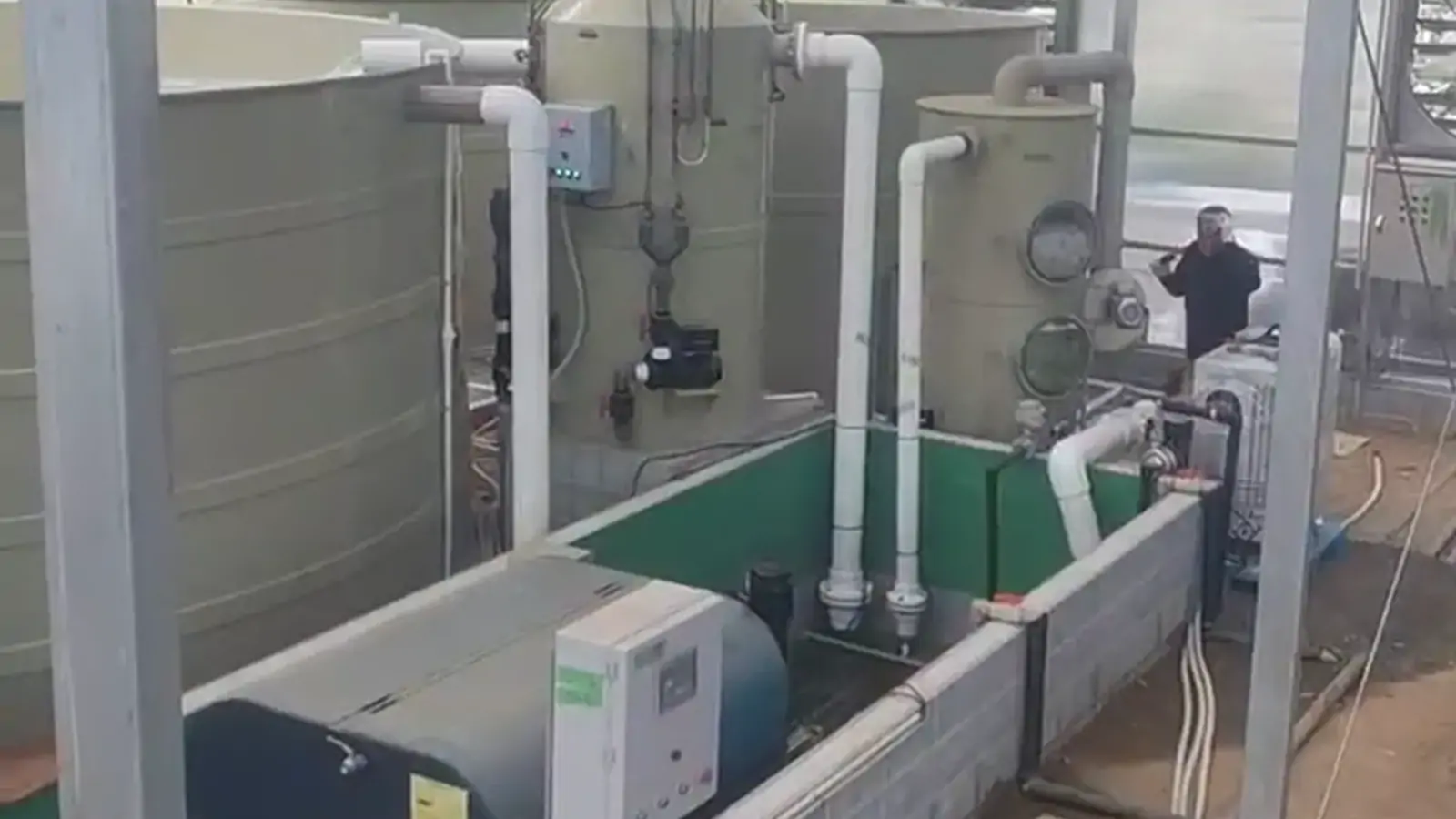
Our 240 m³ eel RAS project in Japan includes two degassing towers among its recorded treatment equipment, together with biological treatment and oxygenation equipment.
The next step is to compare your actual requirements with the treatment options available. We can discuss that together as part of commercial RAS system planning.
FAQ About CO₂ Removal in RAS
If DO Is Normal, Do I Still Need to Check CO₂?
Yes. DO and CO₂ describe different gas-management conditions. Adequate oxygen does not establish that dissolved CO₂ is within the range appropriate for your species and operation.
Can Adding More Oxygen Remove CO₂?
Oxygen addition alone is not a dependable CO₂-removal method. Equipment that provides gas–water contact may also promote some CO₂ transfer, but its CO₂-removal duty needs to be evaluated separately.
Does a Normal pH Reading Mean CO₂ Is Safe?
Not necessarily. pH is influenced by the carbonate system and alkalinity. Use relevant CO₂ assessment or measurement together with the broader water-chemistry context.
Does Every RAS Need a Dedicated Degassing Tower?
Not necessarily. If aeration or other existing gas-contact stages can keep CO₂ within a suitable range at the planned peak load, a separate tower may not be needed. A good DO reading or small system size alone is not enough to make that decision.
Can I Choose a Degassing Tower by Water Flow Alone?
No. Flow is important, but CO₂ load, inlet conditions, required outlet conditions, gas-extraction design and site interfaces all affect the final selection. A nominal model flow is not a universal removal guarantee.
References
- Skov, CO₂ in aquaculture (DTU) — background on CO₂ production, water chemistry and control in aquaculture.
- Lindholm-Lehto et al., Water quality monitoring in recirculating aquaculture systems — CO₂, pH, alkalinity and species-specific monitoring context.
- Recirculating Aquaculture Technologies (Springer) — discusses gas exchange through aeration and why oxygen-enriched systems may need additional CO₂ stripping; not evidence that every RAS needs a dedicated tower.
- Mota et al., The effects of carbon dioxide on growth performance, welfare, and health of Atlantic salmon post-smolt (USDA record) — evidence for risks associated with excessive CO₂ exposure in a specific species.
Discuss CO₂ Management for Your RAS
If you are designing a new RAS or reviewing gas management in an existing system, we can start with the production plan and whatever water-quality information you already have. We will help identify the conditions that need confirming before recommending a degassing arrangement.