
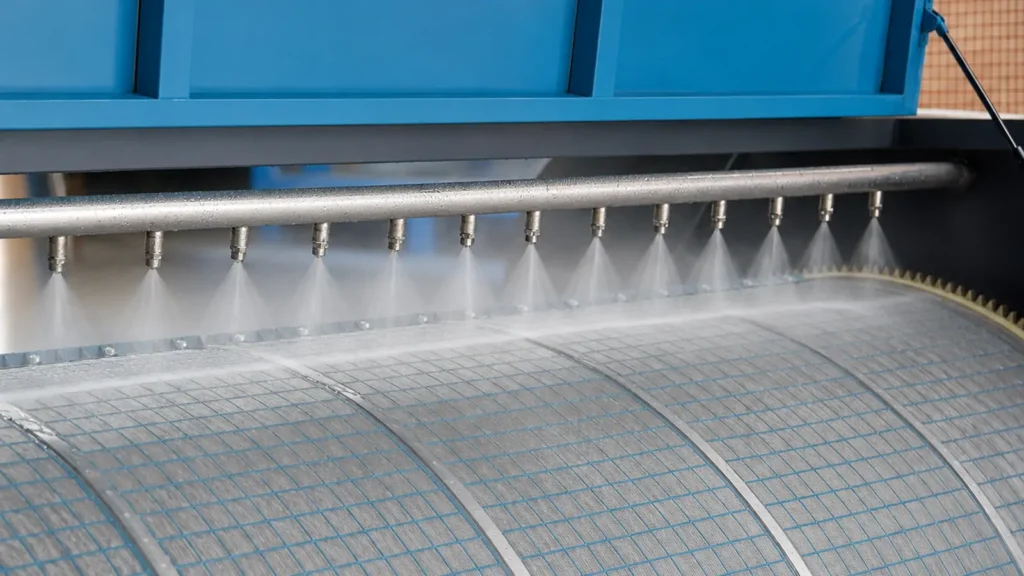
If your RAS drum filter suddenly starts backwashing more often, it does not necessarily mean something has failed. We would first look at recent changes in feeding, fish biomass and circulation flow, then check whether the screen is being rinsed clean, the spray-water supply is working properly and the collected waste is leaving the filter.
Automatic backwashing keeps the screen working; it does not make the equipment maintenance-free. If washing becomes frequent, the water level remains high after a cleaning cycle or a screen is damaged, the right next step depends on the symptom. It is rarely a good idea to change controller settings or replace an entire filter screen before understanding the cause.
Why Does a RAS Drum Filter Backwash Automatically?
Our PP box-type and submerged stainless steel drum filters use an automatic filtration and backwashing cycle. Fish feces, uneaten feed and other suspended solids that can be captured accumulate on the screen. As the deposits build up, resistance to water passing through the screen increases and the water level inside the filter changes.
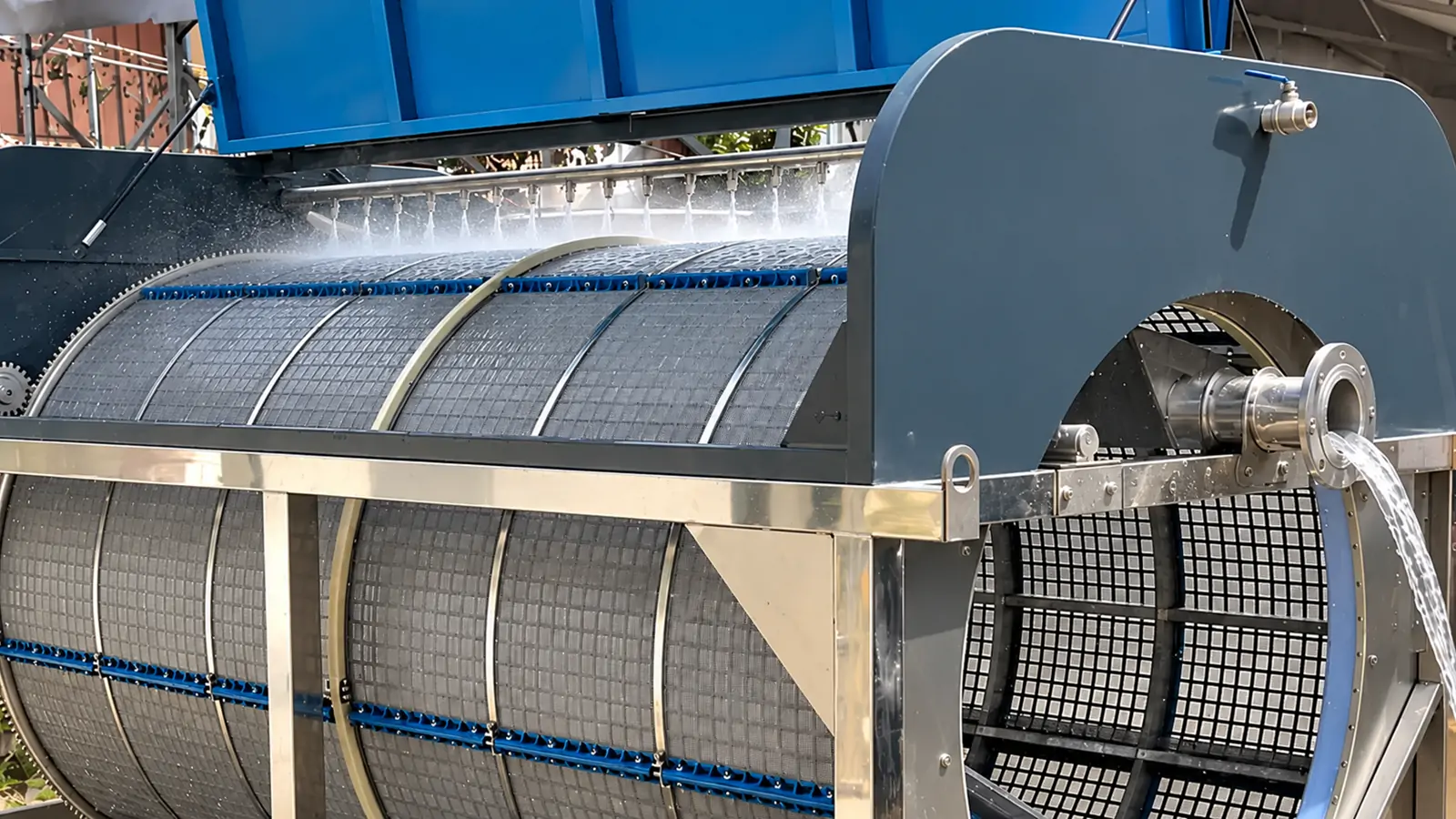
When the water reaches the level sensor's operating position, the control system starts drum rotation and spray rinsing. The released solids enter the waste channel and drain pipe. Once cleaning is complete, the filter continues treating water until the next cleaning cycle is needed.
For a fuller explanation of the equipment, see our guide to how an aquaculture drum filter works. Here, we will focus on what to look for when a filter already in service starts behaving differently.
Why Has Backwashing Become More Frequent?
We would not assume the screen or sensor is defective just because the cleaning cycle starts more often. First, compare how the farm is operating now with how it was operating before the change.
More feed and higher fish biomass. As fish grow and feed input increases, the amount and nature of feces and feed residues entering the drum filter may change. More collected solids can mean more frequent cleaning. If the screen is being cleaned effectively and the waste drains as it should, this may reflect a change in operating load rather than a fault.
Changed circulation flow. More water passing through the unit also changes its hydraulic duty. Check the actual water flow rather than relying on the nominal treatment capacity shown for the model.
Deposits on the screen or ineffective rinsing. Fine deposits, algae, biofilm or oily residues may keep the screen partly obstructed. The unit can finish a backwash cycle and still see the water level rise again soon afterward if the screen has not recovered its normal ability to pass water.
A level-sensing or control issue. Our manuals also identify level-sensor position and screen condition as possible contributors to repeated washing. You need to compare the level signal with the actual wash cycle before deciding whether the sensor or its setting needs attention.
What matters most is the result after the wash: Is the screen cleaner? Has the level recovered? Did the solids actually leave through the waste drain? There is no single normal number of backwash cycles per hour that applies to every RAS farm.
What If the Spray Is Weak or the Screen Stays Dirty?
When the drum turns but obvious deposits remain, we would look at the spray system next. Observe whether the spray covers the screen evenly, whether some areas appear much weaker than others, whether the cleaning-water supply is available and whether the dislodged waste enters the collection channel.
According to our instruction manuals, blocked spray nozzles and inadequate cleaning-water supply are two common possibilities when rinsing becomes weak. More persistent deposits can also make a screen look dirty even after the equipment completes its normal automatic cycle.
After YUTANK after-sales training, farm staff can inspect the water supply, nozzles and screen in accordance with the applicable model instructions. If a task requires cleaning a nozzle, brushing the screen or opening a guard, first stop the equipment and isolate electrical power as taught, making sure the drum and associated moving parts have stopped. Never put a hand into the drum while it is operating.
Do not simply increase spray pressure without checking the equipment requirements. An unsuitable pressure or cleaning method may fail to solve the problem and could damage the screen or other parts.
How Do High Water Levels, Poor Drainage and Drum Noise Differ?
Several problems can look like “poor filtration,” yet point to different parts of the unit. It helps to start with the observed symptom and follow the water, cleaning and waste-discharge paths.
| What you observe | Possible areas to check | What to notice first |
|---|---|---|
| Water level rises, but automatic rinsing does not start | Level sensor, its position or the control connection | Whether the level change is followed by the expected cleaning action |
| Spray is noticeably weak | Nozzle blockage or cleaning-water supply | Whether the rinse is even and the water supply is normal |
| Washing repeats frequently and deposits remain | Solids load, screen fouling or level setting | Whether the screen and level recover after a cycle |
| Waste gathers but drains slowly | Waste-pipe restriction or drainage arrangement | Whether solids build up near the collection channel or pipe inlet |
| Drum sticks or makes unusual noise | Entangled debris, bearings or transmission | Visible obstruction, binding or unusual vibration |
| Filter overflows | Excess inflow, blocked screen or ineffective cleaning/discharge | Whether incoming flow matches the unit's filtration and drainage behavior |
These are possible causes, not a remote diagnosis. A high water level does not automatically mean a failed sensor, and slow waste discharge does not necessarily indicate a fault within the filter itself. Unusual drive noise, jamming, electrical trips or other unsafe conditions call for safe shutdown rather than continued forced operation.
What Routine Checks and Maintenance Should Your Farm Schedule?
With an automatically cleaning filter, good maintenance often comes down to simple, consistent observations rather than waiting for a breakdown. Both our PP and submerged stainless steel drum-filter manuals outline a schedule along these lines:
| Suggested interval | What to pay attention to |
|---|---|
| Daily | Automatic washing, spray behavior, waste discharge, unusual noise, overflow and visible debris |
| Weekly | Level-sensor condition, nozzles and waste area; remove residue as permitted by training |
| Monthly | With the equipment shut down and safely isolated, inspect and clean the screen; check the drive, bearings, seals and general condition |
| Quarterly | Look for algae and biofilm deposits, electrical moisture protection and level-control maintenance performed by qualified staff |
| Annually | Inspect spray pipework, drive components, screen wear and aging seals; plan replacement where needed |
These intervals reflect the routine guidance in our instruction manuals. Your actual plan should still account for the model, fish production load, water quality and site operating conditions. Disconnect and isolate power before cleaning or disassembly, never reach into an operating drum, and never run the equipment dry.
Even a simple operating log can help. Note whether washing and waste discharge look normal alongside major feeding changes. When a problem appears, it is much easier to see what changed than if the farm only starts gathering information after an alarm.
Does a Damaged Screen Mean Replacing the Whole Screen?
Screen damage can be an expensive inconvenience for a fish farm. Traditional rotary drum filters often used a continuous, one-piece screen. A small tear could mean removing and replacing the entire sheet, even when the damaged area was limited. The material replacement and dismantling work could be disproportionate to the size of the defect.
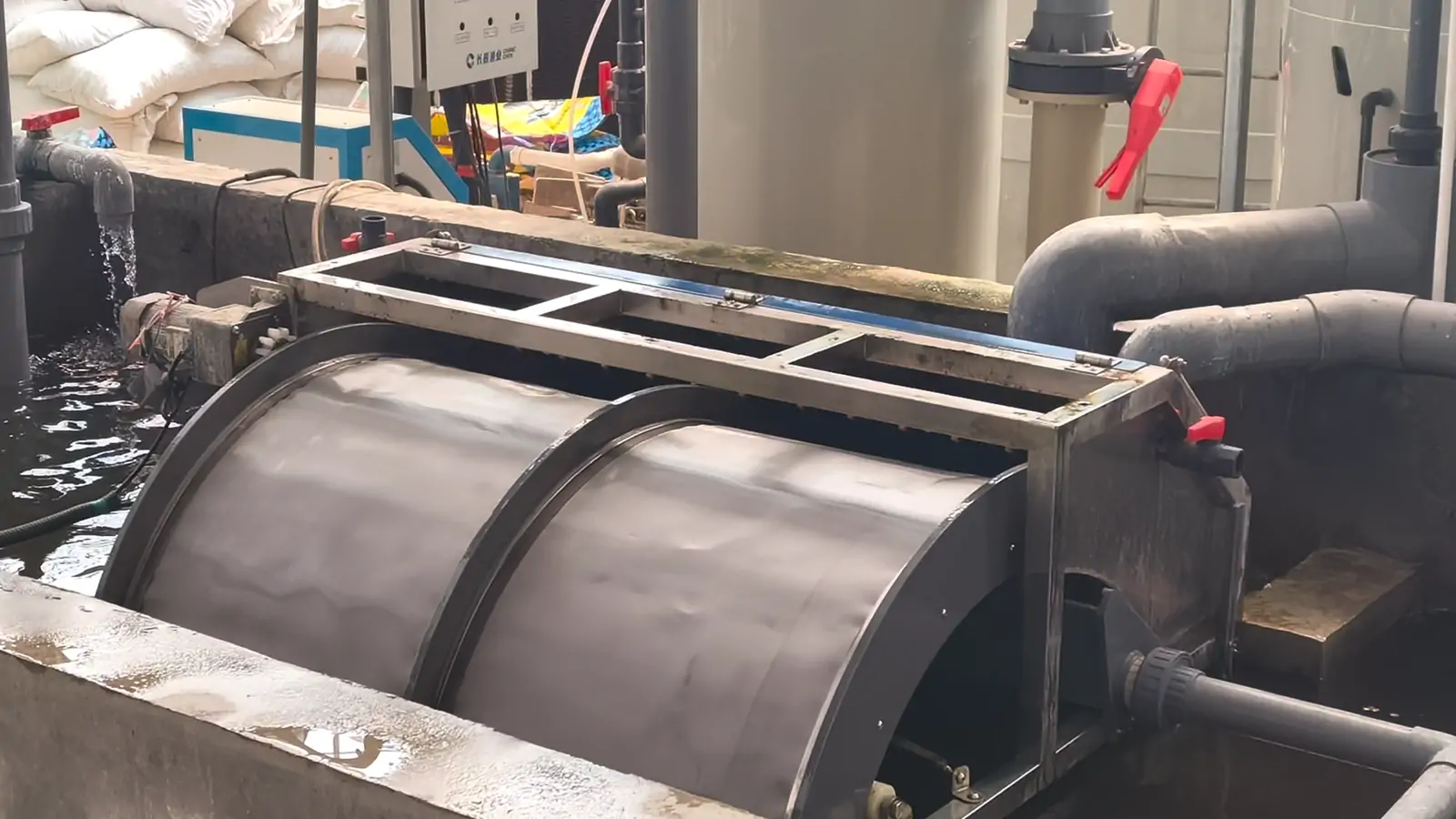
YUTANK has since developed a modular, panel-based screen construction to make maintenance more practical. If the damage is substantial but confined to an affected section, the damaged screen module can be replaced without automatically replacing the entire screen assembly.
For small defects suitable for local repair, we can also use a dedicated repair clip. That means a small opening does not necessarily turn the entire screen into waste. Whether a clip repair is appropriate depends on the size and position of the damage, the surrounding mesh and whether the repaired area can still retain solids reliably.
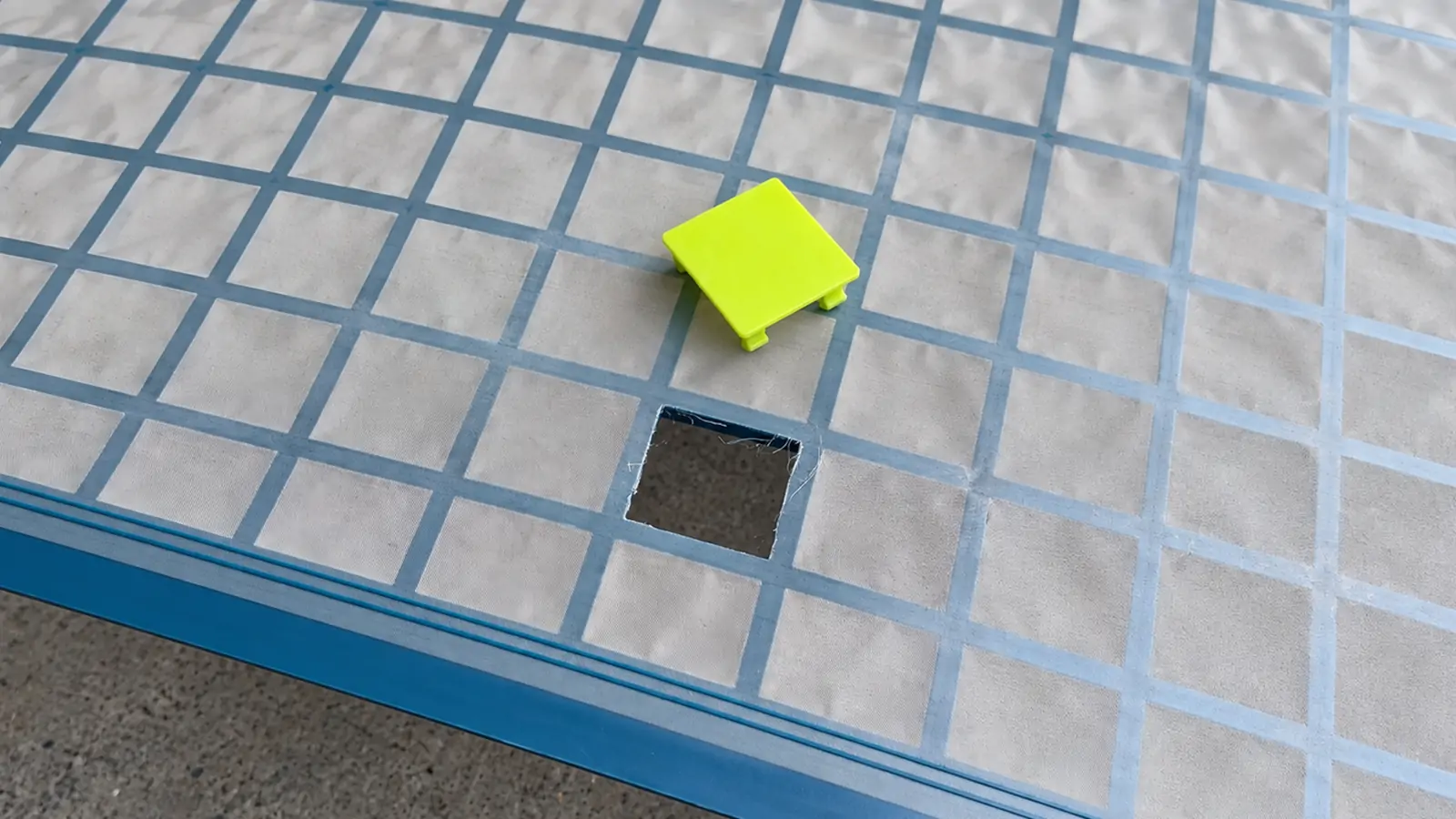
The point of modular construction is to match the repair to the actual damaged area. It can reduce unnecessary whole-screen replacement and the associated maintenance burden. It does not mean every damaged screen can be repaired immediately or that all tears can be treated in the same way.
What Can Trained Farm Staff Check Themselves?
As part of our after-sales service, we train farm employees to operate the equipment and handle routine inspection and troubleshooting. When backwashing looks abnormal, trained staff do not necessarily have to wait for an engineer to arrive before starting to identify the issue.
Within the scope of their training, staff can compare operating flow, screen condition, spray behavior and waste discharge, look for obvious level-sensing problems and carry out permitted cleaning, maintenance or component replacement according to the correct manual. For a modular screen, they can also assess whether an eligible local repair or replacement of an affected panel is the appropriate response.
Being able to inspect a problem is not the same as being qualified to perform every repair. Any work involving electrical wiring, moving transmission parts, pressurized equipment or removal of protective guards must follow the required shutdown and isolation process and be carried out by suitably trained and qualified personnel. For unexplained alarms, repeated electrical trips or other safety concerns, stop unsafe operation and contact technical support.
When Should You Contact YUTANK?
If the spray system has been checked but the water level is still not recovering, or if repeated washing, drainage restrictions or unusual drive noise continue, repeated resets and random setting changes are unlikely to help. We would rather narrow down which stage of the process is causing the problem.
To get started, you can tell us the drum-filter model, approximate operating flow, whether feeding has recently increased, and what you are seeing—high water level, frequent backwashing, weak spray, leakage or a damaged screen. A photo or short video can help us understand the situation. You do not need a complete technical report before contacting us.
The drum filter's job is to remove captureable solids early in the RAS water-treatment process. If filtration and waste removal are unreliable, feces and feed residues may remain in circulation and place additional load on downstream treatment. That is why we consider the filter as part of the wider RAS process, not simply as a controller that counts cleaning cycles.
Frequently Asked Questions
Does frequent backwashing always mean the drum filter has failed?
No. Increased feeding, biomass or water flow can change how often the screen needs washing. Look at the screen condition, water level and waste discharge after cleaning before deciding whether there is fouling or a control issue.
Is weak spray always caused by a blocked nozzle?
No. An inadequate water supply can produce a similar symptom. Trained staff should check according to the applicable manual rather than increasing spray pressure without identifying the cause.
Does automatic backwashing eliminate manual maintenance?
No. Automation reduces the routine need to initiate washing, but screens, nozzles, level sensing, transmission components and waste drains still need regular inspection and service.
Can every small screen tear be fixed with a repair clip?
Not every tear. An appropriate small opening may be repaired with a dedicated clip. Larger damage, or a screen that cannot be restored reliably, calls for replacement of the affected module and a check of screen integrity.
Can farm employees troubleshoot a YUTANK drum filter themselves?
Yes, within the scope of their after-sales training and the correct operating instructions. Electrical, pressurized or hazardous mechanical work still requires proper isolation and appropriately qualified personnel, with YUTANK support when needed.
Discuss Your Drum Filter Operating Issue With Us
If your drum filter has started backwashing more often, or you are considering screen repairs, modular replacement or farm-staff training, tell us what is happening in your system. We can review your drum filter configuration, water flow and maintenance conditions to help identify a sensible first step.
Contact the YUTANK team to discuss drum-filter operation and maintenance in your RAS.