Aquaculture Drum Filter

Aquaculture Drum Filters for RAS & Fish Farming

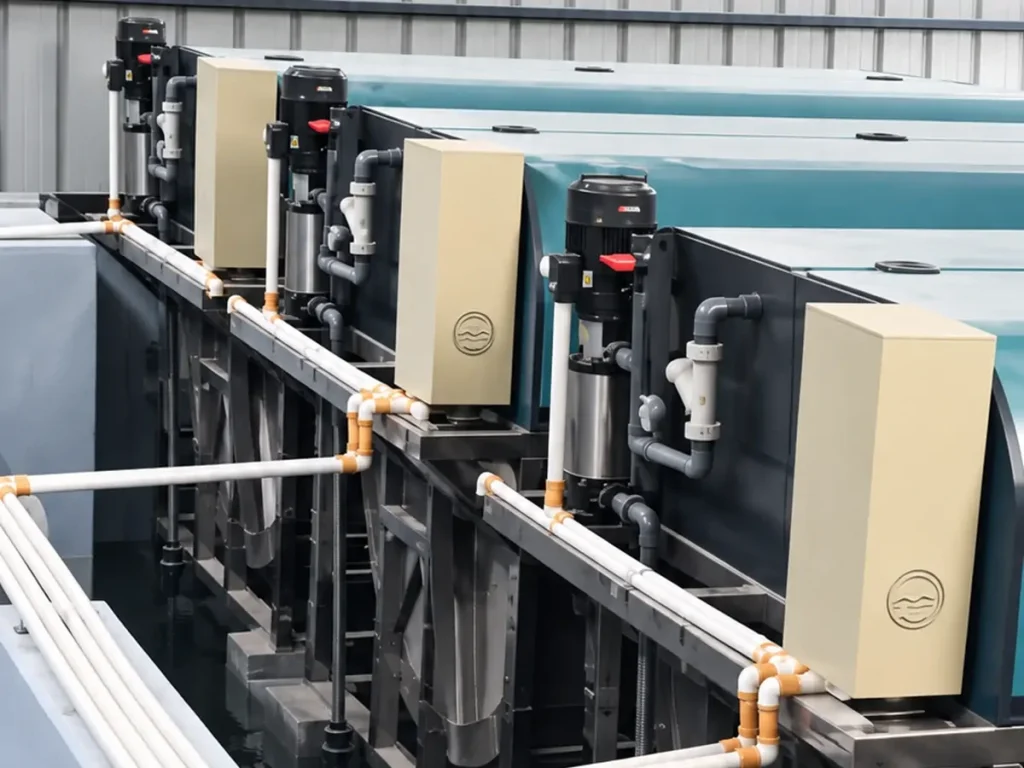
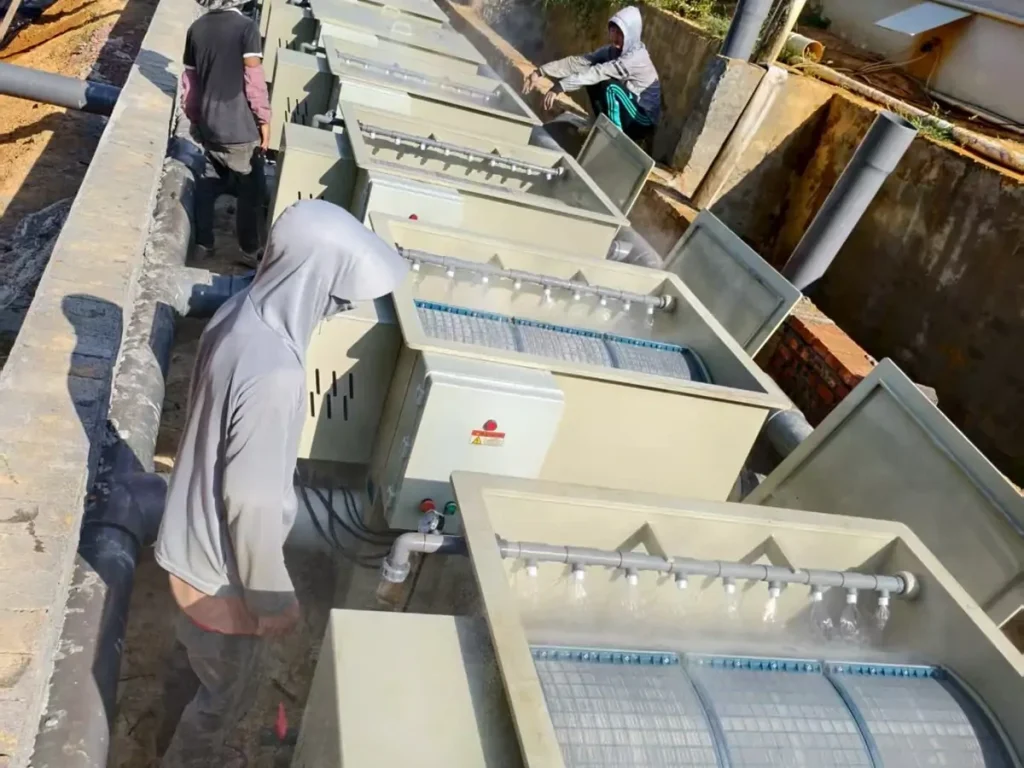
Automatic rotary drum filters for mechanical solids removal in commercial recirculating aquaculture systems. Available in box-type PP and sinking-type stainless steel configurations.

  • 74 μm mechanical filtration
  • Automatic backwashing
  • Freshwater & marine options

Aquaculture Drum Filter Series

YUTANK offers two rotary drum filter configurations for commercial aquaculture. The Box Type PP Drum Filter is designed for compact and medium-scale RAS with a corrosion-resistant PP body and a 316L stainless steel screen. The Sinking Type Stainless Steel Drum Filter is designed for medium and large RAS, where the filter is integrated directly into the water-treatment channel and handles higher flow rates.

Box type PP aquaculture drum filter

Box Type PP Drum Filter

A corrosion-resistant rotary drum filter with a PP body and 316L stainless steel screen. Designed for compact and medium-scale RAS, hatcheries, shrimp farming and marine aquaculture.

  • Best for: Compact and medium-scale RAS · Marine aquaculture · Hatcheries · Shrimp farming
  • Body material: PP
  • Screen material: 316L stainless steel
  • Series flow range: Approx. 10–300 m³/h
  • Standard catalog models: 30–300 m³/h
  • Filtration precision: 74 μm (200 mesh)
  • Installation: Floor-mounted · Recessed · Elevated
  • Key benefit: Corrosion-resistant, lightweight construction with flexible installation options.
View PP Drum Filter Models →
Sinking type stainless steel aquaculture drum filter

Sinking Type Stainless Steel Drum Filter

A high-flow rotary drum filter with a 304 / 316 stainless steel body, designed to be integrated directly into the RAS water-treatment channel for medium and large systems.

  • Best for: Medium and large RAS · High-flow systems · Integrated treatment channels
  • Body material: 304 / 316 stainless steel
  • Series flow range: Approx. 60–600 m³/h
  • Standard catalog models: 100–600 m³/h
  • Filtration precision: 74 μm (200 mesh)
  • Installation: Sinking · Recessed · Pit-mounted
  • Key benefit: High-flow mechanical filtration integrated directly into the RAS water-treatment channel.
View Stainless Steel Drum Filter Models →

Compare Our Aquaculture Drum Filters

Both YUTANK drum filter series use a 74 μm (200 mesh) filtration screen with automatic backwashing. The main difference is the body material and the installation method, which determine the suitable system scale and layout.

Box Type PP drum filter comparison
Box Type PP Drum FilterCompact, flexible installation for small and medium RAS.
Sinking Type stainless steel drum filter comparison
Sinking Type Stainless Steel Drum FilterIntegrated recessed installation for medium and large RAS.
Feature Box Type PP Drum Filter Sinking Type Stainless Steel Drum Filter
Body materialPP304 / 316 stainless steel
Filtration screen316L stainless steelStainless steel
Filtration precision74 μm (200 mesh)74 μm (200 mesh)
Series flow rangeApprox. 10–300 m³/hApprox. 60–600 m³/h
Standard catalog models30–300 m³/h100–600 m³/h
InstallationFloor-mounted · Recessed · ElevatedSinking · Recessed · Pit-mounted
FreshwaterYesYes
Marine waterSuitableMaterial selection required
Automatic backwashingYesYes
Typical applicationCompact / medium RASMedium / large RAS
Main advantageCorrosion resistance and lightweight constructionHigh flow and integrated installation

Not sure which drum filter fits your RAS? Get a Model Recommendation

How Does an Aquaculture Drum Filter Work?

A rotary drum filter continuously separates suspended solids from aquaculture water using a fine filtration screen mounted on a slowly rotating drum. When the screen begins to clog, the filter cleans itself automatically.

Water Enters the Drum

Water Enters the Drum

RAS return water enters the filtration chamber and flows into the rotating drum.

Solids Are Retained

Solids Are Retained

Water passes through the 74 μm filtration screen, while fish feces, uneaten feed and other suspended particles are retained on the inner side of the screen.

Water Level Triggers Backwashing

Water Level Triggers Backwashing

As captured solids accumulate, water flow through the screen decreases and the internal water level rises. A level sensor detects the change and automatically activates the drum rotation and cleaning system.

Solids Are Flushed to Waste

Solids Are Flushed to Waste

Pressurized spray water cleans the rotating screen. Captured solids are washed into the waste collection channel and discharged from the filter. After cleaning, the system returns automatically to normal filtration.

Read: How Does a Rotary Drum Filter Work in RAS? →

Mechanical Solids Removal Before Biological Filtration

A rotary drum filter removes suspended solids before they break down further. Removing fish feces and uneaten feed from the water early protects the biofilter and stabilizes the entire recirculating system.

Fish feces and uneaten feed decompose quickly in warm aquaculture water. If they are not removed early, they release ammonia and consume dissolved oxygen, increasing the load on the biological filter and destabilizing water quality.

Mechanical filtration — the drum filter — is therefore positioned upstream of biological filtration. By removing most suspended solids first, the drum filter keeps the biofilter cleaner, more efficient and more predictable.

The exact treatment sequence depends on the species, water quality requirements and system design. The drum filter is consistently placed early in the loop so that solids are removed before biological and other downstream treatment steps.

Drum filter positioned upstream for mechanical solids removal before biological filtration

Key Advantages of YUTANK Aquaculture Drum Filters

Automatic Backwashing drum filter

Automatic Backwashing

The drum filter cleans its own screen automatically during operation. Backwashing is triggered by the water-level sensor, so the filter runs continuously without manual intervention.

74 μm mechanical filtration screen

74 μm Mechanical Filtration

A 74 μm (200 mesh) screen removes fish feces, uneaten feed and suspended particles before they break down and load the biological filter.

Drum filter designed for aquaculture water

Designed for Aquaculture Water

The filtration screen and structure are selected for continuous operation in aquaculture water, with the drum rotating to distribute wear and keep filtration stable.

Multiple drum filter flow capacities

Multiple Flow Capacities

YUTANK offers a series flow range from approximately 10 m³/h up to 600 m³/h, covering hatcheries, grow-out systems and high-flow commercial RAS.

Flexible drum filter installation

Flexible Installation

Box Type PP filters can be installed floor-mounted, recessed or elevated; Sinking Type SS filters are integrated directly into the water-treatment channel.

Easy maintenance access drum filter

Easy Maintenance Access

The filtration screen and internal components are accessible for inspection and periodic maintenance, reducing downtime and service cost.

Aquaculture Drum Filter Specifications

YUTANK offers multiple drum filter capacities to cover a wide range of RAS sizes. The values below show the series flow range and the standard catalog models; additional capacities may be available according to specific project requirements.

Model Flow Rate Filtration Overall Size (mm) Inlet (mm) Outlet (mm) Motor Power Pump Power
ED-PP-3030 m³/h74 μm1050 × 850 × 7701101100.12 kW0.37 kW
ED-PP-6060 m³/h74 μm1050 × 850 × 7701601600.37 kW0.55 kW
ED-PP-100100 m³/h74 μm1630 × 1120 × 1120160–200160–2000.55 kW0.75 kW
ED-PP-150150 m³/h74 μm1990 × 1120 × 11202002500.65 kW0.75 kW
ED-PP-200200 m³/h74 μm1900 × 1800 × 17002002500.75 kW1.5 kW
ED-PP-300300 m³/h74 μm2350 × 1800 × 17003153150.75 kW1.5 kW

Additional capacities may be available according to project requirements.
Request PP Drum Filter Specifications →

Model Flow Rate Filtration Overall Size (mm) Motor Power Pump Power
XCS-100100 m³/h74 μm1680 × 1280 × 16000.75 kW1.1 kW
XCS-200200 m³/h74 μm2000 × 1520 × 17800.75 kW1.5 kW
XCS-300300 m³/h74 μm2380 × 1520 × 17800.75 kW2.2 kW
XCS-400400 m³/h74 μm2750 × 1520 × 18301.1 kW2.2 kW
XCS-500500 m³/h74 μm2750 × 1800 × 20201.1 kW2.2 kW
XCS-600600 m³/h74 μm3120 × 1800 × 20201.1 kW2.2 kW

Standard voltage: 380 V. Final specifications should be confirmed with the YUTANK engineering team based on the specific project.
Request Stainless Steel Drum Filter Specifications →

Aquaculture Drum Filter Applications

YUTANK drum filters serve a wide range of aquaculture systems, from compact hatcheries to high-flow commercial RAS.

Commercial RAS drum filter

Commercial RAS

Continuous mechanical solids removal for recirculating aquaculture systems producing salmon, trout, barramundi and other commercial species.

Hatcheries and nursery systems drum filter

Hatcheries & Nursery Systems

Gentle, reliable filtration for larval and juvenile rearing, where stable water quality and fine solids removal are essential.

Marine aquaculture drum filter

Marine Aquaculture

Corrosion-resistant PP and stainless steel construction for seawater and brackish-water RAS.

Shrimp and crustacean farming drum filter

Shrimp & Crustacean Farming

Fine solids removal that supports biofloc management and stable water quality in intensive shrimp culture.

High-density fish farming drum filter

High-Density Fish Farming

High-capacity mechanical filtration that keeps solids under control in high-density grow-out systems.

Aquaculture water treatment drum filter

Aquaculture Water Treatment

Primary mechanical treatment of intake or recirculating water, protecting downstream equipment and biological filtration.

Flexible Installation for Different RAS Layouts

Drum filter installation should be coordinated with the RAS water-treatment sequence. The drum filter is normally positioned before the biological filter, so that solids are removed before they can affect biofilter performance.

Box Type PP Drum Filter installation layouts

Box Type PP Drum Filter

The enclosed PP body supports multiple installation layouts to suit different equipment rooms and system elevations.

  • Floor-mounted: Installed directly on the equipment-room floor, with the inlet and outlet connected to the RAS piping.
  • Recessed: Partially sunk to match the channel water level, saving headroom in compact plant rooms.
  • Elevated: Positioned above the tank or channel to allow gravity return of filtered water to the fish tanks.
Sinking Type Stainless Steel Drum Filter installation layouts

Sinking Type Stainless Steel Drum Filter

Designed for medium and large RAS where the filter is integrated directly into the water-treatment channel.

  • Sinking installation: The filter body is sunk into the treatment channel, with the inlet aligned to the channel water level for high-flow, low-head operation.
  • Recessed / pit-mounted: Configured within a dedicated filter pit or recessed bay for direct integration with the RAS treatment line.

Aquaculture Drum Filter Projects

Explore project photographs and the equipment included in each system.

Filtration equipment and pipe connections.

2,250 m³ Tilapia RAS Project

Riyadh, Saudi Arabia

Species
Tilapia
System Water Volume
2,250 m³
Culture Tanks
25
Culture Tank Size
15 m × 5 m × 1.2 m

Project Equipment

  • Drum Filters: 4
View Project

View All RAS Projects →

Why Choose YUTANK as Your Drum Filter Manufacturer?

01

Drum Filter + Complete RAS Engineering

YUTANK designs and manufactures the drum filter together with the rest of the RAS equipment, so mechanical filtration is correctly sized and coordinated with biological filtration, oxygenation and the overall system flow.

02

Two Drum Filter Platforms

With both a Box Type PP platform and a Sinking Type Stainless Steel platform, YUTANK can match the filter to the system scale, water type and installation layout rather than forcing a single design.

03

Project-Specific Model Selection

YUTANK selects the drum filter model based on your recirculation flow, water volume, species and stocking density, providing a technical recommendation rather than a one-size-fits-all product.

04

Installation & Commissioning Support

YUTANK provides installation guidance and commissioning support, helping to position the drum filter correctly in the RAS treatment line and to verify backwashing and filtration performance.

FAQ About Aquaculture Drum Filters

01 What is a drum filter in aquaculture?

A drum filter (also called a rotary drum filter or microscreen drum filter) is a mechanical filtration device that removes suspended solids — fish feces, uneaten feed and organic particles — from aquaculture water. Water flows through a fine filtration screen mounted on a slowly rotating drum, and captured solids are automatically flushed away, keeping the water clean before it continues to biological filtration.

02 How does a rotary drum filter work?

Water enters the rotating drum, flows through the 74 μm filtration screen, and leaves the suspended solids trapped on the inner surface of the screen. As solids accumulate, the water level inside the drum rises; a level sensor detects this rise and automatically triggers drum rotation and spray-water backwashing. Captured solids are flushed into the waste collection channel and discharged from the filter, after which the system returns to normal filtration automatically. Read: How Does a Rotary Drum Filter Work in RAS? →

03 What filtration size does YUTANK use?

YUTANK aquaculture drum filters use a standard 74 μm (200 mesh) filtration screen. This precision is chosen to remove the suspended solids that would otherwise increase the load on downstream biological filters, while avoiding excessively frequent backwashing.

04 What flow rate drum filter do I need?

The correct drum filter size depends on your RAS recirculation flow, water volume, species, stocking density and feeding rate. YUTANK offers a series flow range from approximately 10 m³/h up to 600 m³/h. We recommend contacting the YUTANK engineering team so they can calculate the required capacity for your project. Read: How to Choose the Right Drum Filter for Aquaculture →

05 Can a drum filter be used in seawater?

Yes. The Box Type PP Drum Filter is particularly suitable for marine aquaculture because its PP body and 316L stainless steel screen resist corrosion. For the Sinking Type Stainless Steel Drum Filter, material selection (304 or 316) should be confirmed for the specific seawater application.

06 What is the difference between a drum filter and a biofilter?

A drum filter provides mechanical filtration — it physically removes suspended solids. A biofilter provides biological filtration — it uses bacteria to convert dissolved ammonia and nitrite into less toxic nitrate. In a complete RAS, the drum filter is placed before the biofilter so that solids are removed first, keeping the biofilter clean and efficient.

07 How often does a drum filter need to be cleaned?

The drum filter cleans itself automatically: when captured solids reduce the flow through the screen, the water level rises and backwashing is triggered. The screen is cleaned by spray water during rotation, so the filter operates continuously without manual interruption. Regular maintenance mainly involves periodic inspection of the spray nozzles, seals and moving parts. Read: Drum Filter Maintenance Guide →

08 How much does an aquaculture drum filter cost?

The cost depends on the model, flow capacity, body material (PP or stainless steel) and any project-specific options. Contact YUTANK with your flow rate and system requirements to receive a technical recommendation and a specific quotation. Request a Drum Filter Quote →

RAS Equipment Inquiry

Need Information About This Equipment?

Tell us which equipment you need and how it will be used. Share any known flow, water conditions or integration requirements so we can review your inquiry.

You can start with the information you already have.

  • Equipment or application
  • Required capacity or flow
  • Water conditions
  • Installation or integration requirements

Equipment: Drum Filter

RAS Project Inquiry