
DESIGN / PRODUCT DESIGN
Commercial RAS System Design & Aquaculture Equipment Engineering
Improving Products Starts with Real Problems
At YUTANK, a product is the connection between what users need and what technology can deliver. User needs remain relatively stable, but technology keeps evolving. We believe technology should evolve around those needs. That is why we start with the real problems people face in fish farming, installation and maintenance.
We operate our own fish farm and maintain long-term relationships with fish farmers. This gives us firsthand experience of the challenges that arise during everyday operation, installation and maintenance. When we design a product, we start with these specific problems and keep improving from there.
01 | Easy to Transport, Assemble and Relocate
Traditional fish tanks often require extensive on-site construction. If you are planning to expand your fish farm, the cost of the tank itself is only one consideration. Construction, transportation and future changes to the farm layout matter too.
Inspired by the modular construction of grain silos, we designed galvanized steel tank walls that could be assembled using bolts. The design was developed in 2016, went into mass production in 2017 and received a Chinese design patent.
The steel panels can be transported separately and assembled on site. If your farm layout needs to change in the future, the tank walls can also be dismantled and reassembled where appropriate.
This is particularly worth considering if you operate on rented land. When your farm needs to change, you do not necessarily have to leave your entire tank structure behind.

02 | Stronger Inside and Out
Polypropylene (PP) is subject to creep. Under sustained water pressure, even a tank wall that is initially thick enough can gradually bulge outward. For deeper or larger tanks, this deformation needs to be considered, and additional external steel frames or reinforcing ribs are often required.
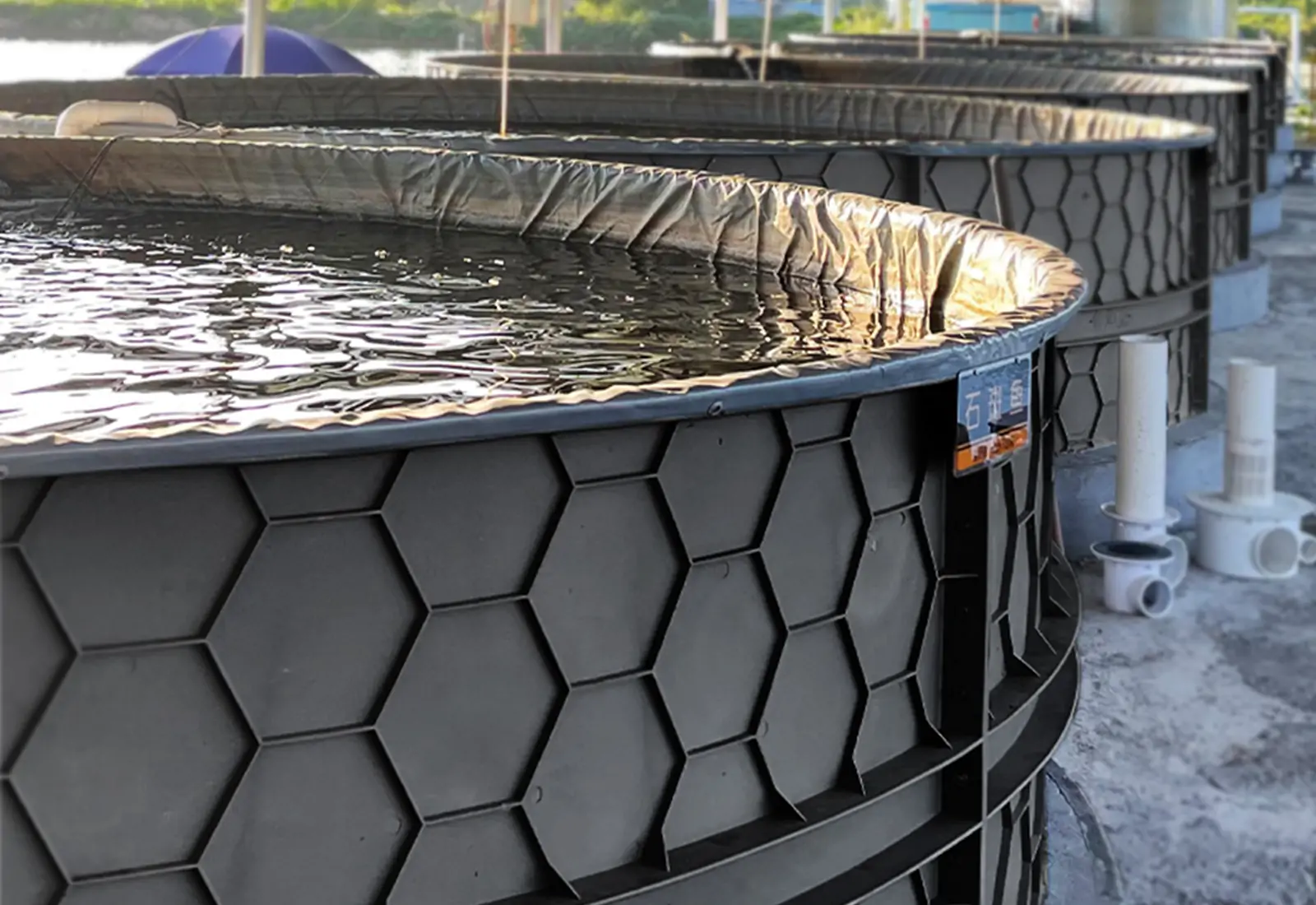
Honeycomb reinforcement changes that approach. We use honeycomb-reinforced PP structures to create modular tank walls. Each module features 75 mm reinforced edges and 20 mm honeycomb ribs, significantly improving the overall rigidity and stability of the tank compared with conventional PP tanks of the same thickness.
Our waterproofing methods have also evolved. Depending on practical requirements, we have developed solutions using fabric liners, PP liners, membrane laminates or no additional liner. Throughout this process, we have focused on improving the waterproofing structure and connection methods of the tank itself.
This design was not developed overnight. It has evolved through actual manufacturing and use.
03 | Why Pay for a Whole Screen When Only a Small Part Is Damaged?
Traditional continuous filter screens have one inconvenient feature: even minor local damage may require the replacement of a large section or the entire screen.
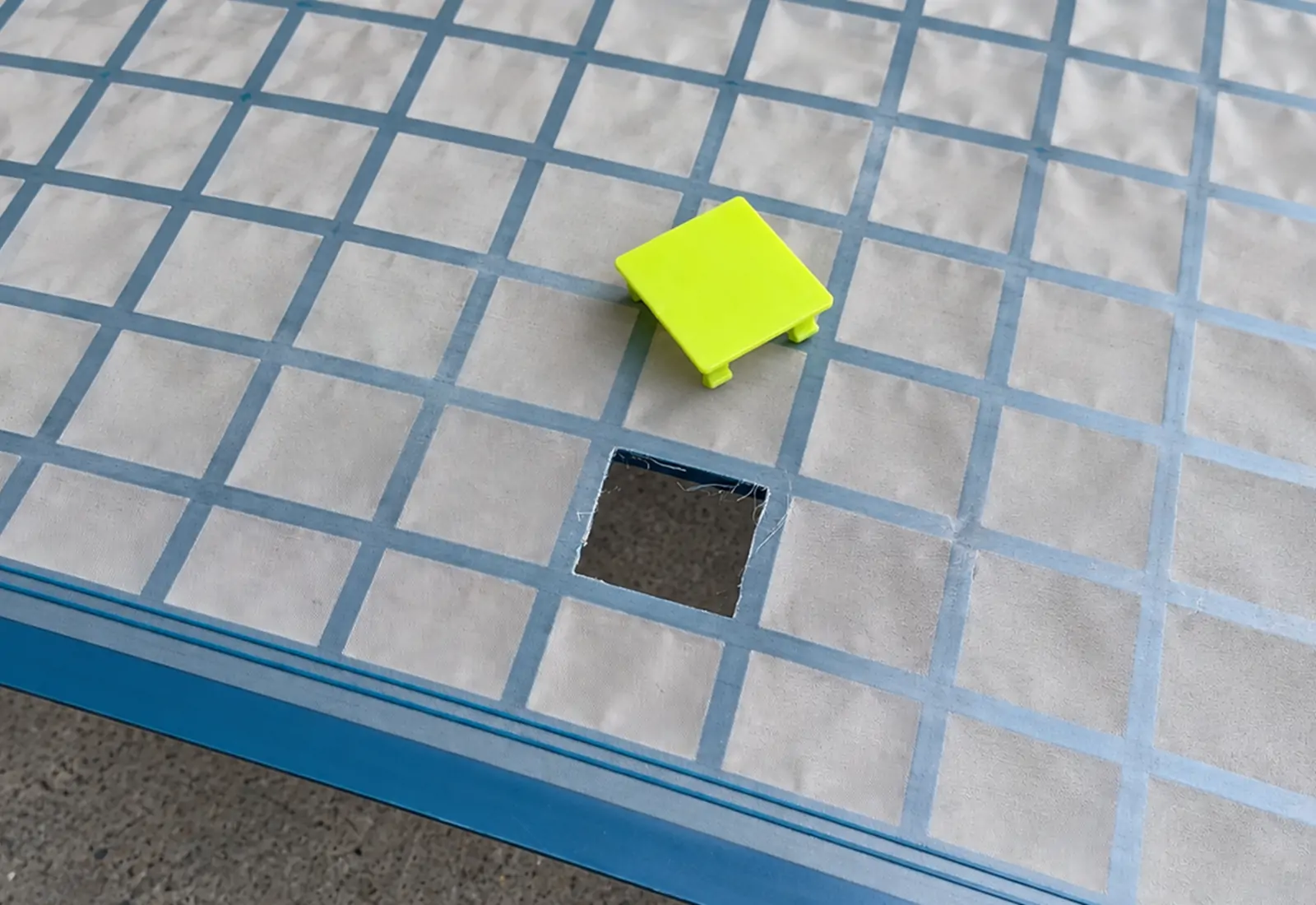
We designed our filter screens as independently removable modules. When one module is damaged, you can replace that section instead of replacing the entire screen.
For small areas of damage that are suitable for repair, we have also developed a local repair method.
Filter screens require regular inspection and maintenance. We want you to pay for the part that actually needs replacing, not an entire assembly every time.
04 | Standardized Parts, Easier Maintenance
Besides the filter screen, a drum filter contains many components that need to be manufactured and assembled.
We use dedicated molds and standardized components in our product designs, keeping individually manufactured and replaceable parts as modular as possible.
This is not just about making production easier. It is also about making future maintenance easier for you. When a component needs attention, you can deal with that specific part rather than dismantling an entire machine because of one small problem.

05 | Standardized Bottom Drains for Different Farming Needs
A bottom drain may look like a small component in a recirculating aquaculture system, but it plays an important role. Installation often involves coordinating the tank floor slope, drain outlet and connecting pipework.
In our early work, we encountered drainage structures built on site using concrete and metal components. This involved several construction stages, with site dimensions and installation accuracy requiring careful coordination.
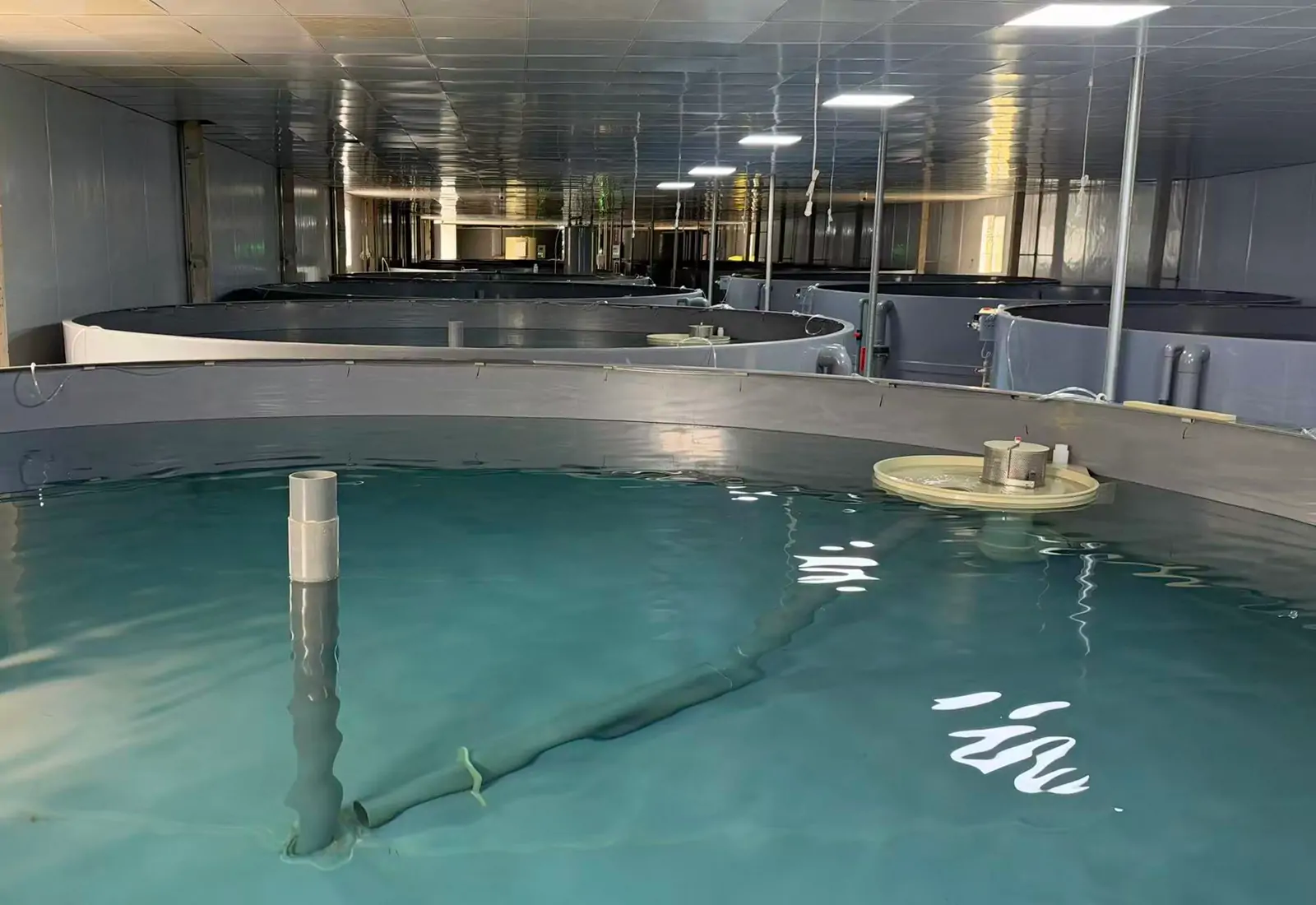
That is why we developed standardized bottom waste collection and drainage units, with different configurations for different farmed species and drainage requirements. Eel tanks, for example, require more complex bottom drainage structures than tanks used for other species.
By manufacturing key components in advance, we can reduce on-site fabrication, make installation easier and avoid unnecessary complications during future operation.
06 | Why Every Pipe Elbow Matters to Us
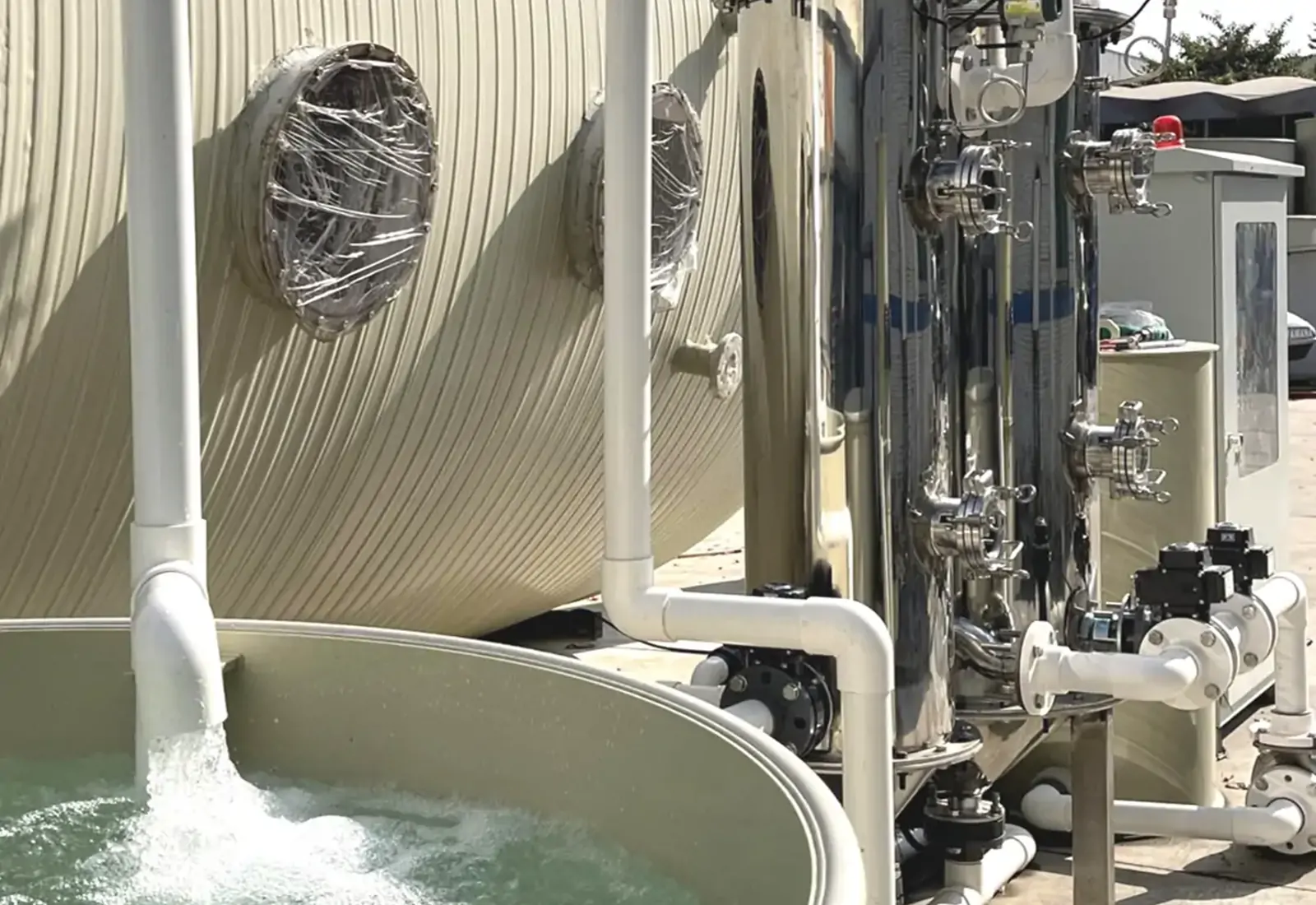
In a recirculating aquaculture system (RAS), water continuously passes through fish tanks, filtration equipment and other treatment stages.
Poor pipework design can force water to travel unnecessarily long distances, pass through too many elbows and undergo unnecessary pumping stages. Even when the equipment itself works properly, these design choices can increase hydraulic head loss and energy consumption.
Elbows and fittings mainly contribute to local head losses, while longer pipes also introduce friction losses along their length. In an aquaculture system that operates continuously, these losses need to be considered at the design stage. The energy loss caused by a single elbow may seem insignificant, but you might be surprised by how much unnecessary head loss can cost over time.
We usually start by arranging the tanks, filtration equipment and pipework according to the site conditions. We then determine suitable pipe diameters, flow paths and pumping arrangements.
The goal is not simply to use fewer fittings. It is to minimize unnecessary hydraulic losses while meeting flow, maintenance and water treatment requirements. After all, hydraulic losses translate into energy losses.

07 | Farming Needs Determine Equipment Configuration
Different fish species have different requirements for water quality, water flow, dissolved oxygen and temperature. Even when farming the same species, differences in feeding rates, stocking densities and production targets can change the water treatment capacity required.
That is why we do not want to give every customer the same equipment list.
When designing a freshwater tilapia farming system, for example, we evaluate the actual organic load and water treatment requirements before deciding whether a dedicated protein skimmer is necessary. We do not assume that every system needs one.
We start with your farming requirements. Only then do we determine which equipment is necessary, how much treatment capacity is needed and how the different pieces of equipment should work together.

08 | A Little Redundancy Goes a Long Way
For a fish farm, equipment failure is not just a repair expense. It can directly affect water circulation and water treatment.
For suitable projects, we consider using multiple pumps or drum filters to share the workload rather than relying on a single machine.
For example, when a system requires substantial filtration capacity, we may evaluate the use of two smaller drum filters. If one unit stops operating, the other may still maintain part of the treatment capacity.
The same principle applies to water pumps. However, the number of pumps, flow rate and head required for each unit must be calculated for the entire system. Motor power alone cannot simply be divided between multiple pumps.
When designing these configurations, we think about more than normal operating conditions. We also consider what happens when you need to service a machine or when one unit fails.

09 | We Are Still Growing
We are developing a new ultrafiltration equipment range designed to remove fine contaminants remaining in water after drum filtration or sand filtration. The aim is to meet the needs of aquatic environments and customers with more demanding water quality requirements.
It is an ongoing journey — growing alongside the aquaculture industry.
DESIGN IN PRACTICE
Designed Through Farming. Improved for Farming.
Fish tanks should be easy to install. Filter screens should be easy to maintain. And an entire system needs to be designed with long-term operation in mind.
These practical challenges guide our design decisions.

Our Design Team
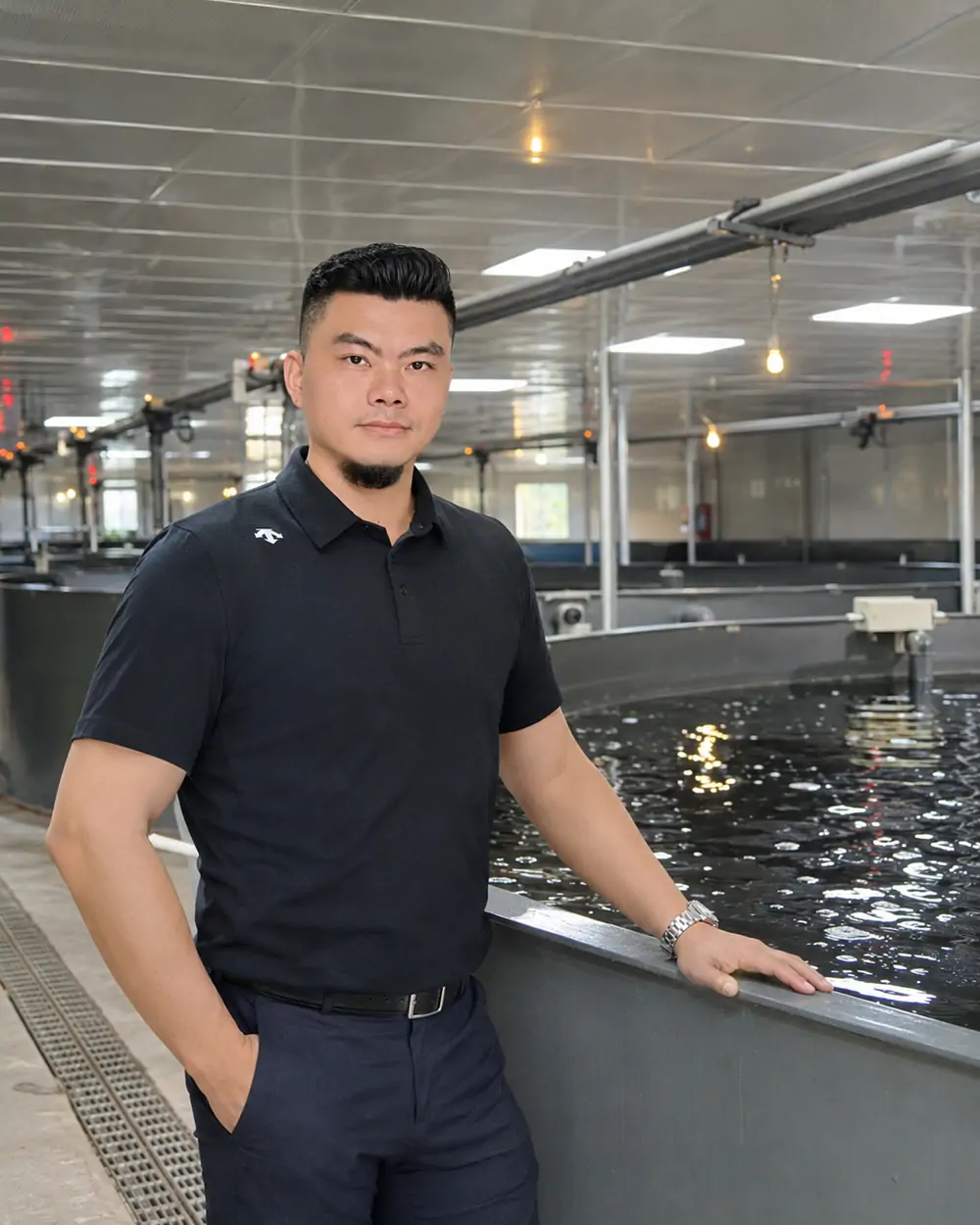
We gain experience on the fish farm and bring the problems we encounter back into product design. Tony leads product research, development and design at YUTANK, while our team continues to improve products around real operating needs.
A design philosophy from our founder, Tony
“We start with specific, practical problems and use them to drive continuous product improvement.”
SELECTED RAS PROJECTS
From Design to Real Fish Farms
Different species, sites and project requirements call for different system solutions. Explore some of YUTANK’s actual projects.

Zhangzhou · 4,900 m³ Largemouth Bass RAS
China · 80 fish tanks
View Project →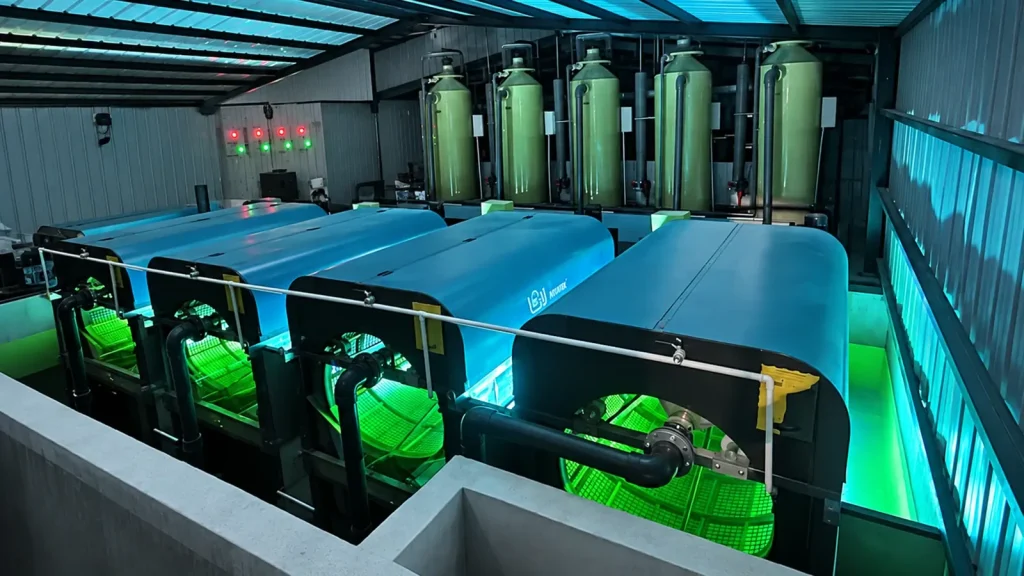
Riyadh · 2,250 m³ Tilapia RAS Retrofit
Saudi Arabia · 25 fish tanks
View Project →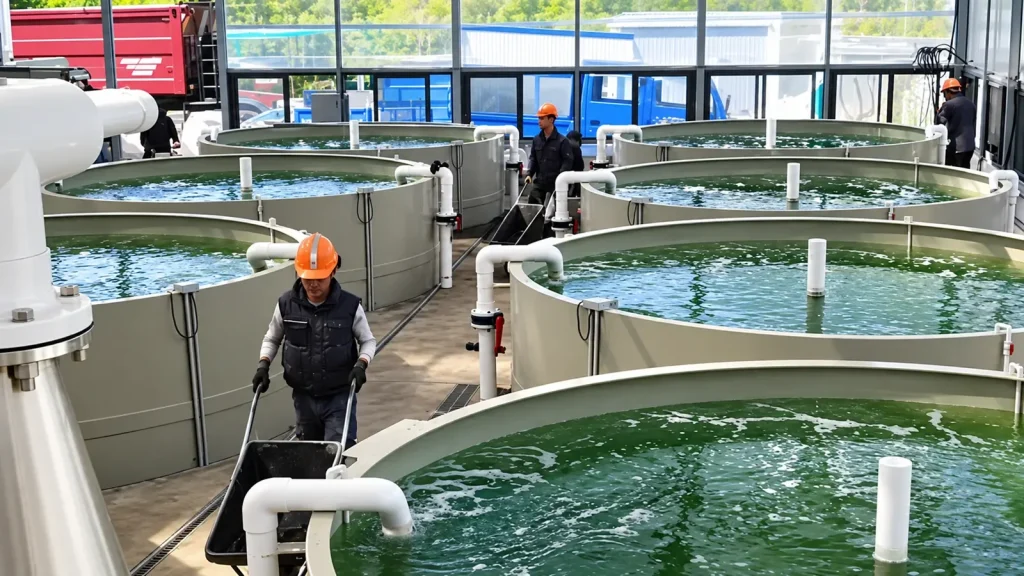
Japan · 240 m³ Eel RAS
Japan · 11 fish tanks
View Project →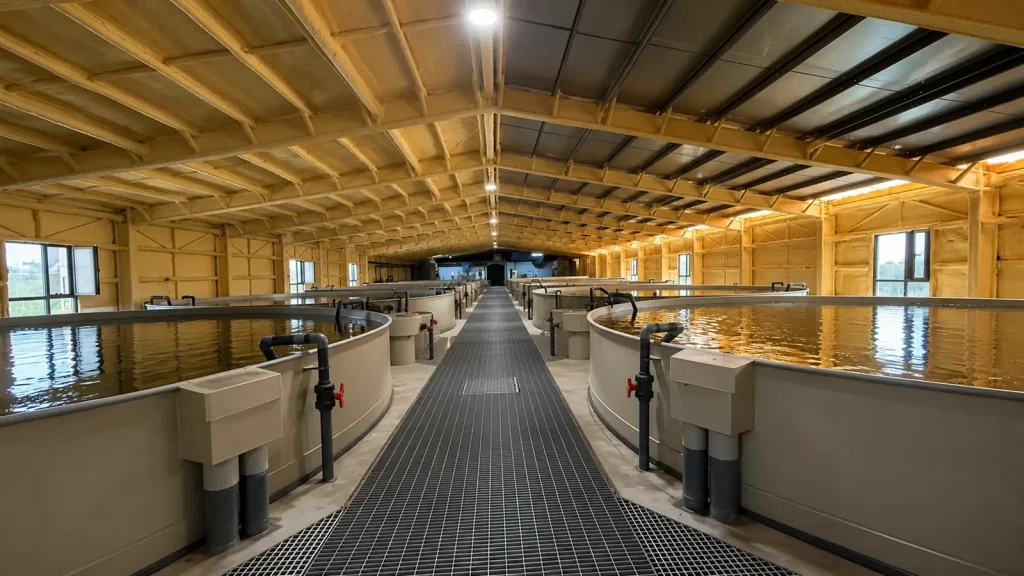
Korla · 1,300 m³ European Perch RAS
China · 20 fish tanks
View Project →