

4,900 m³ Largemouth Bass RAS Project
- Project Type
- Commercial RAS Project
- Water Type
- Freshwater
- Project Status
- Operational
- System Water Volume
- 4,900 m³
- Culture Tanks
- 80
- Culture Tank Size
- Ø8 m × 1.5 m; Ø6 m × 1.5 m
Project Overview
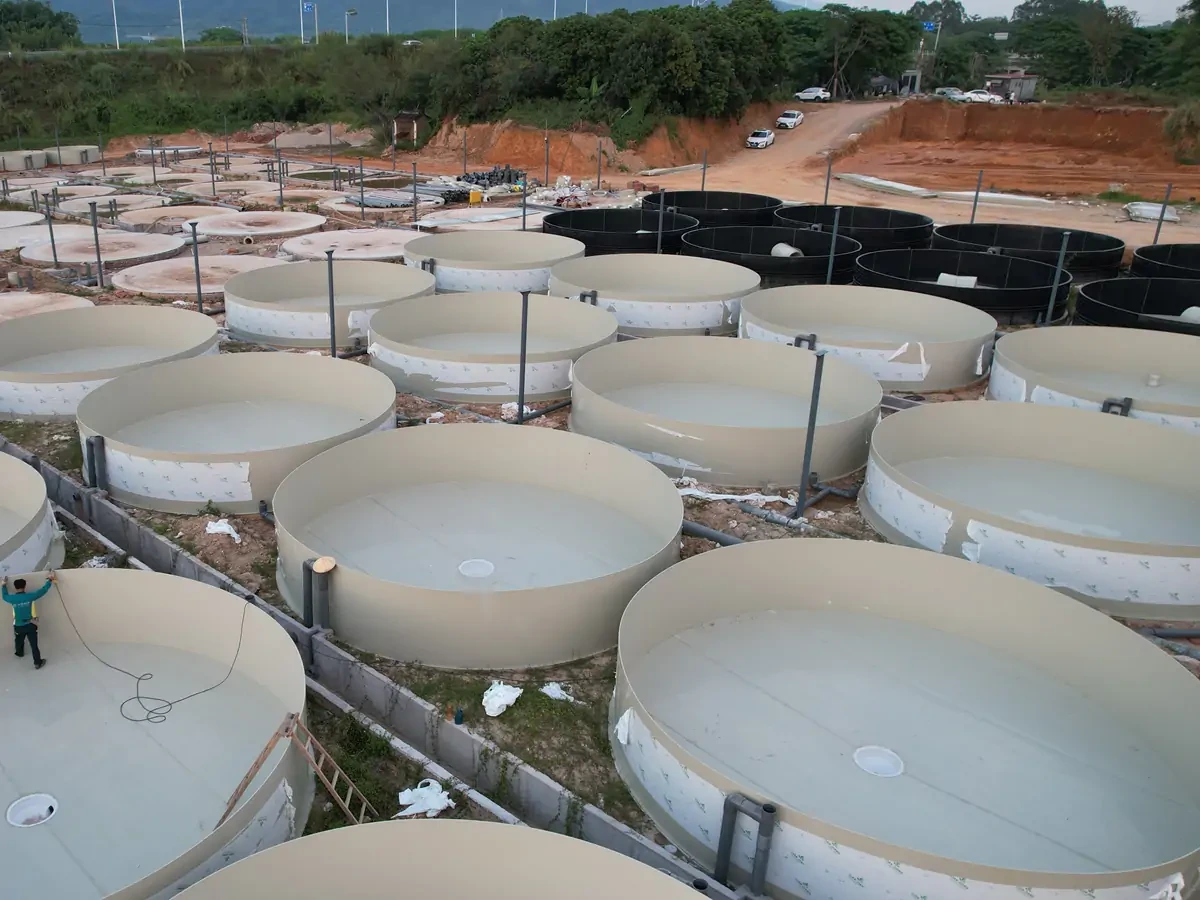
Located in Fujian, China, this commercial recirculating aquaculture project was launched in August 2024. The overall site covers approximately 100 mu, with a planned investment of RMB 30 million. The project is designed as an integrated aquaculture base combining indoor RAS production, biological purification and ecological planting.
The first phase includes a 15-mu intelligent recirculating aquaculture facility with 80 culture tanks and a total water volume of approximately 4,900 m³. The system consists of 12 nursery tanks measuring Ø6 m × 1.5 m, 20 grow-out tanks measuring Ø6 m × 1.5 m, and 48 grow-out tanks measuring Ø8 m × 1.5 m.
Mechanical filtration, biological treatment, temperature control, water-quality monitoring and ecological wastewater treatment are integrated into the system. More than 95% of the culture water can be continuously recirculated, supporting stable water quality, efficient production and reduced environmental discharge.
YUTANK’s scope covered system design, main equipment manufacturing, on-site installation and commissioning.
Related technical guide: What Is an Aquaculture Tank? Complete Guide. Another project for this species: 3,800 m³ Largemouth Bass RAS Project.
Explore RAS Solutions

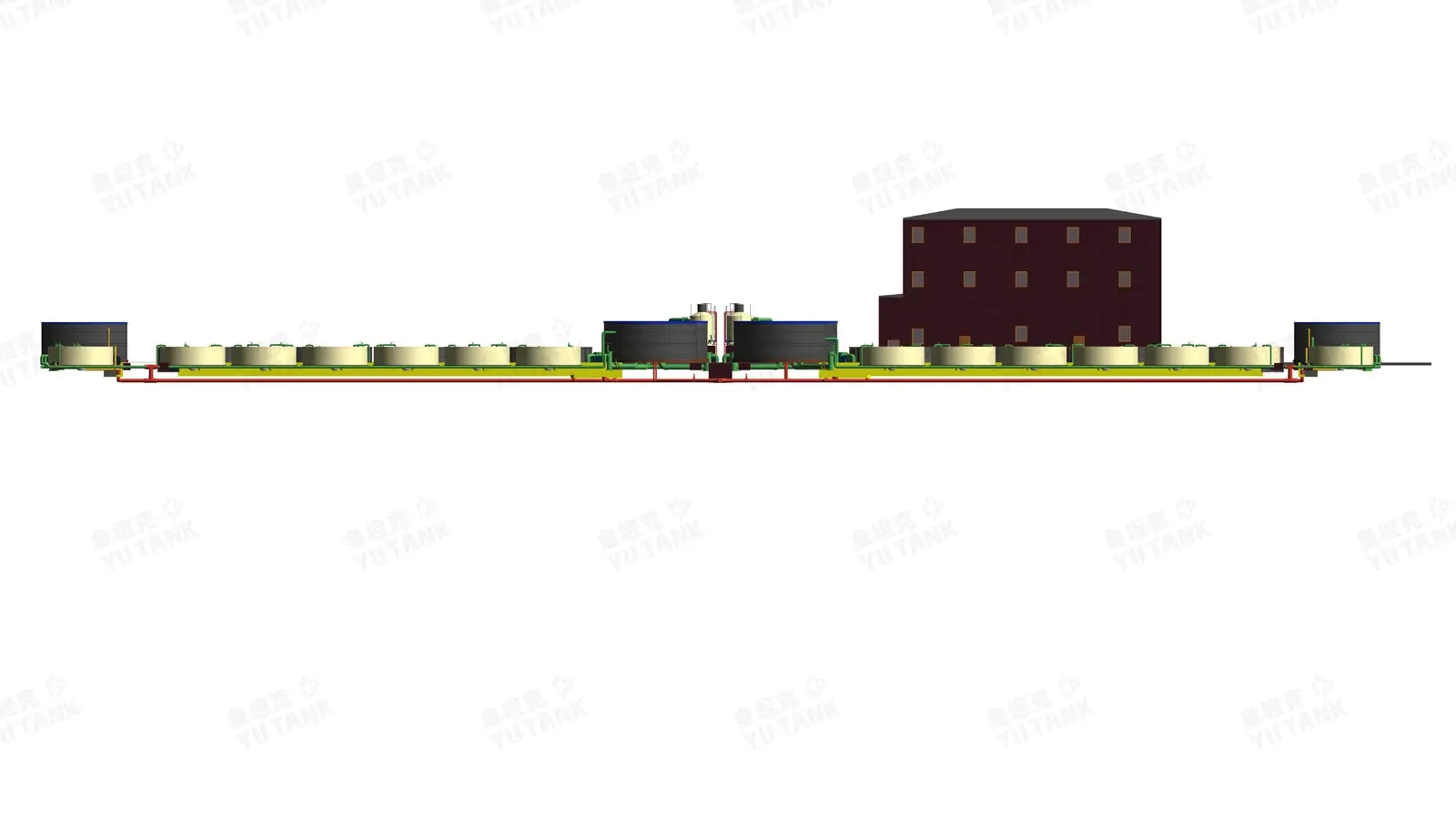
System Configuration
- Aquaculture TanksQuantity: 80
- Drum FiltersQuantity: 16
- Protein SkimmersQuantity: 12
- Degassing TowersQuantity: 10
- Oxygen ConesQuantity: 10
- Oxygen GeneratorsQuantity: 6
- Ozone GeneratorsQuantity: 6
- MBBR Biofilter TankQuantity: 16
- Biological Filter Media
- UV SterilizersQuantity: 12
- Roots BlowersQuantity: 16



Start Your RAS Project
Planning a Similar RAS Project?
Tell us what you plan to farm, your production goals, project location and current project stage. We can start by understanding your requirements before defining the appropriate RAS configuration.
You don't need a complete equipment list to get started.
- Species or application
- Production target or required capacity
- Project location and water source
- Current project stage
- Any known site or technical requirements