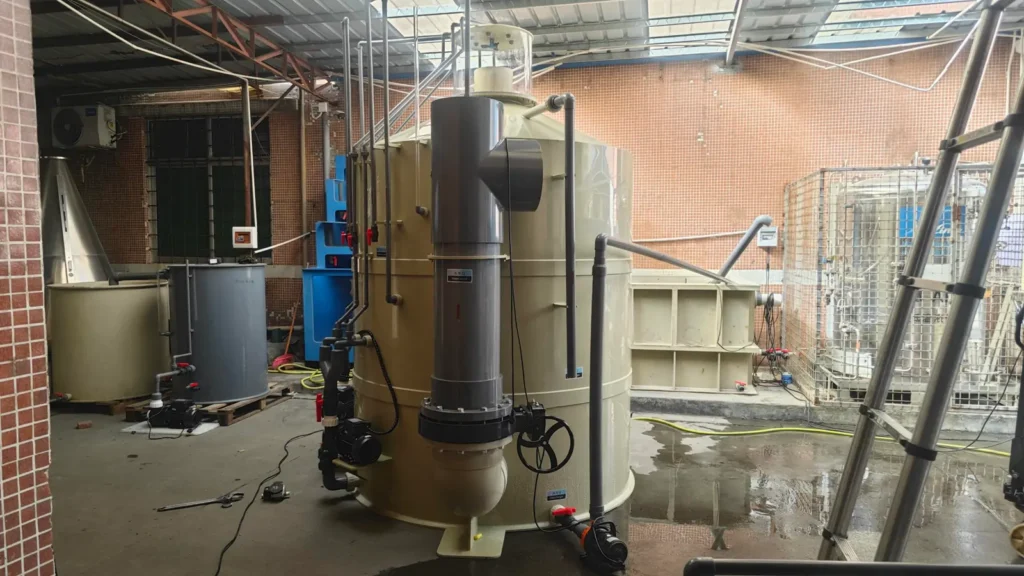
If your RAS already has a drum filter and biofilters, do you still need a protein skimmer? We wouldn't answer yes or no just by looking at the equipment list. A drum filter captures some of the solids. An MBBR or other biological treatment stage supports the conversion of nitrogen compounds. But the water may still carry colloids, very fine particles and certain organics that can be separated through foam. That's the part of the job a protein skimmer may help with: bubbles and foam collect some of those substances and carry them out of the water circuit.
It isn't a universal filter that every fish farm must install. Before discussing whether to add one, we'd look at the water-quality goal, whether the system is freshwater or saltwater, the actual organic load and the way the skimmer would work alongside mechanical and biological treatment. The question isn't just whether you can make foam. It's whether that foam is removing the substances you're trying to manage.
We've already talked about how foam fractionation works, the differences between freshwater and seawater, and how a skimmer differs from a drum filter. Here, let's look more closely at when protein skimming is worth considering in an RAS and where it fits in the water-treatment process.
Why Can Organics Remain After Drum Filtration?
Fish waste, uneaten feed and substances released by fish don't always stay in the form they started in. Water movement, aeration and time can break up some solids, while other organic substances are released from particles into the water. A drum filter can remove larger suspended solids, but that doesn't mean every colloid or dissolved organic compound has been removed.
The remaining material is a complex mixture. Not every organic compound is attracted to bubbles, and yellow-looking water doesn't automatically mean a protein skimmer is the right solution. We'd first want to understand the incoming water and what you're trying to improve.
If a lot of fish waste is still sitting at the bottom of the tanks, improving solids discharge is usually a more direct place to start. Otherwise, solids continue to break down at the front of the system while the skimmer is being asked to solve the entire organic-load problem at the back. Protein skimming doesn't replace good tank drainage.
What Does Protein Skimming Actually Remove?
A protein skimmer is also called a foam fractionator. The equipment introduces bubbles into the water. Some surface-active organic substances tend to gather at the air–water interface. As foam rises, is collected and discharged, some of those substances leave the system with it. Certain fine particles and colloids associated with the foam can also be carried out.
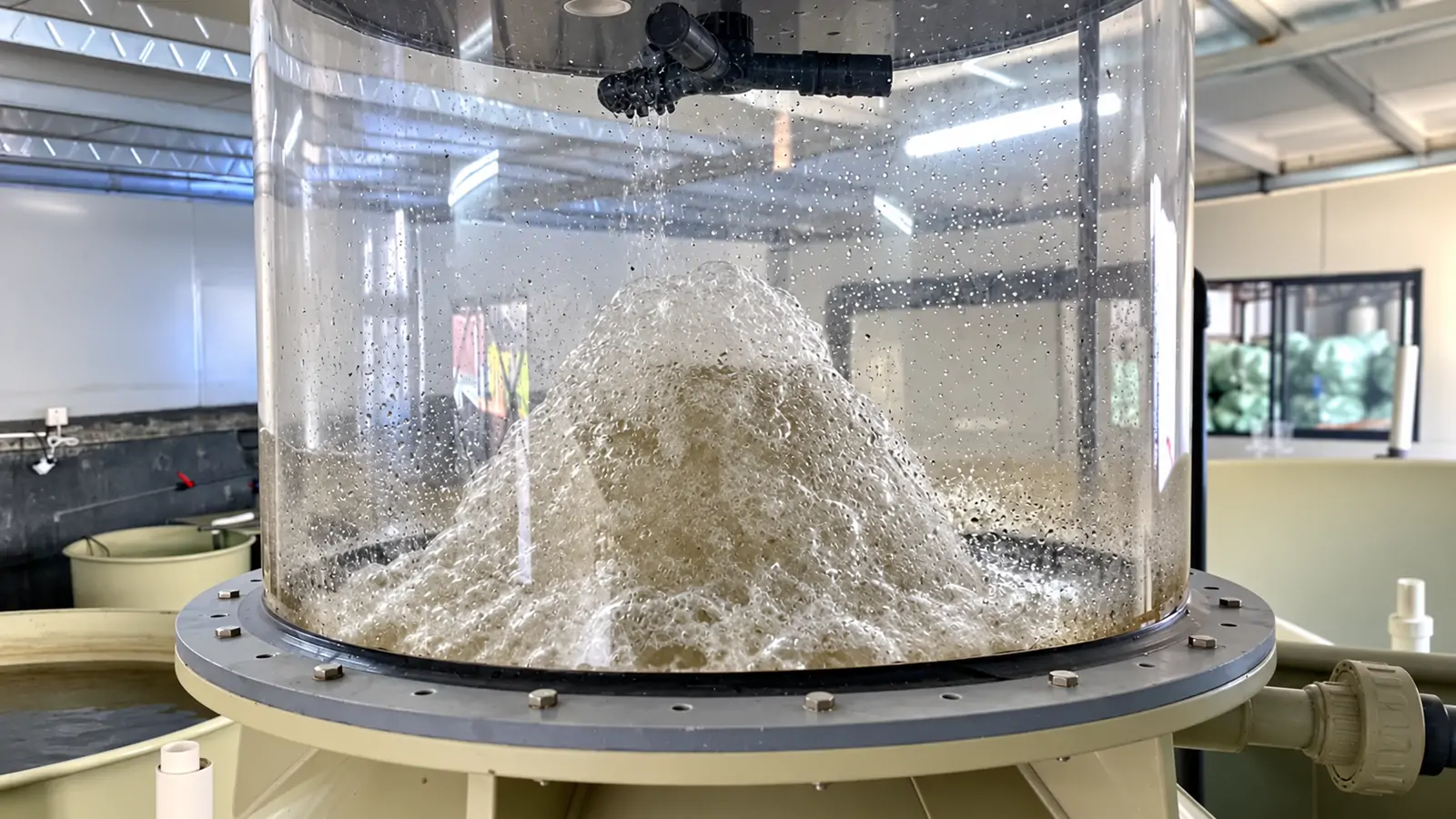
It's important to distinguish two things: foam production is something you can observe; removal of the target organics is the treatment result you actually want. Foam volume depends on salinity, water chemistry, bubble conditions and operation. Without comparable inlet/outlet measurements or evidence from the discharged foam liquid, you can't rank equipment by foam thickness alone.
And despite the name, a protein skimmer doesn't remove every protein or every dissolved organic compound. In freshwater systems especially, foam formation and stability can differ from seawater. It wouldn't be sensible to copy a result from one seawater setup directly into a freshwater fish farm.
Where Might a Protein Skimmer Sit in the RAS Treatment Train?
In one common arrangement, water first passes through mechanical solids removal. A skimmer then handles some of the remaining fine organic load, while biological filtration, gas management, oxygenation and any necessary disinfection address other water-quality needs. The logic is straightforward: remove the more readily separable solids early, then use other processes for pollutants the first stage doesn't handle.
But this is a way to understand the treatment sequence, not a layout drawing for every project. Side streams, the amount of water diverted, inlet and outlet levels, and any connections with ozone or other gas systems can change the arrangement. If ozone is used with a skimmer, its safety controls and the risks associated with residual ozone require separate attention. We wouldn't present that combination as the default.
| Treatment stage | Main job | What we shouldn't expect it to do alone |
|---|---|---|
| Tank waste discharge and mechanical filtration | Remove larger fish waste, uneaten feed and screen-retainable solids promptly | Remove all dissolved organics |
| Protein skimmer / foam fractionation | Discharge some foam-separable organics, colloids and fine particles | Replace all mechanical solids removal or nitrogen treatment |
| MBBR and other biofiltration stages | Support the biological conversion of ammonia, nitrite and related nitrogen compounds | Remove organics through foam or accomplish every form of nitrogen removal by itself |
| Other treatment stages | Handle degassing, oxygenation, disinfection and other defined needs | Solve every water-quality problem with one process |
So when you ask us whether a protein skimmer can replace a drum filter, we'd first ask what type of waste you're actually trying to remove. Both treat water, but they don't do the same job.
When Is Protein Skimming Worth a Closer Look?
Suppose your system is already removing most visible fish waste and uneaten feed, yet you still need better control of fine particles, colloids or organic substances in the water. In that situation, protein skimming may be worth evaluating. The original treatment arrangement may also need another look if feeding load, stocking conditions, salinity or the water-reuse target changes.
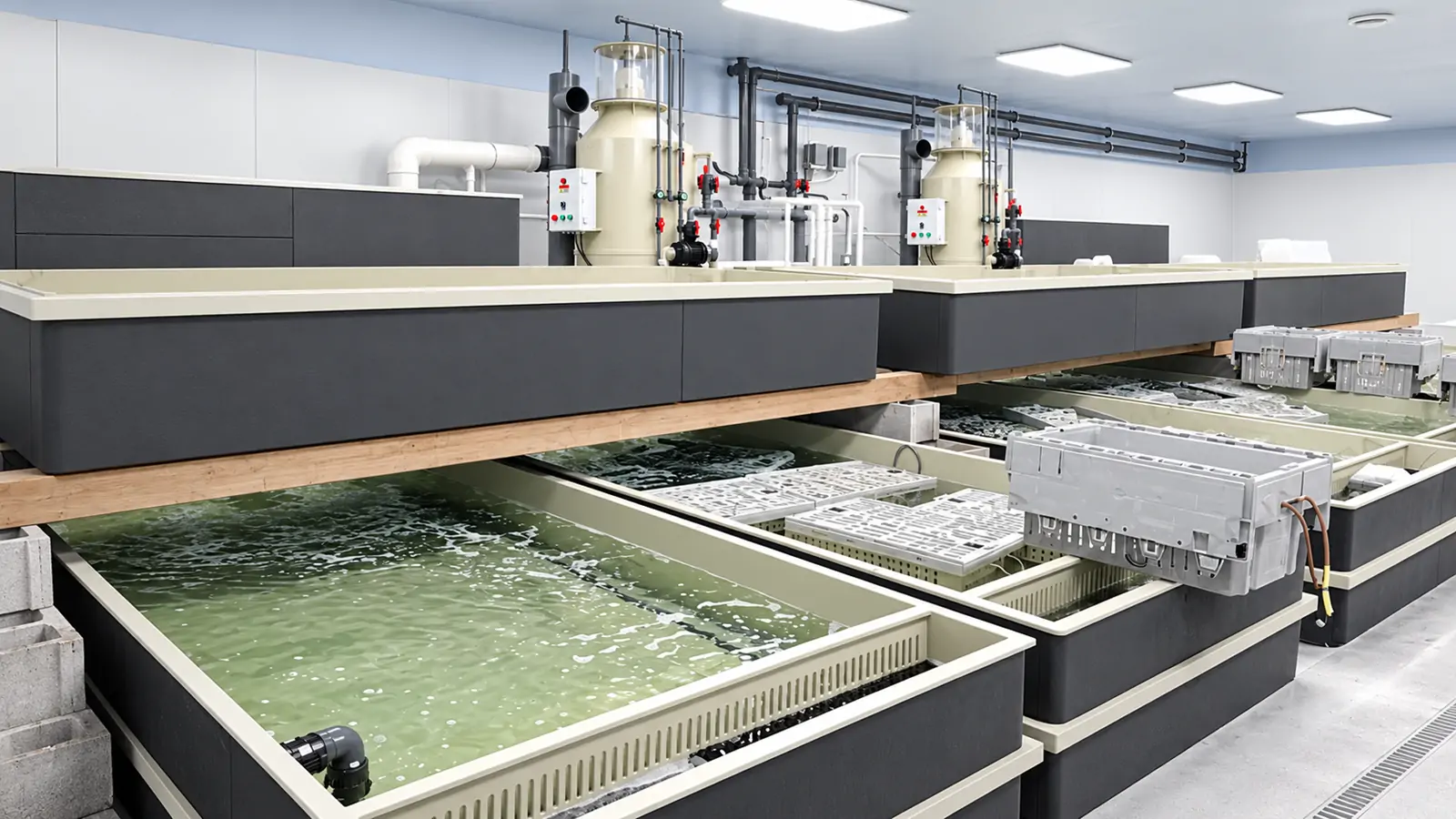
But the aim shouldn't be limited to “making the water look clearer.” Water can look transparent while still presenting other water-quality problems; visible foam doesn't necessarily mean a large amount of pollution is being removed. We'd rather consider water-quality trends, farming load, what actually leaves in the collected foam liquid, and the operating conditions before judging whether a skimmer is doing its intended job.
Freshwater projects need particular care. Foam fractionation can be used in freshwater, but performance depends on actual water chemistry, bubble and foam characteristics, and equipment operation. Without suitable evidence, we won't promise a fixed removal percentage, a daily quantity of organics removed, or a particular reduction in water exchange.
What Should You Watch While a Protein Skimmer Is Running?
Alongside normal inlet and outlet flow, gas supply and pump operation, check whether foam can be collected reliably, whether the collected liquid drains away, and whether the discharge pipe and collection container are functioning as intended.
That collected liquid is itself a waste stream that needs handling. If the foam collapses and drains back into the original water circuit, or the discharge becomes blocked, separation hasn't achieved its purpose. Changes in collection volume should be interpreted alongside recent feeding, salinity, water quality and operating conditions, rather than judging the system from the foam colour on a single day.
For abnormal vibration, electrical leakage or gas-supply faults, follow the relevant equipment instructions for safe shutdown and inspection. Where ozone is involved, the project's dedicated safety measures are essential; watching foam is not a substitute for gas-safety control.
Why Did We Use Both Drum Filters and Protein Skimmers in Our Huangyangquan RAS?
In our 3,800 m³ largemouth bass RAS project in Huangyangquan, Xinjiang, the operating freshwater system has 20 culture tanks. The treatment equipment includes four rotary drum filters, four protein skimmers and eight sets of MBBR biofilter tanks, alongside other treatment components.
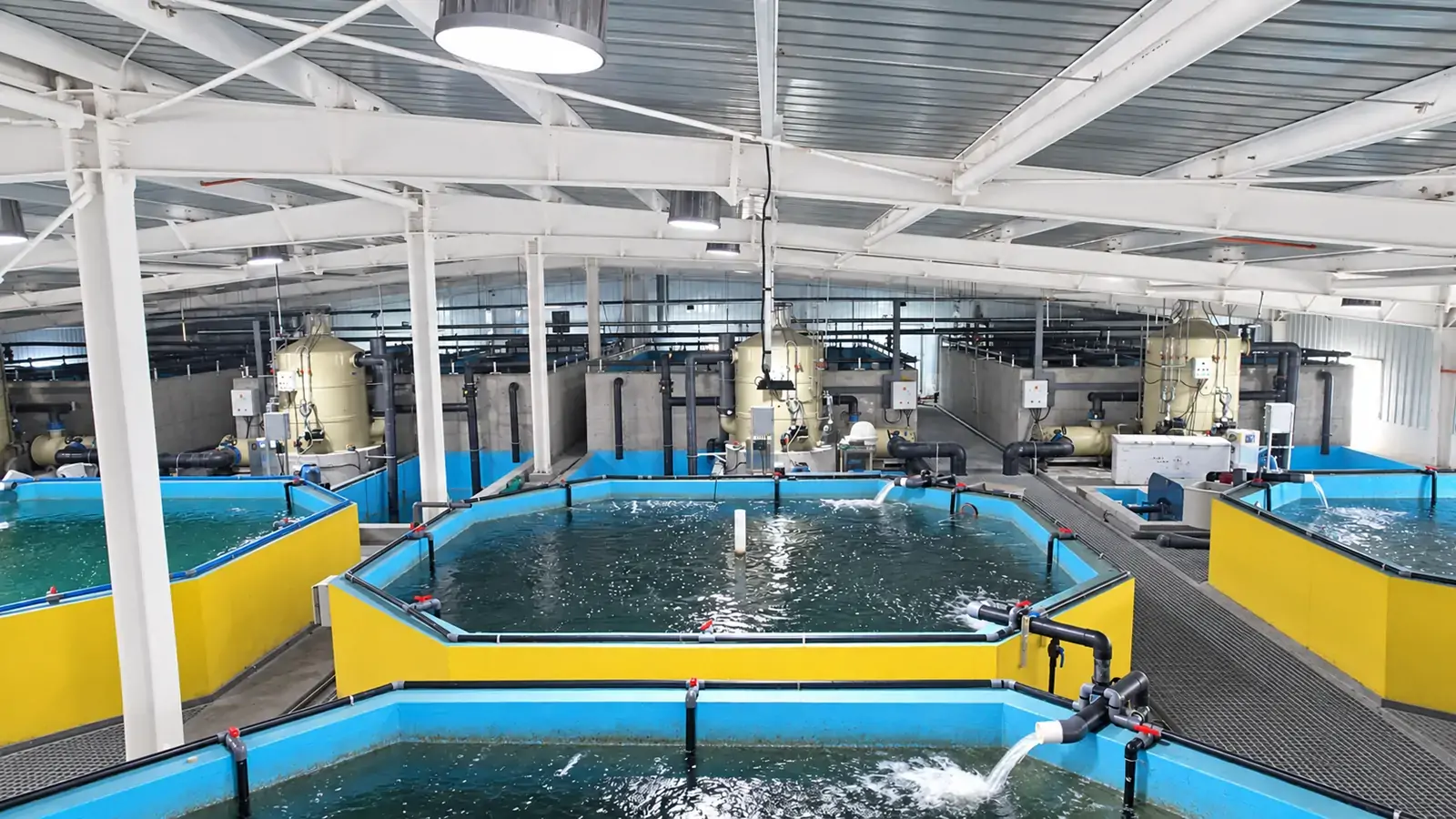
Why bring up this project? Because it's an easy way to see that drum filtration, protein skimming and biofiltration can each have a different role in a freshwater RAS. But “four skimmers for 3,800 m³” is not a sizing formula. We don't have a comparable inlet/outlet organic-removal dataset for those units, so we wouldn't claim a removal efficiency from the equipment count.
You can explore our Huangyangquan largemouth bass RAS project and the protein skimmer product and system information.
When Might a Protein Skimmer Not Be the First Thing to Add?
If your existing water-treatment arrangement is already meeting the water-quality goals reliably, you may not need another skimmer. And if the clear problem is sludge accumulating in the tanks, excessive ammonia load, or insufficient biological treatment, a skimmer may not be the first improvement we'd discuss.
We'd try to identify the actual treatment gap: are solids staying in the tanks? Are some organics continuing to accumulate? Or is the issue really ammonia, dissolved oxygen, CO₂ or another parameter? These problems point to different solutions. We can discuss the potential value of a skimmer during initial planning, but the final decision depends on your system conditions and treatment goals.
Frequently Asked Questions
Can I use a protein skimmer in a freshwater RAS?
It's an option worth evaluating. We've used protein skimmers in freshwater RAS projects, but foam behaviour differs between freshwater and seawater. Performance from one seawater system shouldn't simply be assumed for freshwater.
If I have a protein skimmer, can I do without a drum filter?
Not on that basis alone. A drum filter handles solids retained by its screen, while a skimmer targets some organics that can be separated through foam. They have different jobs.
Can a protein skimmer directly remove ammonia and nitrite?
A skimmer isn't a replacement for nitrifying biological filtration. Dissolved ammonia and nitrite still need appropriate monitoring and treatment processes.
Does more foam mean a better skimmer?
Not necessarily. Foam volume depends on salinity, surface-active substances, bubble conditions and operation. The actual discharged material and treatment objective matter more than foam height alone.
Does every RAS need a protein skimmer?
No single answer fits every system. The decision depends on species, water-quality goals, salinity, feeding and organic load, and what the existing treatment stages already achieve.
References
- YUTANK. Foam Fractionation in Aquaculture — how foam fractionation works and its limitations.
- YUTANK. Protein Skimmer vs. Drum Filter in RAS — different roles of mechanical filtration and foam fractionation.
- YUTANK. 3,800 m³ Largemouth Bass RAS Project, Huangyangquan — project status and equipment configuration.
- YUTANK. Aquaculture Protein Skimmers for RAS — product connections and system-integration context.
Talk to YUTANK About Organic Load in Your RAS
If you're considering adding a protein skimmer, start by telling us whether your system uses freshwater or seawater, what species you're raising, what filtration equipment is already installed, and which water-quality issue you'd most like to improve. We can work through what your current system removes and what may still be in the water, then discuss whether protein skimming has a useful role in the treatment process. Contact YUTANK.