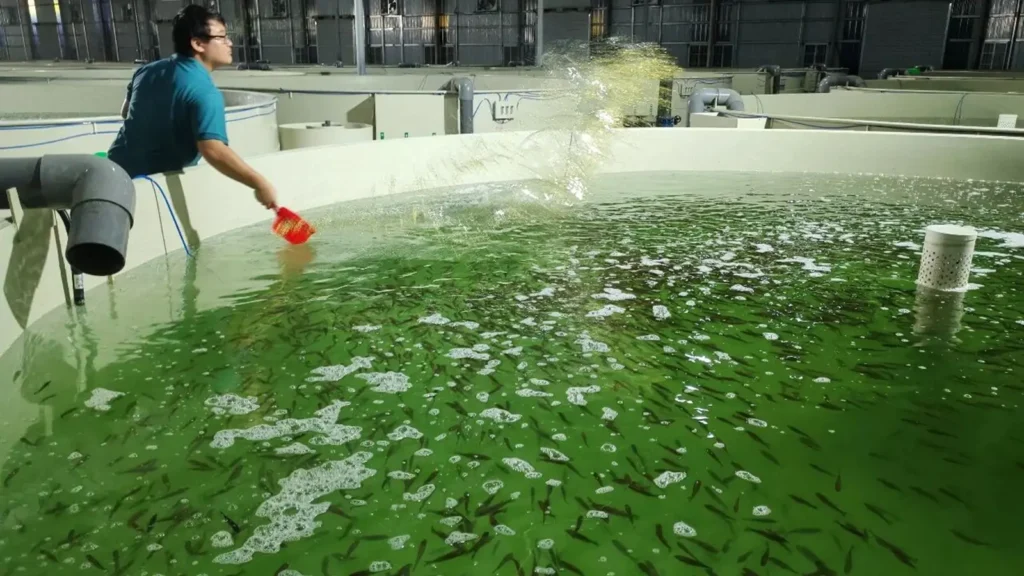
If you monitor water quality in your RAS and notice ammonia and nitrite becoming more stable while nitrate keeps climbing, don't assume straight away that your MBBR biofilter is failing. In a typical nitrification process, ammonia is converted first to nitrite and then to nitrate. The nitrogen has changed form, but that doesn't mean it has left the water.
When this comes up, we usually start with a few practical questions. Is your test reporting NO₃⁻ or NO₃⁻-N? Have feeding rates increased? How does the system add and discharge water? And, most importantly, where does the nitrogen actually leave the system? Looking at those details together tells us more than any one test result.
Let's work through these questions. Different species and system conditions call for different decisions, so we won't give every fish farm the same “safe nitrate number” or suggest copying an unverified denitrification recipe into a working RAS.
Ammonia, Nitrite and Nitrate Are Different Steps in the Nitrogen Cycle
Nitrogen from feed and fish metabolism enters the culture water. Some of it appears as ammonia nitrogen and related compounds. Under suitable conditions, nitrifying microorganisms in biological treatment progressively convert ammonia to nitrite and then to nitrate.
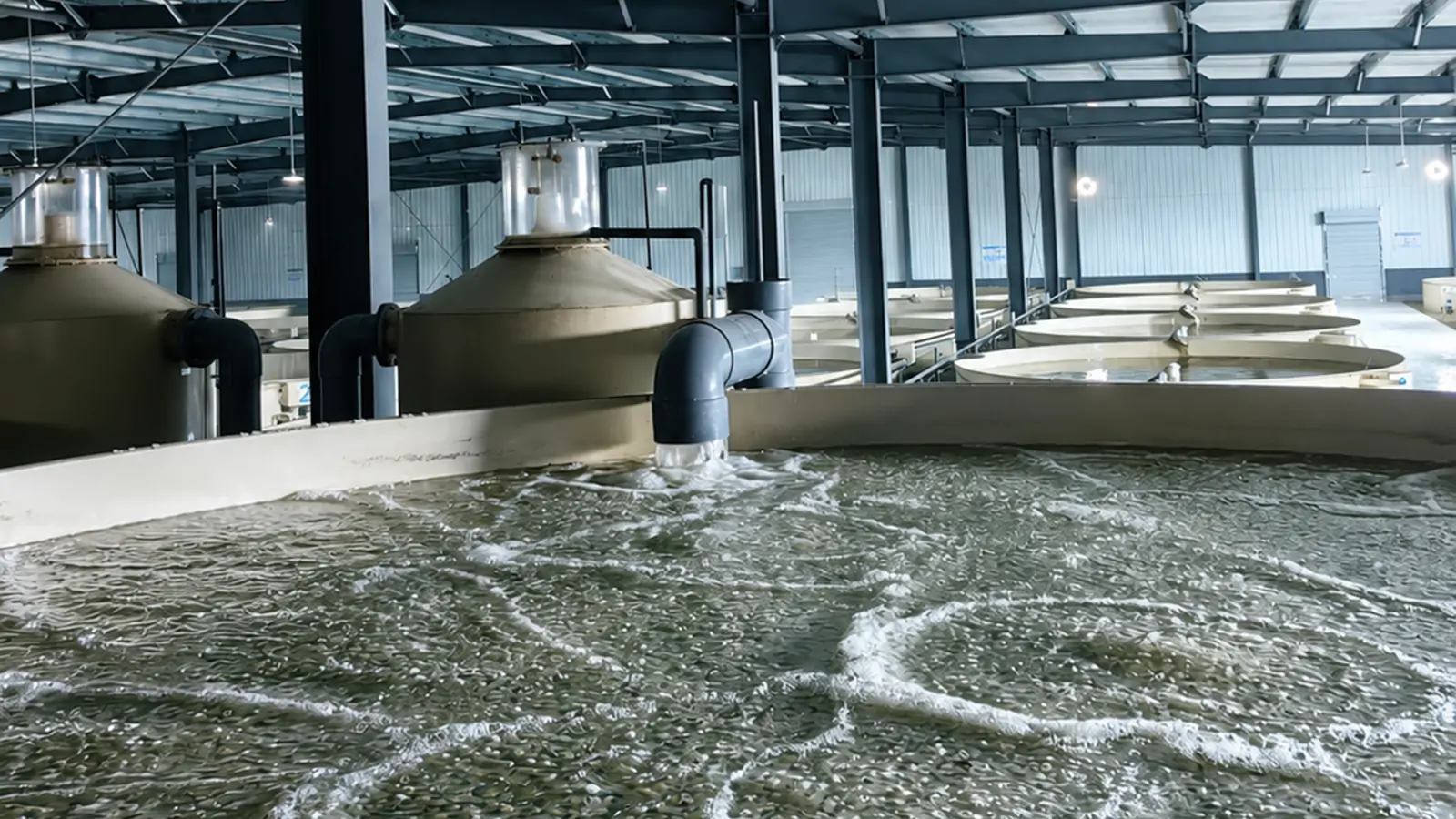
The distinction to remember is converting nitrogen versus removing nitrogen from the system. In a typical aerobic MBBR biofilter, nitrification changes the form of nitrogen; it does not, by itself, discharge that nitrogen from the treatment circuit. Nitrate generally has different toxicity characteristics and long-term management implications from ammonia and nitrite. Being a later product of nitrification does not mean it can accumulate without limit.
If you're dealing with a sudden rise in ammonia or nitrite, our RAS water-quality management guide is a useful starting point. Here we'll focus on why nitrate builds up and how it may eventually leave the water circuit.
Check the Units on the Test Report First
“Nitrate: 50 mg/L” isn't a complete statement on its own. One laboratory may report nitrate ion as NO₃⁻, while another reports nitrate nitrogen as NO₃⁻-N. They use different mass bases, so the same number does not represent the same amount of nitrate.
Suppose you compare two reports for the same system, one labelled NO₃⁻ and the other NO₃⁻-N. Without checking their methods and units, you might mistake a reporting difference for a sudden change in water quality. Test kits, instruments and laboratory methods can also have different ranges and sources of interference.
That's why we encourage you to record the date, sampling point, parameter, unit and test method along with the result. Keep only the number, and it becomes much harder to compare trends a few weeks later.
Why Can Nitrate Accumulate in a Low-Water-Exchange RAS?
An RAS reuses water repeatedly. That can reduce demand for new water, but it also means some dissolved substances are not automatically carried out with routine solids discharge. If feeding continues, fish continue releasing nitrogenous waste, and the system has insufficient nitrate-removal routes, nitrate can gradually build up.
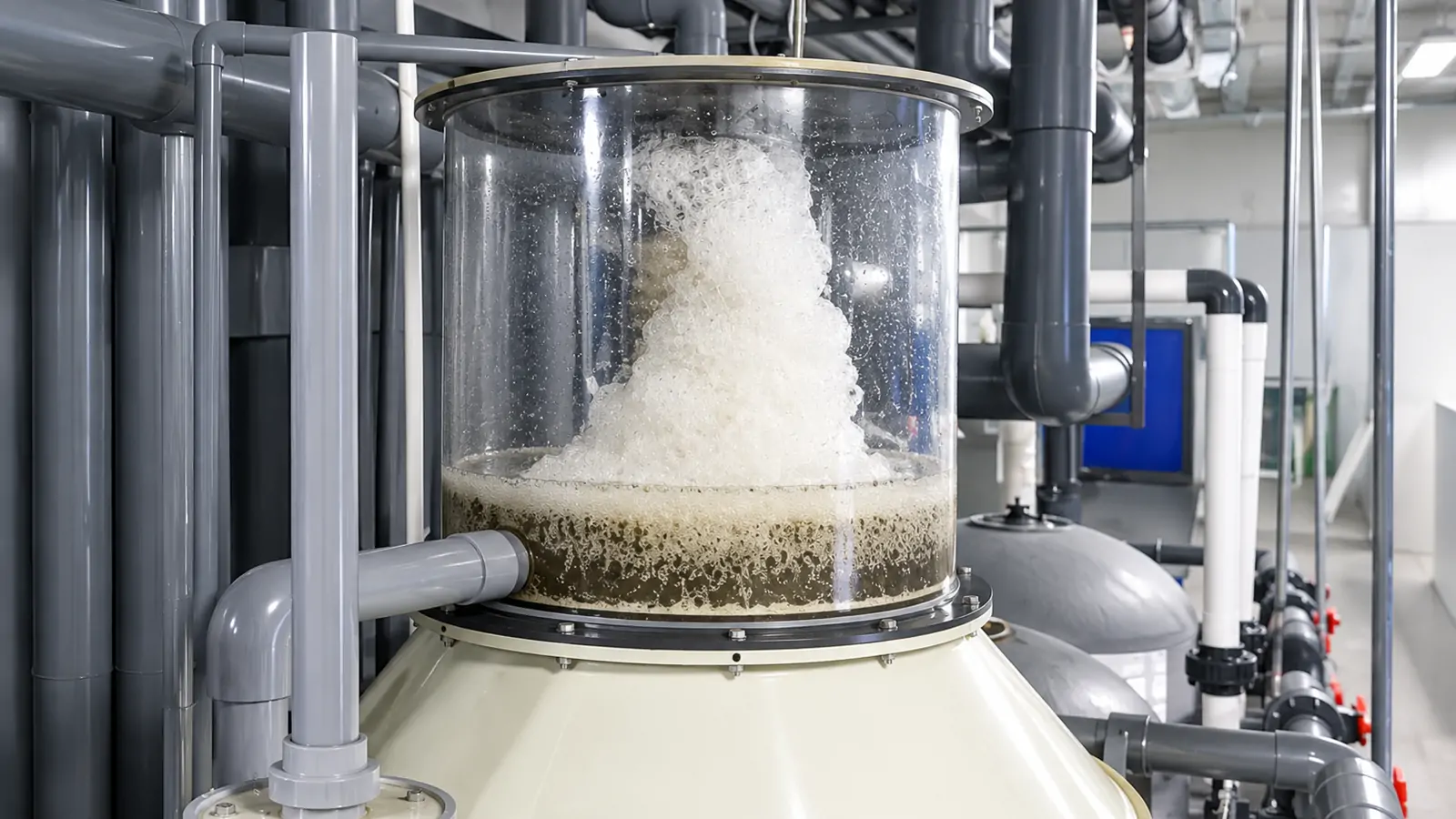
Drum filters remove some solids. Protein skimmers may remove certain foam-separable organic substances. Those processes have value, but they aren't the primary means of directly removing dissolved nitrate. Likewise, conventional MBBR nitrification shouldn't be described as “removing ammonia and completing nitrate removal” in one step.
Nitrate trends also depend on how much nitrate is already in the make-up water, water exchange, discharge pathways, feeding and culture load, and whether there is a dedicated nitrogen-removal process. So the fact that nitrate is rising doesn't, by itself, identify a faulty piece of equipment.
What Should You Check When the Reading Goes Up?
For day-to-day management, we put nitrate readings back alongside farming records instead of reaching for a universal limit. Species and life stages can differ in their sensitivity to longer-term exposure. Effluent discharge limits are a separate matter and depend on local requirements and receiving waters.
| What you're seeing | What we'd check first | Why it matters |
|---|---|---|
| Nitrate rising slowly over time | Feeding load, water exchange/make-up water and nitrogen-removal pathways | Helps assess whether nitrogen keeps entering without an adequate exit route |
| A sudden change between reports | NO₃⁻ versus NO₃⁻-N, sample location, test method and instrument | Helps rule out results that cannot be compared directly |
| Ammonia and nitrite falling while nitrate rises | Biofiltration stages and the time series | May be consistent with nitrification, but does not prove that is the only cause |
| A reading changes after water exchange | Nitrate in the new water, volume exchanged, mixing and sampling time | Make-up water isn't necessarily nitrate-free |
| Fish behaviour or feeding changes | Temperature, dissolved oxygen, pH, CO₂, ammonia, nitrite and other conditions | Not every fish-health or feeding issue is caused by nitrate |
If fish show clear signs of distress or a water-quality safety alarm is triggered, follow your farm's established emergency procedures. A routine checklist in an article should never delay action on a live problem.
How Can Nitrate Leave the System?
Water exchange or controlled discharge can remove some dissolved nitrate. But it increases demand for make-up water, and you'll need to consider the incoming water quality and effluent treatment requirements. In water-scarce areas or systems designed for high water reuse, simply increasing water exchange may not be the most practical long-term solution.
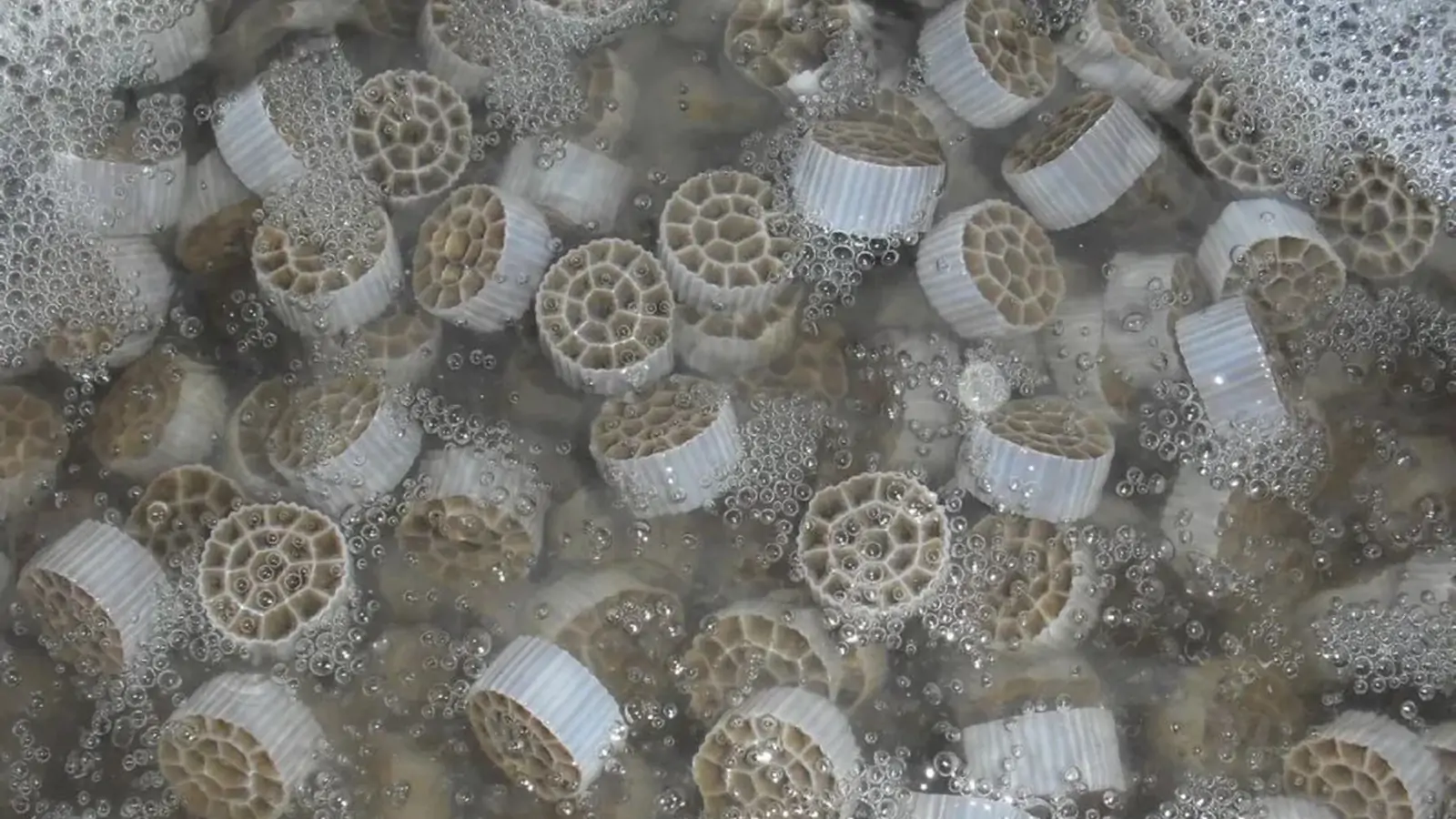
Dedicated denitrification uses an appropriate microbial process to convert nitrate further into gaseous nitrogen, which can then leave the water through a properly designed treatment stage. This is different from ordinary aerobic nitrification. Denitrification involves oxygen conditions, carbon availability, hydraulic retention and control of intermediate compounds. You can't assume that adding a valve to an existing MBBR creates a functioning denitrification system, and operating conditions shouldn't be changed without proper design and monitoring.
Plant uptake or other nitrogen-recovery approaches may also be useful in some integrated systems. The amount of nitrogen actually removed depends on plant growth, harvest and the overall design. Simply growing plants beside an RAS doesn't guarantee a solution to nitrate accumulation.
Researchers have also studied combinations such as woodchip denitrification and slow sand filtration in experimental RAS side streams. That work helps explain the need for a distinct nitrogen-removal route. It is not a ready-to-copy design for your fish tanks, and we aren't claiming that every YUTANK project uses such a process. We've included the study below if you'd like to explore the subject further.
When Does Nitrate Management Become a System-Design Question?
If a project aims to operate with low water exchange over a long period, and nitrate becomes a steadily accumulating parameter as feeding and biomass increase, the design or retrofit needs a clear answer to a basic question: where will the nitrogen leave the system? That decision relates to upstream solids discharge, MBBR nitrification, effluent handling and make-up water management.
We wouldn't recommend buying a particular unit on the strength of one elevated nitrate reading. We can begin with the species, a series of nitrogen test results, daily feed input, water exchange and the existing treatment arrangement. Specific allowable concentrations, nitrogen-removal capacity and denitrification design need further evaluation using reliable evidence and the conditions of your project.
You can see how different treatment stages fit together in our RAS solutions, and read more about day-to-day monitoring in our water-quality management guide.
Frequently Asked Questions
Does rising nitrate mean my MBBR biofilter has failed?
Not necessarily. Conventional nitrification produces nitrate as part of the process. Look at ammonia and nitrite trends together with water exchange and nitrate-removal pathways before drawing conclusions.
Are nitrate and nitrite the same thing?
No. They are different nitrogen compounds with different properties, toxicity and test labels. Reports also distinguish NO₃⁻ from NO₃⁻-N, and NO₂⁻ from NO₂⁻-N.
Can a drum filter or protein skimmer filter nitrate out of the water directly?
They are not the main processes used to remove dissolved nitrate directly. Drum filters handle screen-retainable particles; skimmers mainly handle certain foam-separable organics.
Can water exchange solve nitrate accumulation?
It can help control the concentration, but the effect depends on nitrate in the new water, the amount exchanged and the continuing nitrogen load. Water use and effluent management also matter.
Is there one safe nitrate level for every farmed fish species?
There isn't a single number that should be applied without context. Species, life stage, exposure duration, reporting unit, other water-quality conditions and applicable standards all need consideration.
References
- Water quality monitoring in recirculating aquaculture systems. Aquaculture, Fish and Fisheries (2023). DOI: 10.1002/aff2.102 — nitrogen monitoring, nitrate accumulation and removal pathways.
- Water quality in recirculating aquaculture system using woodchip denitrification and slow sand filtration. Environmental Science and Pollution Research (2020). Full text — research on an experimental nitrogen-removal side stream.
- Recent Developments in Recirculating Aquaculture Systems: A Review. Aquaculture Research (2024). DOI: 10.1155/are/6096671 — nitrification and denitrification as distinct processes.
- YUTANK. RAS Water Quality Management — practical monitoring and relationships among water-quality parameters.
Talk to YUTANK About Nitrate Management
If nitrate keeps rising in your RAS, you can start by gathering a few test results reported in the same units, along with your species, daily feeding, make-up water and current treatment layout. We can first discuss where nitrogen enters the system, how it's transformed and how it currently leaves. From there, we can determine whether a more detailed nitrogen-removal design assessment is needed. Contact YUTANK.