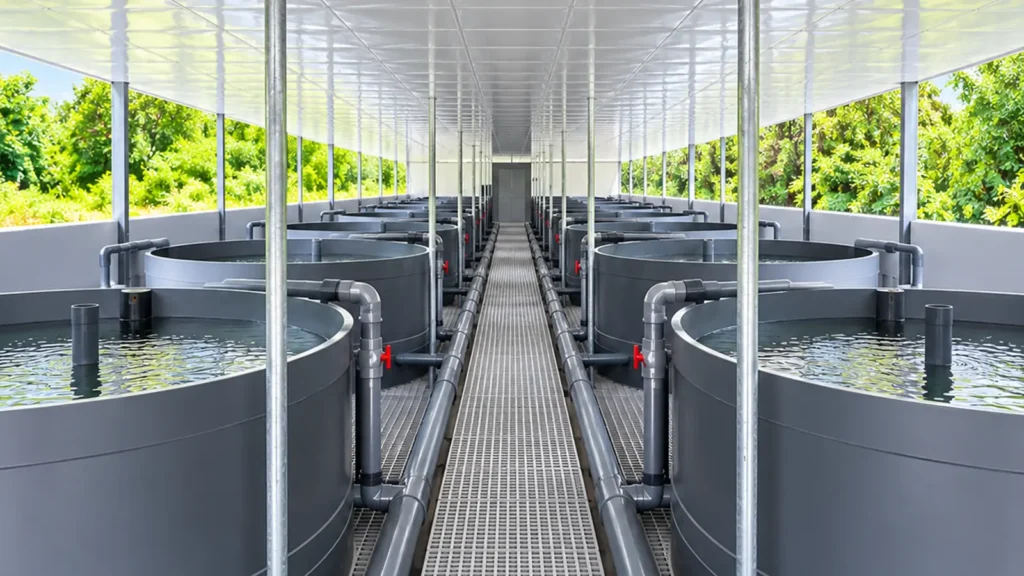
A recirculating aquaculture system (RAS) can be worth considering when your farm faces meaningful limits on available water, suitable sites, production control or biosecurity management. Treating and reusing culture water creates opportunities to manage those constraints, but greater control also brings more responsibility for equipment, energy and daily operations. RAS is not automatically the cheapest or most suitable production method for every farm.
Before deciding whether to investigate RAS further, it helps to look at two questions together: can the species be raised consistently under the proposed conditions, and can the operation sell its harvest at realistic prices while covering the resources needed to produce it? Species, feed conversion ratio (FCR), survival, water and electricity, backup arrangements, skilled staff, capital and waste handling all matter. These assumptions deserve attention before you commit to detailed engineering or an equipment package.
Why Do Fish Farms Consider RAS?
You may be planning a site near your customers but have limited access to water, complicated discharge conditions or insufficient space for a conventional production layout. Perhaps you need tighter control over certain rearing stages or a more predictable harvest schedule. In each case, the useful starting question is not “Is RAS advanced technology?” It is “Which constraint would RAS help this farm manage, and is that benefit worth the added complexity?”
Another farm may already have reliable pond or flow-through conditions and a species suited to them. Moving every stage of its production into a full RAS may provide little additional value. Likewise, a nursery or holding stage may have different requirements from a grow-out stage. An opportunity in one part of production is not automatically a reason to rebuild the entire farm.
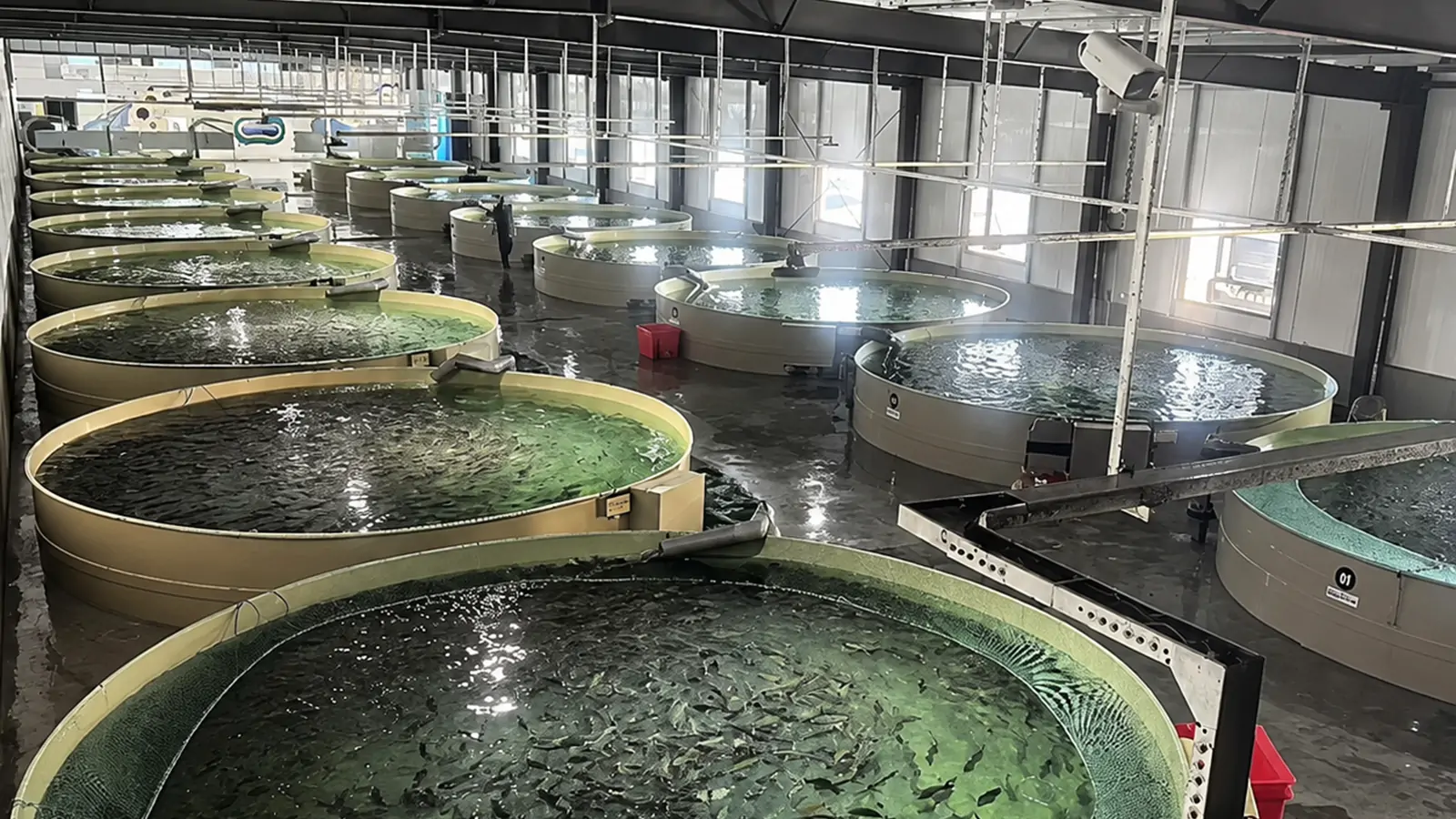
If you want the basic explanation of water recirculation and treatment first, see What Is a Recirculating Aquaculture System?. Here, we focus on the earlier business and operating decision: what must be true for the system's potential advantages to justify its demands?
The EU Aquaculture Assistance Mechanism describes water reuse, environmental control and concentrated waste collection as opportunities, while also noting high investment, energy use and the need for skilled management. Both sides belong in the same discussion.
Where Could RAS Offer Practical Advantages?
Less reliance on large volumes of replacement water
Because treated culture water circulates back through the production system, a farm may reduce its dependence on continuous large-volume water replacement. That can be relevant where water availability, intake permissions or discharge conditions limit the project.
However, reuse does not mean zero make-up water or zero discharge. Evaporation, cleaning, solids removal, necessary water exchange and accumulating constituents still need attention. Claims about water savings only make sense against a defined alternative production method, comparable output and actual operating conditions—not a universal percentage.
More opportunities to manage the rearing environment
RAS can provide more deliberate control of certain water-quality and production conditions through appropriate treatment, oxygen supply, gas management and monitoring. This may matter where incoming water varies or a particular production stage needs closer attention.
The advantage depends on matching system capacity to the actual fish and feeding load. It also requires someone to operate, maintain and interpret the equipment. A pump or sensor being online is not proof that fish conditions are suitable; fish behavior, feeding and measured water quality still have to be read together.
Concentrating certain waste streams for management
Suitable tank hydraulics and solids-removal equipment can collect a portion of feces and uneaten feed at defined points. This gives the farm a better opportunity to plan solids handling than if the waste remained dispersed throughout a water body.
The waste has not disappeared. Drum-filter backwash, sludge and other effluents still need an appropriate treatment and disposal route. Waste capture is an operational opportunity, not a blanket environmental-compliance claim.
Facility layout and biosecurity planning
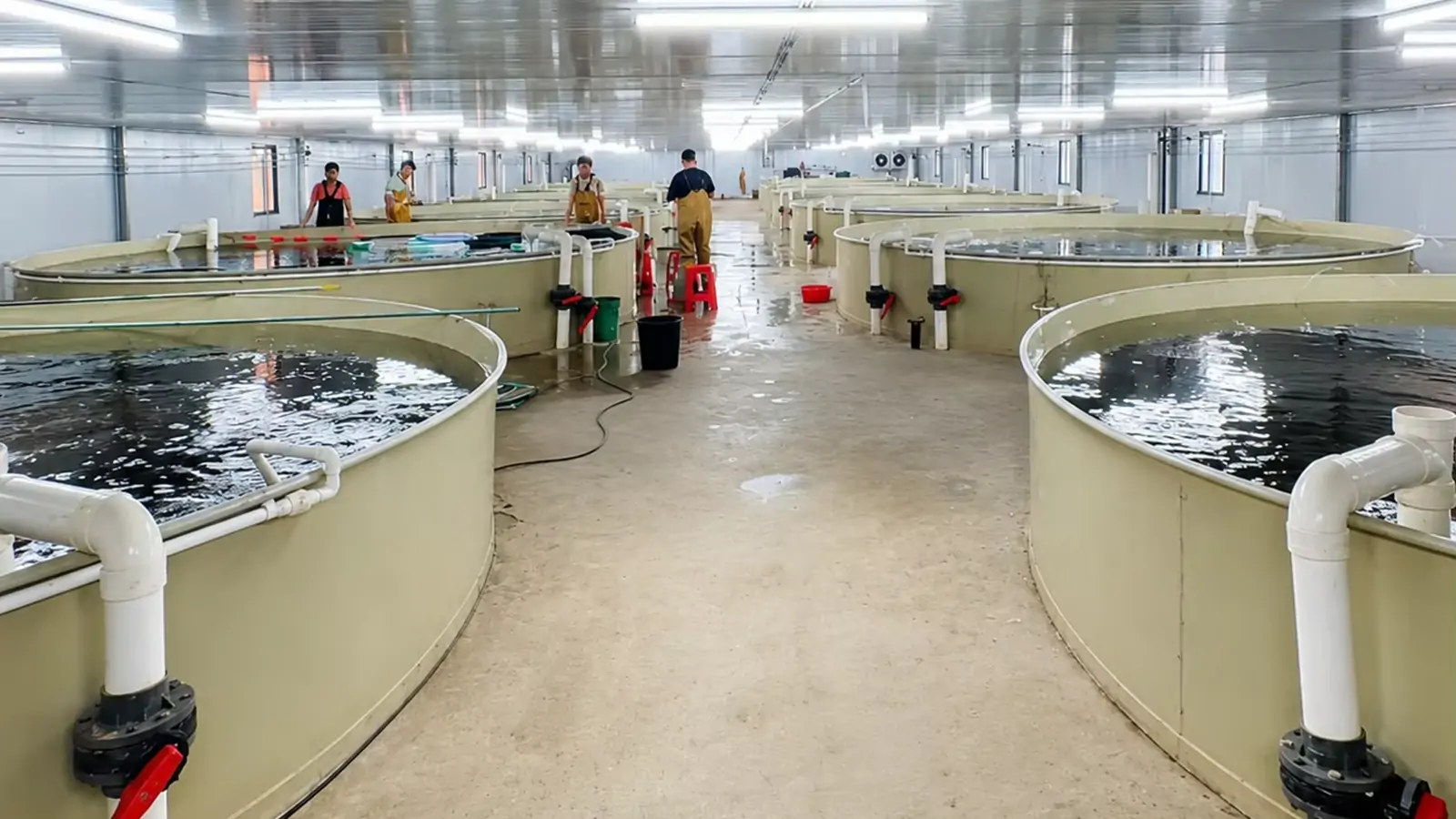
A land-based facility can be designed around specific entry controls, production zones, quarantine needs and husbandry routines. This may offer more ways to manage exposure pathways than a less contained production environment.
But biosecurity depends on fish and water sources, staff, tools, feed, sanitation and actual management. A roof and a recirculating loop do not prevent every disease introduction or spread. SRAC's guide to biosecurity in RAS explains why controlled facilities still require their own biosecurity plan.
What Does RAS Not Solve Automatically?
Higher stocking density is not free production capacity. More fish and feed raise oxygen demand, solids and nitrogen loads, and carbon dioxide production. Sustainable operating density depends on species, life stage, system capacity and management. A high density achieved briefly is not proof of repeatable saleable harvests.
Control does not remove the local climate. Depending on the species and site, heating, cooling, insulation and ventilation may still be necessary. RAS does not supply year-round temperature control at no cost.
More containment does not mean disease-free farming. Pathogens may enter with stock, water, personnel or equipment, while shared treatment loops can create their own risk pathways. Quarantine, hygiene, health observation and appropriate system zoning remain relevant.
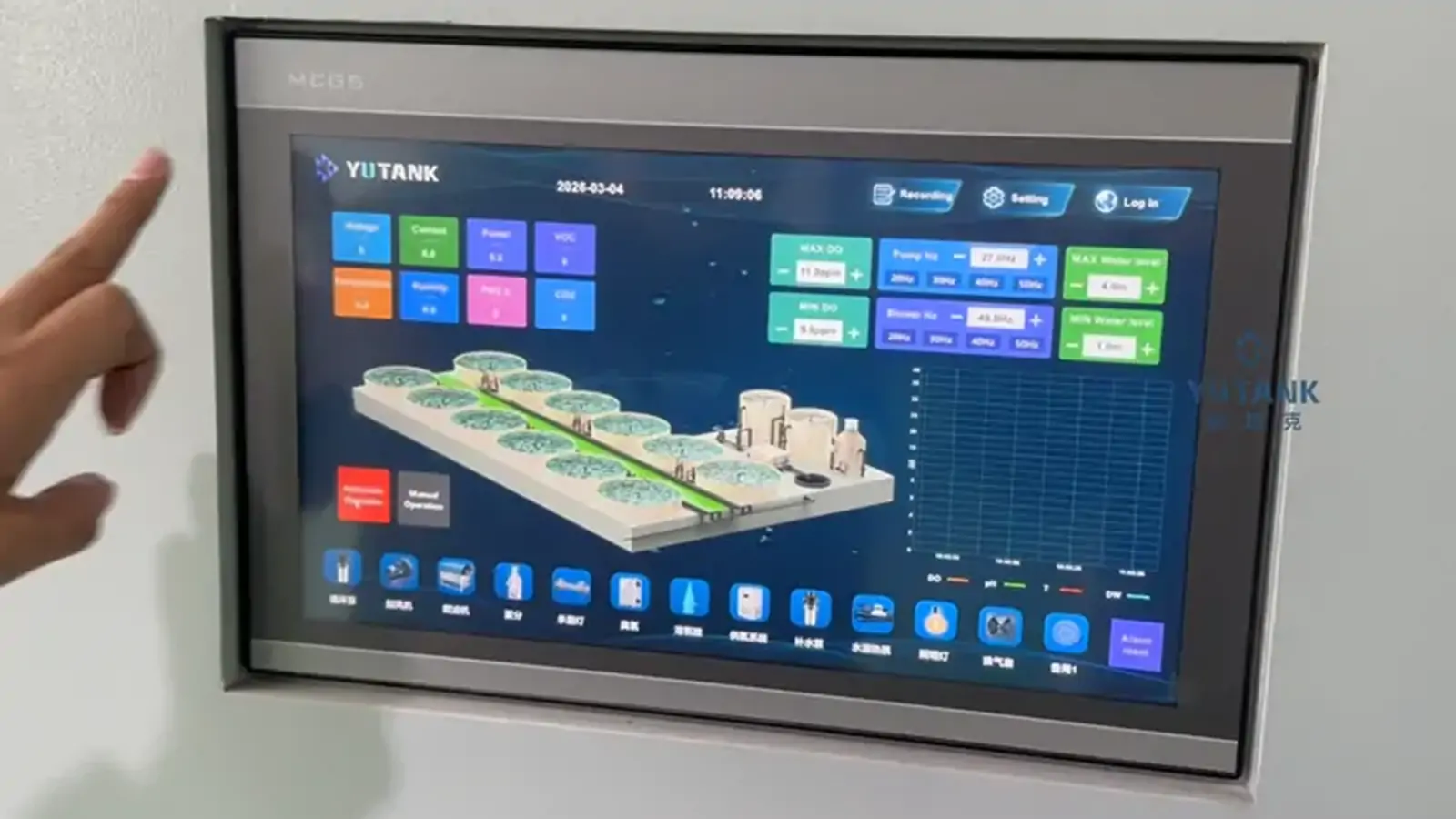
Installed equipment does not make an operation self-running. Monitoring and alarms may support decision-making when they are included in a project's actual specification, but they do not replace trained people or a clear response plan. Nor should a supplier imply that every RAS comes with the same automation capabilities.
The real question is whether the farm can maintain the conditions that allow each proposed benefit to materialize, not whether the benefits can be listed in a brochure.
What Makes a RAS Business Case Work Beyond Equipment and Energy?
A RAS can function technically and still struggle commercially. The product has to reach customers, the farm has to deliver sufficient saleable output, and the operating model has to support the capital invested. Looking only at the equipment cost or electricity bill misses that relationship.
Start with the customer and achievable selling price
A farm close to a population center may be able to explore different routes to market: live fish, fresh whole fish, regular delivery to foodservice, or other products suited to its species and local demand. This is a potential business advantage of location and scheduling, not an automatic premium created by the words “locally farmed” or “RAS.”
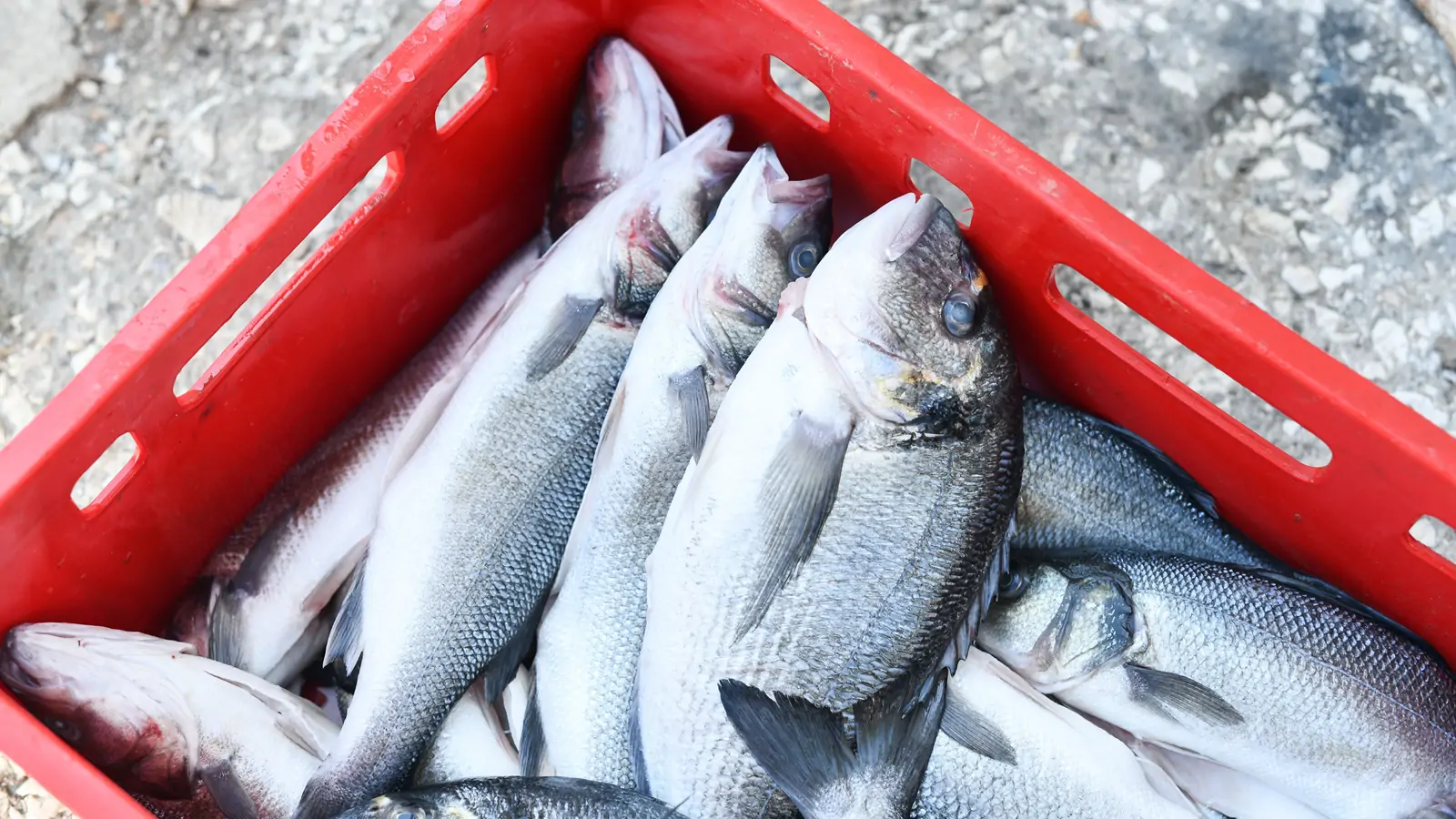
The Aquaculture Stewardship Council's 2026 consumer survey covered 14,795 seafood consumers in 14 countries. When asked what first comes to mind when buying seafood, 31% spontaneously mentioned freshness, ahead of price at 27%, while quality was mentioned by 15%. In ASC's 2024 survey, price had led at 36%. That shift suggests seafood businesses should consider the value customers perceive in freshness and quality, rather than treating price as the only purchasing consideration.
Sustainability matters, but in a more qualified way. Only 3% spontaneously mentioned it as a purchase consideration, rising to 10% when prompted. When two products were otherwise equal, 78% said they would prefer one that was less harmful to people and the environment. For sustainability information, 21% identified independent certification as trustworthy, compared with 11% each for retailers and seafood brands. Credible production information may therefore reinforce a product's value proposition; operating a RAS does not in itself mean the fish is certified.
For a land-based RAS near urban buyers, the practical questions are how quickly fish can move from harvest to customer, how freshness or live-fish quality is maintained, whether supply is reliable, and what restaurants or retailers will actually buy. These survey results are self-reported consumer preferences, not a test of willingness to pay more for RAS-grown fish in a particular market. A sound business case still needs actual buyers, grades, volumes, distribution requirements and achievable prices; proximity alone does not guarantee a premium or higher net profit.
Being near a major market may also increase costs for land, buildings, energy or labor. Those differences must be weighed against any verified selling advantage.
FCR, survival and actual harvest volume belong in the same model
Feed conversion ratio (FCR) helps relate feed input to biomass gain. It is influenced by species, feed, life stage, fish health and management. Using RAS does not guarantee a lower FCR.
For commercial evaluation, consider feed consumed, survival, size distribution, time to market, harvest timing and the quantity that can actually be sold. A projected number of kilograms produced is not the same as contracted or realized sales. Comparing electricity consumption alone can obscure weaknesses elsewhere in the production plan.
Also distinguish maximum standing biomass from repeatable harvested biomass. Carole Engle's 2023 discussion of RAS economics emphasizes effective use of invested tank and filtration capital, along with labor and management efficiency. A one-time high-density result does not by itself demonstrate that productivity.
Test the assumptions, not just the optimistic scenario
An early feasibility review can use a conservative, base and upside case for the main variables. What if realized selling prices are below expectations? What if harvests take longer, operating costs change or saleable output is lower than planned? Which assumptions would materially alter the investment decision?
You do not need a universal payback figure to ask these questions. You do need a realistic basis for what is being compared. The Agricultural Marketing Resource Center's RAS overview likewise stresses the relationship among species biology, technology, management and marketing. A farm's specific figures require a separate, evidence-based feasibility analysis.
Which Engineering and Operating Challenges Matter Most?
Ongoing resources extend beyond the equipment quotation
Circulation, aeration or oxygenation, temperature management, monitoring, preventive maintenance, buildings and site services can all affect operating requirements. Their relative importance changes with species, system intensity and local conditions. More equipment can also mean more spares, maintenance access and staff training.
An overview of commercial RAS equipment can clarify what different modules are intended to do. It should not be treated as a fixed shopping list or a validated equipment sequence for every farm.
Critical failures need a response plan, not just a spare-part list
A failure involving power, water circulation, aeration or oxygen supply may quickly affect fish. The relevant questions include which functions are critical, how abnormal conditions are detected, who receives alarms, what backup arrangements are appropriate and how staff will respond under the site's emergency plan.
UF/IFAS guidance on RAS planning and management identifies equipment redundancy, maintenance, operator competence and emergency procedures as design-stage concerns. It does not supply one backup capacity or response time suitable for all commercial farms.
Waste handling and building conditions remain real obligations
Capturing solids is not the same as safely disposing of them. Sludge, filter backwash and necessary discharge streams need defined handling arrangements under applicable local requirements. Building humidity, corrosion, drainage, ventilation and safe maintenance access also affect how the facility works in practice.
None of these issues rules out RAS. They are part of the system the farm is agreeing to operate and finance.
How Would Day-to-Day Farm Management Change?
RAS brings water treatment and fish husbandry into closer operational contact. Routine work involves more than checking whether individual pieces of equipment are running: the team needs to connect fish behavior and feeding with water-quality trends, treatment-system status and recent operating changes.
For example, a dissolved oxygen or ammonia reading without a measurement location, time, feed context or equipment status may tell you less than expected. Good records help operators recognize what is changing and which system conditions need attention. Our guide to RAS water quality monitoring covers parameter groups, sampling context and how to make records useful for decisions.
Daily management may also include inspecting filters and pipework, checking essential equipment, coordinating maintenance, handing over alarms and training new staff. Serious fish distress or a critical alarm calls for the farm's established emergency response immediately; it is not a routine checklist exercise.
A system may be technologically sophisticated while the operating organization remains underprepared. Defining responsibilities for nights, weekends and holidays can be just as important as choosing the hardware.
How Can You Screen RAS Suitability for Your Project?
You do not need finished engineering drawings to have a useful first conversation. What helps is placing each expected benefit beside the conditions and costs required to achieve it.
| Project consideration | Potential RAS value | Constraint or tradeoff | What to verify next |
|---|---|---|---|
| Water source and discharge | Less dependence on continuous high-volume replacement water | Make-up water quality, sludge and effluent responsibilities remain | Available water, quality and permitted handling options |
| Site and environment | More opportunities to manage rearing conditions | Building, ventilation, temperature and access requirements | Site limits, local climate and target water conditions |
| Power and backups | Continuous treatment under managed conditions | Ongoing energy use and critical failure risks | Supply reliability, essential loads and emergency arrangements |
| Species, feeding and FCR | Coordinate operating conditions with the production plan | Species differences, variable loads and uncertain yields | Life stage, feed plan, survival and target sale size |
| Operating team | Records and planned maintenance can support control | Requires trained people, coverage and maintenance | Staff roles, training, on-call and repair capability |
| Waste and effluent | Collect some wastes at defined treatment points | Sludge, backwash and disposal must be managed | Treatment pathway and local requirements |
| Target buyers and prices | Potential access to freshness- or timing-sensitive channels | Selling premium and demand may not be realized | Buyers, grades, channels, volumes and obtainable price |
| Capital and cash flow | Plan build-out and operations as one business case | Up-front investment, fixed costs and working capital | Funding scope, operating reserves and scenario assumptions |
This is an initial screening framework, not a pass/fail scorecard. An unknown input does not necessarily make the project unsuitable. It tells you which assumption should be tested before you treat an equipment concept as a final plan.
When Should You Avoid Rushing Into a Full RAS Build?
If reliable electricity, essential backups or on-site operational responsibility are still unresolved, the project has significant uncertainties even if the proposed water-treatment layout looks complete. Those issues deserve attention before committing to the full production scale.
Likewise, a business model based on an untested selling-price premium, uncertain harvests or a single optimistic profit scenario is not ready to justify a major investment on its own. A technically functioning RAS and a commercially sustainable farm are related—but different—outcomes.
For some farms, it may be sensible to evaluate a controlled nursery, a holding stage or a phased approach before committing the whole production cycle to RAS. Alternatives should be evaluated on the actual species, site, market and production requirements; we are not suggesting that another aquaculture method is always better. A full production-system comparison belongs in a separate evaluation.
We would rather identify a critical missing assumption at this stage than add equipment to a proposal and hope the business case works afterward.
How Would YUTANK Review Your Next Step?
If you are considering a new farm or a change to an existing one, we would begin with your species, production objective and the particular problem you want the system to solve. We would also want to understand where the product will be sold, along with basic site, water, electricity and operating-team conditions.
Those details help frame what should be validated next and whether a more complete RAS engineering study is justified. Our commercial recirculating aquaculture system solutions show the scope of the systems we publicly discuss. Once you are ready to explore detailed design, our RAS design-input guide explains the information that becomes useful at that stage.
The aim is not to turn every inquiry into an entire RAS equipment order. It is to help you understand the opportunity, recognize the tradeoffs and decide what further technical or commercial evidence the project needs. Final system sizing, operating requirements and financial results depend on verified project conditions.
Frequently Asked Questions
Does RAS always save water compared with other aquaculture methods?
Recirculation can reduce dependence on continuous large-volume water replacement, but actual water use depends on the production method used for comparison, output, cleaning, waste removal and make-up water. A savings percentage without a defined baseline is not a reliable project claim.
Can any farm achieve higher stocking density by installing RAS?
No. Oxygen supply, solids handling, nitrogen treatment, hydraulics and animal health management must support the actual load. Higher density can increase demands on several processes and does not guarantee more saleable harvests.
Does RAS eliminate fish disease and power-outage risks?
No. Biosecurity measures and appropriate redundancy can help manage certain risks, but pathogens, equipment faults and power disruptions remain possible. Monitoring, trained responders and site-specific emergency procedures are still necessary.
Can RAS produce year-round without heating or cooling?
Not as a general rule. Temperature management depends on the species, life stage, local climate, facility design and production target. Recirculation does not provide free temperature control.
Is a RAS suitable if we do not yet have an experienced operations team?
That is a major condition to resolve before full commitment. Staffing requirements differ by scale and design, but training, maintenance ownership and emergency coverage cannot be omitted from a reliable operating plan.
Will locally farmed RAS fish always achieve a price premium?
No. Proximity and freshness may support a particular sales proposition, but prices depend on the species, grade, buyers, distribution channel, competition and delivery capability. Test the actual market rather than assuming the premium in a financial model.
References
- European Commission, EU Aquaculture Assistance Mechanism. What are the advantages and key challenges of Recirculating Aquaculture Systems (RAS)? — Water reuse, control opportunities, investment, energy and staffing challenges.
- Agricultural Marketing Resource Center (AgMRC), 2025. Recirculating Aquaculture Systems — Resource, production, marketing and business considerations.
- Yanong, R. P. E., Southern Regional Aquaculture Center. Biosecurity in Aquaculture, Part 2: Recirculating Aquaculture Systems — Facility-specific biosecurity management.
- Yanong, R. P. E., UF/IFAS. Fish Health Management Considerations in Recirculating Aquaculture Systems—Part 3 — Planning, redundancy, maintenance and emergency procedures.
- Engle, C. R. (2023). The economics of recirculating aquaculture systems, Journal of the World Aquaculture Society, 54, 782–785 — Capital productivity and management efficiency.
- Aquaculture Stewardship Council (ASC), 2026. ASC Consumer Survey 2026 — Consumer purchasing considerations, not a verified premium for any individual farm.
Discuss Your Aquaculture Project With YUTANK
If you are still deciding whether RAS deserves a closer look, tell us the species and production stage you have in mind, the basic site and utility conditions, and who you intend to sell to. You do not need a finished design to start discussing the most important unknowns.