
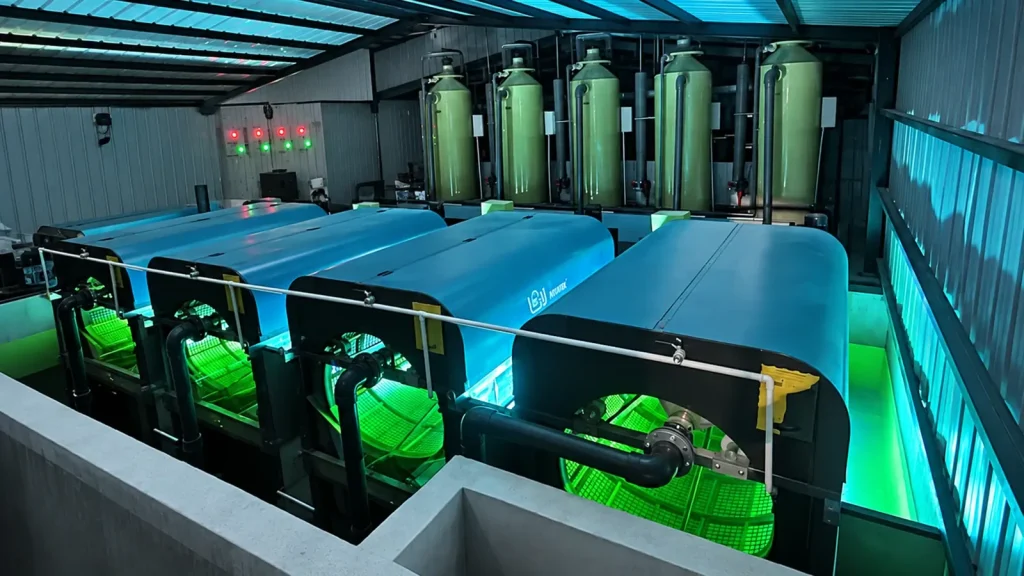
When you’re planning a commercial recirculating aquaculture system (RAS), you may already have a species, a production target or a site in mind. Before we develop the overall system and equipment plan, we need to understand your production plan, biological requirements, site conditions, water supply, utilities and operating constraints. These inputs give us a basis for discussing tank arrangements, treatment requirements and equipment selection with you.
You don’t need completed equipment calculations to start talking to us. Bring the information you have, and make clear what’s measured, estimated or still unknown. The checklist below will help you prepare. Before the overall plan is developed, we’ll need to identify and discuss the unresolved inputs together.
Why RAS Design Starts Before Equipment Selection
At YUTANK, our initial project discussions cover your farming plan, site and utilities, operating experience and cost priorities. Tell us whether your main concern is the initial equipment purchase, energy use, daily labor or maintenance.
This matters because an equipment request can leave important questions unanswered. A tank volume does not describe the planned production cycle. A building footprint does not establish the available structural capacity. A named water source does not describe the water entering the system.
We review the project information with you and make recommendations from the information you provide. You confirm the project requirements. That agreement supports planning; the technical suitability of the resulting design still needs review.
Keep a distinction between a client requirement, a measured condition and an engineering result. Record a proposed target as a target, attach the source of a measurement, and leave calculations to the design team.

Confirm the Production Plan and Species
Production target, cycle and harvest plan
Tell us what you plan to produce and over what period. An annual production target describes a business goal. The production cycle, stocking schedule and harvest plan help explain how that goal would be achieved and how different groups of fish would occupy the facility.
Share your proposed harvest size, the stages to be handled on site and whether harvests would be periodic or spread across the year. If the schedule is still an estimate, say so. We need to understand your plan before discussing the tank arrangement and overall system scale.
Species and life stage
Tell us which species you plan to farm and whether your project covers nursery, grow-out or more than one stage. Different species and stages may have different temperature, salinity, dissolved oxygen and feeding requirements. A change in species can therefore require the original design assumptions to be reviewed.
Provide the biological references or existing farming records behind the proposed requirements. Target water conditions need to be checked for the intended species, stage and project conditions; they should not be copied from an unrelated farm.
Record Peak Biomass and Daily Feed Load
Bring your biomass and feeding estimates into the same discussion as your production target. Annual output, biomass and daily feed load answer different planning questions. Biomass is the total mass of live fish in a defined tank, production group or system at a particular time. For design discussions, the expected peak biomass and its distribution across tanks or production groups are more useful than an annual output figure alone.
Daily feed information helps describe the feeding load associated with the production plan. Record the expected peak daily amount, the feed being considered and the stage to which the estimate applies. Distinguish a daily peak from an average or an annual feed total.
We check the inputs according to the function being designed. Feed load, biomass and hydraulic conditions all need consideration; they do not become a single formula for every device. For example, discussing MBBR biofilter requirements needs the intended loading and operating conditions, rather than a tank volume alone.
You can share your production or feeding estimates with us without calculating equipment capacity. Mark their basis and confidence so we can discuss them with you. The separate guide to selecting RAS equipment based on production load covers the later equipment-matching discussion.
Check Site, Building and Layout Constraints
Show us the land available for your project and describe usable building space separately. Include your site boundary, intended construction area, existing structures and whether the installation is indoors or outdoors.
For an existing building, the information we’d ask for includes structural documentation, column positions, clear height, site levels and access for installation and maintenance. A photograph alone does not establish whether a floor is suitable for the proposed installation. Provide the available structural information and agree with the project team how that suitability will be assessed. Columns and overhead restrictions may affect the tank arrangement and equipment positions.
Prepare the building drawings and known foundation information, together with the route by which equipment can enter and later be removed. Allow the design team to assess maintenance access around aquaculture tanks and the treatment area. Building size alone does not describe these constraints.
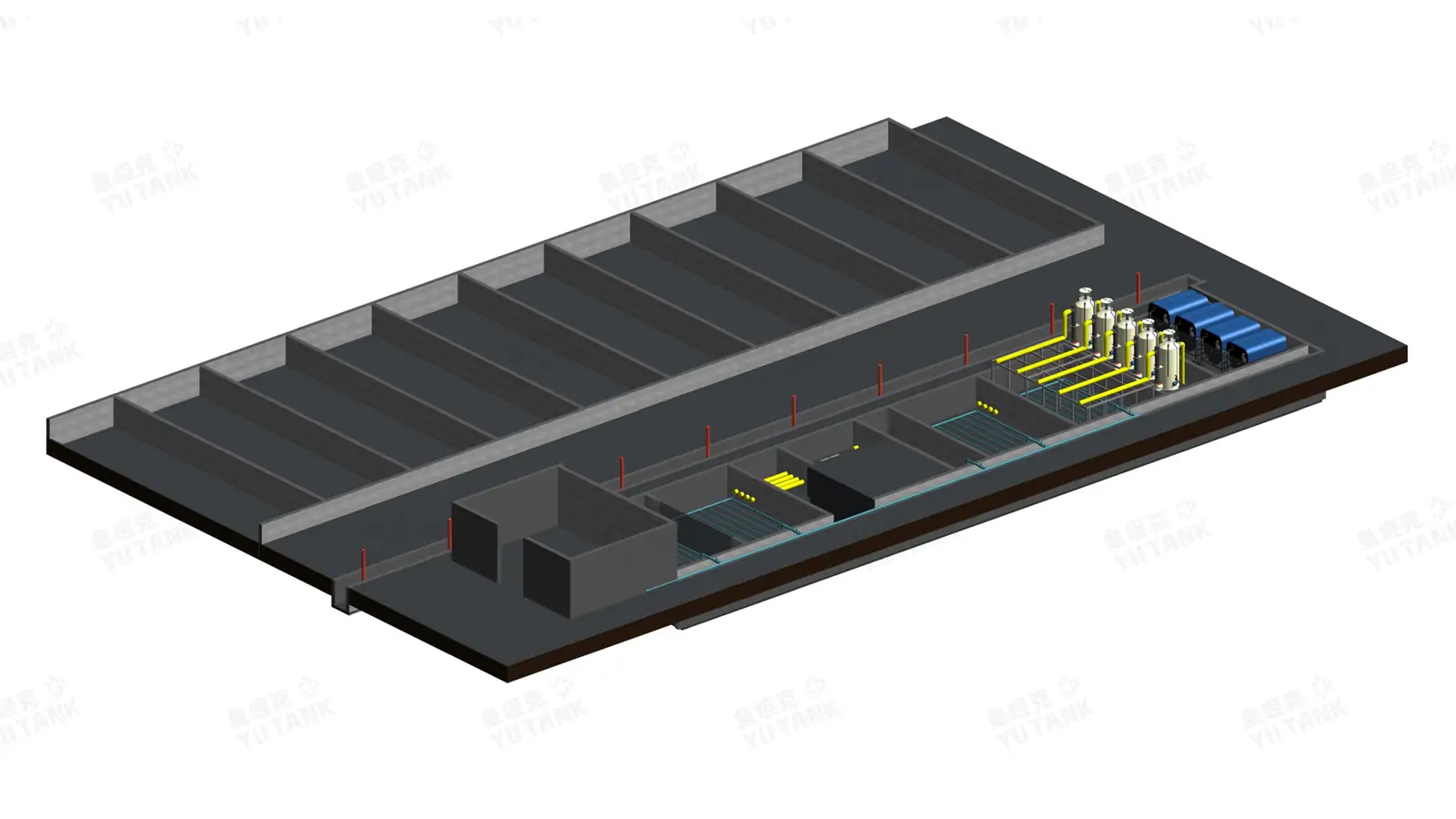
A published layout reference is YUTANK’s RAS retrofit project in Riyadh. Its project page includes system drawings and photographs of the existing facility. These help illustrate the site information relevant to a retrofit discussion. They do not establish structural capacity, hydraulic requirements or performance for another site.
Document the Water Source and Water Quality
Before we discuss pretreatment for your project, we need to understand the water available at your site. Tell us where it comes from and what can be supplied consistently. The source may be a groundwater well, surface water, a municipal supply or seawater. Freshwater or saline conditions also need to be recorded, rather than inferred from the source name.
Collect the available raw-water reports. Include the sampling location, date, units and any known treatment before the water reaches the site. Information such as temperature, pH, salinity and solids or turbidity can help frame the discussion; the project team should confirm what additional testing is needed.
Keep the raw-water condition separate from the proposed water conditions for the fish. They describe different parts of the design problem.
We need to review the actual water information before deciding on pretreatment for your project. The source type alone does not justify assigning the same treatment equipment to every project. If a report is old, incomplete or taken from a different sampling point, identify that limitation rather than presenting it as a current site measurement.
Record Climate and Temperature Conditions
To discuss temperature conditions for your project, we’d want information about the site’s environment and the water-source temperature across relevant seasons. A city name or an annual average can hide conditions that matter to heating and cooling decisions.
For an indoor project, describe the building envelope, exposure, insulation and known ventilation conditions. For an outdoor installation, identify exposure to sun, wind and seasonal weather. These conditions may affect the heating, cooling and environmental-control discussion and the associated energy requirements.
Seasonal raw-water temperature is one of the details we’d want to clarify with you. Label a single water-temperature measurement with its date; do not present it as a year-round operating condition.
Provide the available weather records and site measurements, together with their source and period. The engineering team can then review the relationship between the intended biological conditions, incoming water and the building or outdoor environment. This preparation does not establish a heating capacity, cooling capacity or insulation specification.
Confirm Drainage and Hydraulic Interfaces
A drainage point on your plan needs both a position and a level. We need the floor level, the outlet or connection level, the surrounding ground levels and the intended pipe routes. Identify the measurement reference so that the levels can be compared.
For the drain connection, record its invert level: the level at the bottom of the pipe or channel. Its location alone does not show the available height relationship.
Pipe distance, routing and changes in level may affect the hydraulic arrangement and the subsequent pipe and pump calculations. Existing buried services can also restrict possible routes.
Your role in this discussion is to provide reliable information about the existing site; engineers use it to assess the hydraulic design. You do not need to invent a pipe diameter, pump power or circulation rate to begin the discussion. Where a value is proposed, clarify what it measures and whether it describes recirculating flow, water turnover or make-up water.
Discuss Power, Utilities and Emergency Conditions
Tell us about the electricity available at your site, including known supply limitations and the history of interruptions. Include what you know about restoration time and who can respond when an interruption occurs.
Water supply and your proposed oxygen source belong in our early discussion too. Describe existing supplies, storage or equipment as existing conditions, and proposed additions as proposals. These inputs help the team discuss oxygen supply requirements in relation to the production plan and site utilities.
Backup and redundancy
Ask which functions require continued support or recovery under the agreed failure scenarios. Oxygen supply, water circulation, treatment aeration or gas management, and monitoring or alarms are functions to review with the engineer. The appropriate arrangement depends on the system and response conditions.
Include access to backup power, maintenance support and staff availability, especially outside normal working hours. For each agreed failure scenario, discuss how backup arrangements, staff response and restoration of the affected functions will work together. This discussion should establish the questions to resolve; it should not become a generic equipment shutdown list, fixed redundancy ratio or promised survival time.
Match Automation to Operating Capability and Biosecurity
Automation and monitoring
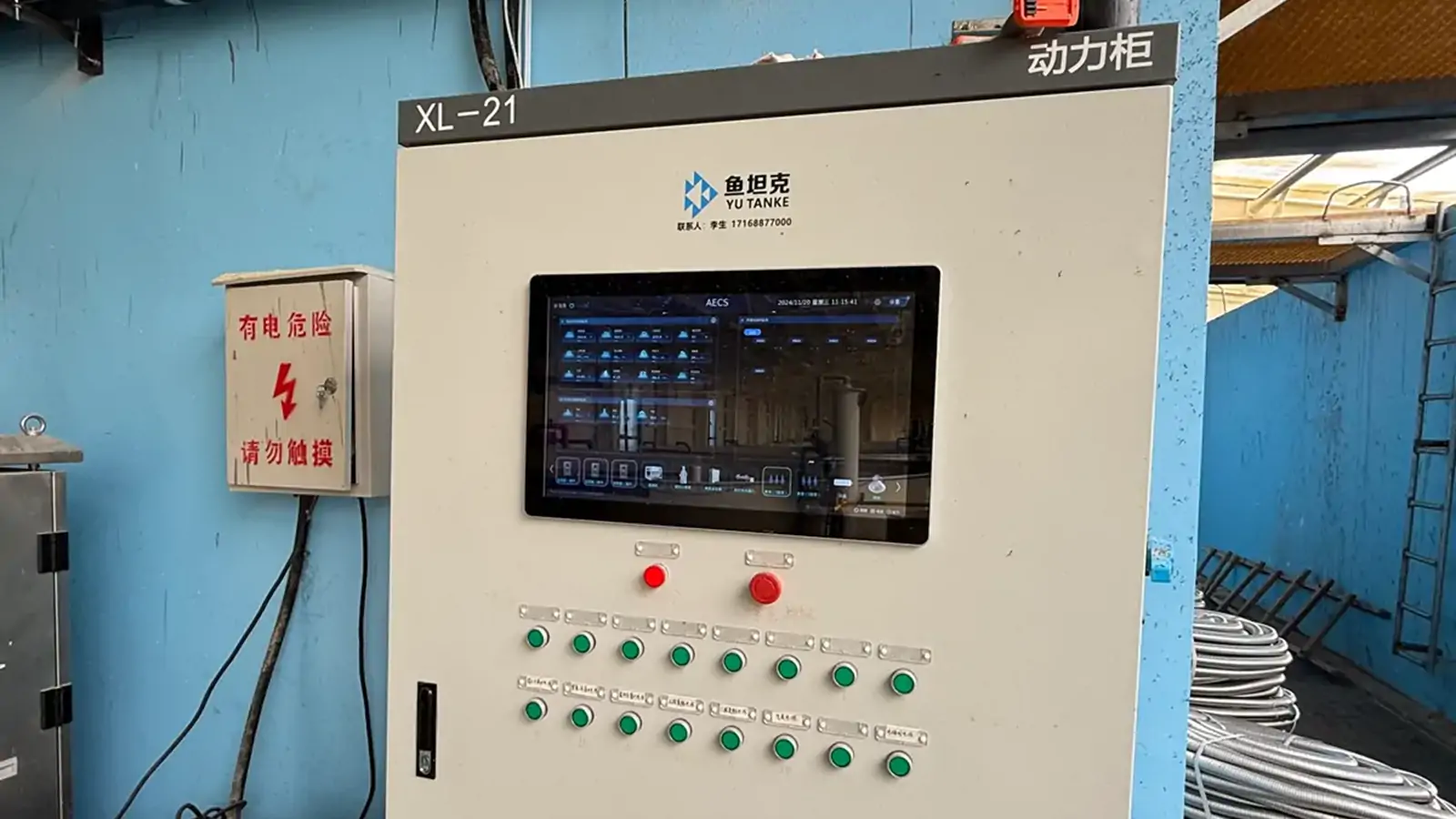
Tell us what you expect from monitoring and control, and what your team can manage. At YUTANK, we consider project scale, budget, staff experience, maintenance capability and the ability to respond to alarms.
Separate the desired monitoring, alarm, control and record-keeping functions. Identify who checks readings, responds to an alarm and maintains the instruments. More automation does not remove these responsibilities. The configuration needs to match the team’s capability and the project’s risk discussion.
Biosecurity responsibilities
Discuss the source of incoming stock and water, proposed separation between production areas, staff and visitor access, and the movement of tools or materials. These inputs may affect the space and interfaces needed for isolation, cleaning or disinfection arrangements.
Engineering facilities and day-to-day management need distinct responsibilities. The project team should agree which activities belong to the design scope and which are managed by the farm operator. Treatment procedures are outside the scope of this design-input guide. The inputs described here do not establish or guarantee disease-free operation. Specific biological risks and control measures need suitable technical review.
Clarify Phase-One and Future Expansion Plans
If you have plans to expand, tell us what belongs to the first phase and what remains a longer-term option. State which land, buildings and production areas belong to phase one and what might be added later.
Expansion planning needs more than a larger future output target. Discuss space for additional tanks and treatment equipment, utility access, pipe interfaces, drainage and the constraints of shared services. Identify which assumptions are firm and which remain options.
A physical connection point does not establish the capacity of the systems behind it. Existing water treatment, oxygen supply, power and drainage still need assessment when the production plan changes.
We’d want to consider these boundaries with you early. That does not mean building every service to its final capacity immediately, or promising that expansion can proceed without interruption. Those are project decisions to assess against the layout, capacity, implementation plan and operating requirements.
What Information Should You Prepare Before Requesting a RAS Design?
Use this checklist to prepare for our design discussion. Send the records you already have, identify estimates and mark unanswered items clearly. We can help you identify what needs confirmation before developing the overall plan.
| Input group | What to prepare |
|---|---|
| Production plan | Target annual output, cycle, harvest size, stocking and harvest schedule; distinguish goals from achieved results. |
| Species and stage | Species, nursery or grow-out scope, proposed biological requirements and their reference sources. |
| Biomass and feeding | Expected peak biomass, proposed density, daily feed information and the basis of each estimate. |
| Site and building | Usable site dimensions, indoor or outdoor setting, drawings, columns, clear height and structural documentation. |
| Installation and maintenance | Equipment entry routes, access restrictions and the space available around tanks and treatment equipment. |
| Water source | Source type, available supply, sampling records, raw-water reports and known seasonal changes. |
| Climate and temperature | Environmental records, seasonal source-water temperatures, building exposure and insulation information. |
| Power and other utilities | Available services, interruptions, proposed oxygen source, backup supplies and staff response conditions. |
| Drainage and hydraulics | Connection locations and invert levels, floor and ground levels, proposed routes and existing buried services. |
| Operations and biosecurity | Farming experience, staffing, maintenance, monitoring expectations, stock sourcing and separation requirements. |
| Expansion and priorities | Phase-one scope, possible additions, implementation timing and the balance between purchase, energy, labor and maintenance priorities. |
Record the source and confirmation status
For each important input, note:
- The value or description, including its unit and time basis where relevant.
- Whether it is measured, estimated, proposed or still unknown.
- Its source and date, such as a drawing, laboratory report or production plan.
- Who can confirm it and the next action needed.
For example, label an unmeasured seasonal water temperature as unknown. A current test report remains useful, but its sampling date does not turn it into evidence for every season. This is a preparation example, not a recorded project case.
Three details to check deliberately
As you prepare your information, give floor and foundation documentation, drain-connection invert levels and seasonal water-source temperature an explicit place in the discussion alongside your production target. If they remain assumptions until later, the team may need to reconsider layout, hydraulic connections or temperature-control requirements when the actual conditions are confirmed.
How YUTANK Uses These Inputs
At YUTANK, we start by understanding what you plan to produce and the conditions your farm will operate under. We ask about your farming goals, site and supply conditions, operating experience and cost priorities before developing the overall system and equipment proposal.
Your species, life stage, biomass and feeding information give us a basis for discussing biological requirements and treatment loading. Site levels, drainage and routes support hydraulic planning. Building dimensions, structural information and access conditions inform the layout discussion.
We consider these inputs together. A treatment arrangement may fit the intended load but require space or interfaces that the building cannot provide. A proposed operating plan may also need a different approach to monitoring or emergency response. The agreed inputs support our discussion of RAS equipment configuration within a commercial RAS system design.
During our discussion, we need to be clear about which project requirements you’re confirming and which technical questions remain with the design team. If your farming plan or site information changes, bring the revised information back into the review so that the proposal reflects the agreed project conditions.
FAQ About RAS Design Inputs
What information should I prepare before requesting a commercial RAS design?
Prepare the farming plan, species and stage, site and building records, water source, utilities and operating conditions. Identify estimates and missing information. You and our engineering team need to confirm the inputs used for the overall system plan.
Can I contact YUTANK before all technical parameters are known?
Yes. Share the information you have with us and explain the open questions. Initial contact and an agreed design basis are different stages; missing inputs still need attention before the overall system and equipment plan is developed.
Is tank water volume enough to select a RAS system?
Water volume alone does not describe the production cycle, biomass, feeding load or site constraints. Those inputs need discussion before configuration. Equipment sizing and calculations belong to the subsequent engineering work.
Is there a standard recirculation rate for every RAS project?
First clarify whether the question concerns water turnover, recirculating flow, reuse proportion or make-up water. They need defined units and boundaries. This guide does not propose a rate that can be applied to every species, stage and site.
What should an existing farm provide for a RAS retrofit discussion?
Provide the existing layout, tank and building information, current production and feeding records, water reports, utility conditions, levels and drainage connections. Separate documented conditions from proposed changes so the team can assess the retrofit constraints.
Discuss Your RAS Design Inputs
Bring us your species and production plan, site and water-source information, and any drawings or reports you already have. Mark estimates and open questions clearly.
We can use those inputs to discuss system planning and equipment selection with you. You don’t need completed equipment calculations to make first contact, but unresolved design inputs still need attention before the overall plan is developed.
Discuss Your RAS Design Inputs with us. Use the checklist above to prepare your project requirements.