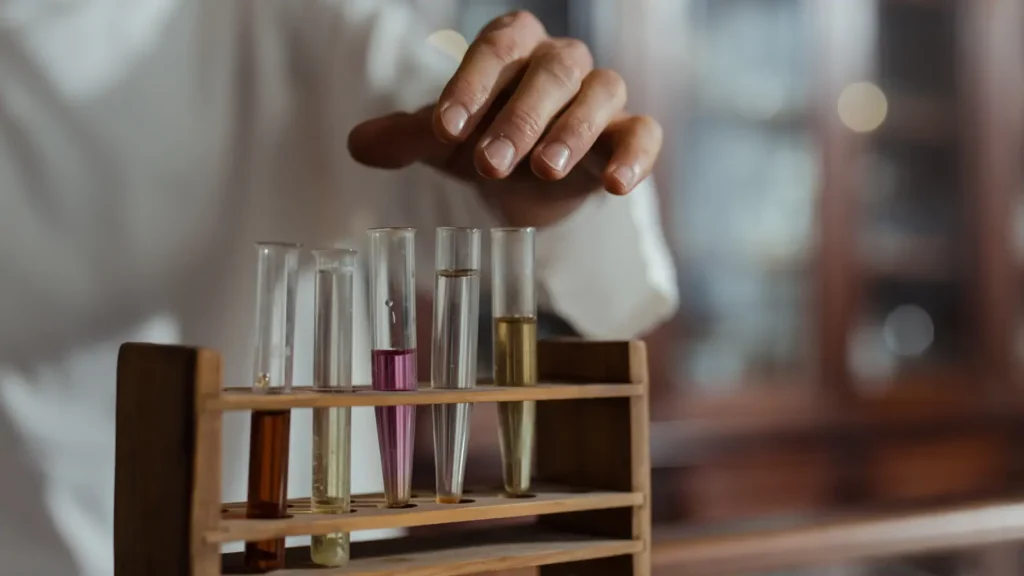
Water quality management in a commercial recirculating aquaculture system (RAS) means tracking several related conditions, not checking one “good” number. Start with temperature, dissolved oxygen (DO), pH, alkalinity and nitrogen compounds; review dissolved carbon dioxide (CO₂), suspended solids and other parameters according to your species, water source and system.
The useful question is not simply whether a reading falls inside a generic range. It is whether the measurement is reliable, how it is changing, and what the combined readings say about the fish, feed load and water-treatment process. Your operating targets and response procedures must fit the actual farm.
Why One Normal Reading Is Not Enough
Suppose the DO reading in a culture tank looks acceptable, but fish behaviour or feeding has changed. That does not rule out a water-quality issue. Dissolved CO₂, temperature, nitrogen compounds, water movement and other conditions may have changed even while the oxygen reading remained stable.
The same applies to clear-looking water. A drum filter can remove part of the suspended solids load, yet dissolved ammonia or CO₂ cannot be judged by looking through the tank wall. A useful monitoring plan therefore separates what is visible, what is measured, and what still requires investigation.
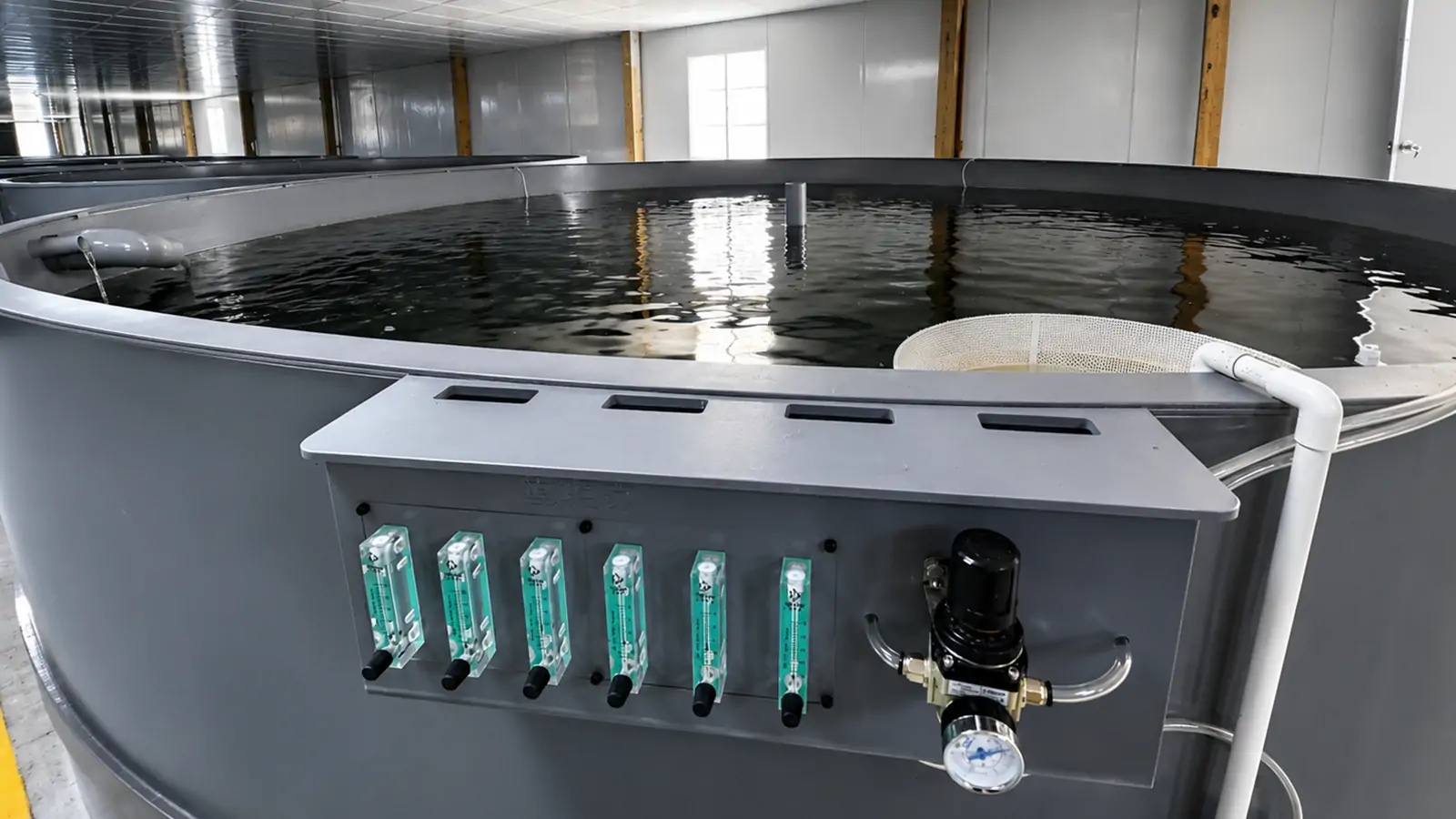
We approach this as an operating and engineering question: which measurements explain the condition you are seeing, and which part of the system should be reviewed next? It also helps to distinguish daily operating records from the information needed before a RAS design. The latter establishes the original design basis; routine monitoring shows what is actually happening after operation begins.
Core Water Quality Parameters to Track
The exact monitoring program depends on your species, life stage, system intensity, freshwater or marine conditions, and testing capability. The parameters below are a practical way to organize the discussion—not a universal checklist with fixed safe limits.
| Parameter | What it helps you understand | What to read alongside it |
|---|---|---|
| Temperature | The thermal conditions affecting fish activity, gas solubility and biological processes | DO, feed intake, species and production stage |
| Dissolved oxygen (DO) | The oxygen available in water at the measurement point | Temperature, feeding, water movement and oxygen-delivery status |
| Dissolved CO₂ | Whether respiratory CO₂ may be accumulating in the culture-water loop | DO, pH, alkalinity and gas-removal conditions |
| pH | Acidity and the chemical conditions affecting fish and biological treatment | Alkalinity, temperature, TAN and CO₂ context |
| Alkalinity | Buffering capacity relevant to pH stability and nitrification | pH, nitrogen trends and makeup-water properties |
| Total ammonia nitrogen (TAN) | Combined ammonia/ammonium nitrogen load, which can reflect feeding and biological-treatment balance | pH, temperature and biofilter conditions |
| Nitrite and nitrate | Different nitrogen transformation products; their trends can help review nitrification and accumulation | TAN, feeding, water exchange and applicable nitrogen species/units |
| Suspended solids / turbidity | Different indicators of particles in water; neither is a direct substitute for the other | Feeding, solids-removal operation and sampling location |
| Salinity / conductivity, when relevant | Context about source water, dissolved ions and operating conditions | Species needs, makeup-water changes and measurement method |
Turbidity and total suspended solids (TSS) are not interchangeable measurements: a turbidity reading cannot be converted into a solids concentration without a suitable site- and method-specific relationship. Likewise, a lab report that states nitrite as NO₂⁻ is not numerically identical to one reported as NO₂⁻-N. Keep the chemical form and unit with every recorded value.
A review of RAS monitoring research identifies both continuously measured parameters and measurements commonly performed with handheld or laboratory methods. That is one reason the right monitoring system is usually a combination of instruments, sampling and consistent records, rather than one sensor claiming to describe every aspect of water quality. Lindholm-Lehto, 2023
How to Read Related Parameters Together
DO and CO₂ answer different questions
DO shows dissolved oxygen availability at the point where you measured it. It does not directly establish the dissolved CO₂ concentration. Oxygen addition and gas removal are related parts of RAS management, but one is not proof that the other is adequate.
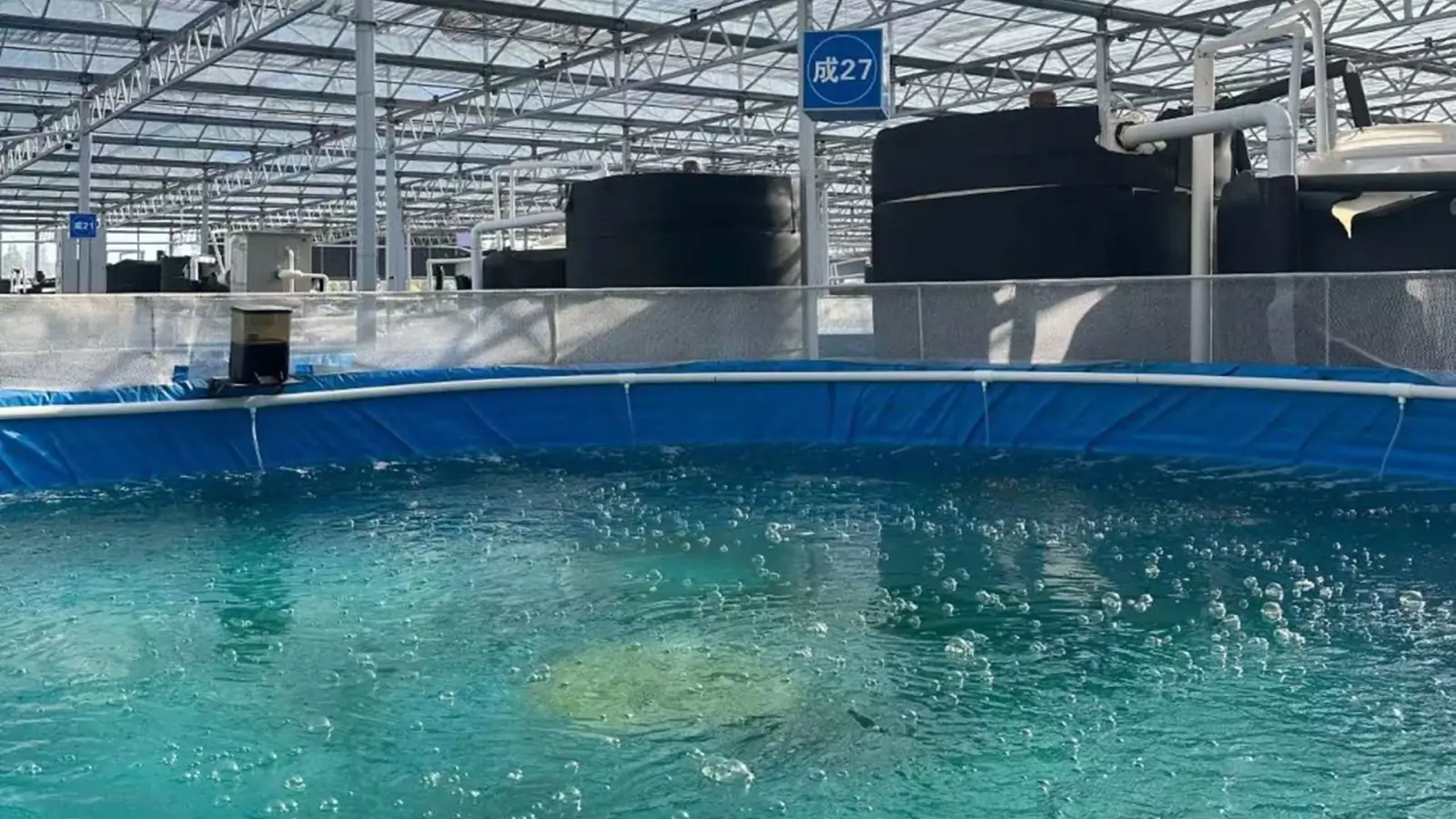
If DO appears stable while fish behaviour or water chemistry changes, a CO₂ review may still be relevant. We explain this distinction in why CO₂ removal matters in RAS. The operating context also matters when considering oxygen management in RAS. Neither article supplies a universal CO₂ limit for every farm.
TAN, pH and temperature belong in one interpretation
TAN includes un-ionized ammonia (NH₃) and ammonium (NH₄⁺). These forms do not have identical implications for fish. Their relative proportions depend strongly on pH and temperature, with salinity also playing a role. A TAN number on its own therefore does not tell the full story. UF/IFAS, Ammonia in Aquatic Systems
For example, if TAN remains similar while pH rises, the un-ionized fraction may increase. This is a reason to look at the measurements together—not to estimate exposure from an arbitrary rule of thumb or issue a chemical treatment recommendation.
pH and alkalinity help explain stability
pH describes the water’s current acidity. Alkalinity provides information about its capacity to resist changes in pH. A single pH reading may look familiar while alkalinity is shifting. Biological ammonia oxidation is also connected to water chemistry, which is why pH and alkalinity deserve attention when reviewing the condition of a biofilter.
If you need the treatment-process background, see moving-bed biofilm reactor technology. Carrier movement or the presence of an MBBR tank is not, by itself, evidence that the required nitrogen conversion is occurring at a particular rate.
Feed load, solids and nitrogen trends tell a wider story
Changes in feeding and biomass can affect oxygen demand, particulate waste and dissolved nitrogen loads. A rise in suspended solids is not automatically a drum-filter failure; nor does an unusual TAN trend, by itself, identify the biofilter as the cause.
Look at what changed upstream and downstream: feed delivered, fish response, solids-removal operation, water replacement and relevant nitrogen measurements. If the concern relates to the mechanical unit itself, drum filter backwashing and maintenance explains that specific process. It should not be treated as a substitute for system-level water-quality investigation.
Where and When Should You Sample?
Measurements become far more useful when you know where, when and how they were taken.
- Location: A culture-tank reading and a sample taken before or after a treatment stage answer different questions. Use a clearly identified and repeatable sampling point.
- Timing: Record time of day and relevant events such as feeding, water exchange or a change in equipment operation. A reading taken after feeding may not be comparable with one taken under another load.
- Method: Record whether you used an online sensor, handheld meter, field test or laboratory method. Use the method’s calibration, maintenance and quality-control instructions; investigate a suspicious result rather than assuming every instrument is correct.
- Units and basis: Retain units, chemical notation and whether results are reported as an element or ion. Record the water temperature and other conditions relevant to interpretation.
Should You Monitor the Shared Loop or Each Culture Tank?
If several culture tanks share one water-treatment loop, a sensor installed on a common line describes the water at that sampling point. It does not automatically tell you the DO conditions in every tank. Tank-level readings may differ with biomass, feeding time, water-flow distribution and local oxygen demand—even when the tanks use the same treatment equipment.
Before deciding how many probes to install, clarify what you need the measurements to answer:
- System-wide trend: What is happening in the shared supply or return line?
- Tank-specific condition: Could an individual culture tank experience a change that the central reading does not reveal?
- Treatment performance: What changes between defined points before and after a treatment stage?
Possible monitoring arrangements include a central online instrument with scheduled, verified tank sampling; selected tank-level sensors; or a validated multipoint sampling system. The appropriate choice depends on risk, how quickly conditions may change, measurement response time, maintenance and calibration capability, and budget. One DO probe per tank is not a universal engineering rule, and a central probe should not be presented as equivalent to per-tank measurement.
For ammonia testing specifically, UF/IFAS notes that tanks sharing a biofilter can still differ in water quality. It describes consistent testing at a representative high-feeding tank, spot checks of other tanks, and direct testing in a tank where fish show abnormal behaviour. This TAN-focused guidance helps explain why a shared loop does not remove all tank-level questions; it does not prescribe a DO-probe count. UF/IFAS, Ammonia in Aquatic Systems
Separately, the SeaRAS AquaSense study used sensors at different treatment-process locations to investigate H₂S and other water-quality changes. It supports the importance of process-stage sampling points, not a required number of DO sensors in culture tanks. Neither source establishes that YUTANK supplies a particular sensor network or alarm function. SeaRAS AquaSense study, 2022
Some rapidly changing parameters may warrant continuous observation where appropriate instruments are installed. Other tests may reasonably be periodic. The correct frequency and trigger levels must be specified for the actual species, stocking and feeding pattern, operating risk, system design and local professional guidance. University of Florida extension guidance similarly makes monitoring needs dependent on the facility and fish being kept. UF/IFAS RAS management guide
What Should You Check When a Reading Changes?
If fish show distress or a critical alarm occurs, activate the farm’s established emergency response procedure immediately while verifying the measurements. Do not wait to finish a routine checklist before responding to an urgent risk.
For non-emergency deviations, do not jump from one unusual value straight to an equipment purchase or a chemical adjustment. A short sequence can help your team separate bad data from a possible operating problem:
- Verify the observation. Check the instrument status, calibration history, test method, units and sample identification; repeat or cross-check the measurement under the site’s testing protocol.
- Compare with your own baseline. Was this a sudden change, a repeated pattern, or a value already seen during similar feeding and water-exchange conditions?
- Look at the fish and recent operating events. Note behaviour, feeding, biomass changes, water-source changes and any recent interruption or maintenance.
- Review related measurements. For example, examine DO and CO₂ separately, or TAN together with pH and temperature. Check solids and nitrogen trends alongside feeding and relevant treatment records.
- Escalate according to the farm’s written response plan. Trained site staff and the responsible aquaculture professional should review verified deviations and decide on the appropriate site-specific response; this article is not a corrective-treatment protocol.
A change that persists after the measurement has been verified deserves a site-specific investigation. Whether the cause is the source water, an operating setting, a treatment stage or a biological issue cannot be concluded from a single number.
Turn Monitoring Records Into Better RAS Decisions
A useful record can be simple. For each observation, capture the sample location, time, instrument or test method, reported value and unit, recent feeding or operating event, and action taken under the site’s protocol. Keep enough consistency to compare like with like.
Use a consistent point name and reporting basis so records can be compared over time. The template intentionally contains no sample reading or universal action threshold.
The value comes from the relationships you can see over time. If a nitrogen parameter changes after a load increase, you have a reason to review related biofilter conditions and records. If DO and CO₂ move differently, a gas-management review may be appropriate. If solids readings differ by sampling point, the location and upstream process become part of the question.
Those observations can inform a discussion about water-treatment capacity or operation, but they do not establish a new equipment size, guaranteed removal rate or treatment outcome. For a commercial RAS system, equipment decisions still need a documented design basis and reliable operating data.
How We Would Start a Water-Quality Discussion With You
If you are reviewing an existing RAS or planning a new one, you can begin with a few representative water-quality records and the conditions behind them: species and life stage, production load, water source, sampling point, feeding history and the current treatment arrangement.
We can use that information as a starting point to discuss which parts of the system merit closer review and what technical data would still be needed. The goal is to help you understand the next engineering question—not to declare a final diagnosis from a spreadsheet or recommend a product before the operating conditions are clear.
FAQ About RAS Water Quality Management
Is dissolved oxygen the most important RAS water-quality reading?
DO is essential, but it cannot substitute for CO₂, pH, nitrogen compounds or other measurements. Review it as part of a species- and system-specific monitoring plan.
Can I judge ammonia risk from TAN alone?
Not reliably. TAN includes NH₃ and NH₄⁺. Their proportions depend on pH and temperature, so record these conditions and use the appropriate interpretation method.
Are nitrite and nitrate the same measurement?
No. They are different nitrogen species with different significance. Also check how each laboratory or instrument reports the units, such as an ion concentration versus a nitrogen basis.
How often should a commercial RAS measure water quality?
There is no single schedule suitable for every RAS. Frequency depends on the species, life stage, stocking and feed load, system risk, existing monitoring instruments and approved site protocol. Some parameters may need continuous monitoring, while other analyses are periodic.
Can one unusual reading tell me which RAS equipment to replace?
No. Confirm the measurement and review related trends, source water, operating events and equipment records before reaching a component-level conclusion.
Does every culture tank in a shared-loop RAS need its own DO probe?
Not automatically. A central measurement, tank-level measurements and multipoint sampling answer different questions. The monitoring arrangement should be reviewed against the particular tanks, risks, response-time needs and maintenance plan rather than chosen from a fixed probe-count rule.
References
- Lindholm-Lehto, P. (2023). Water quality monitoring in recirculating aquaculture systems. Aquaculture, Fish and Fisheries, 3, 113–131.
- Yanong, R. P. E. Fish Health Management Considerations in Recirculating Aquaculture Systems—Part 3. University of Florida IFAS.
- Watson, C., Francis-Floyd, R., Petty, D., and Pouder, D. B. Ammonia in Aquatic Systems. University of Florida IFAS. Cited for ammonia chemistry and shared-biofilter tank testing; not for DO-probe counts.
- The SeaRAS AquaSense System: Real-Time Monitoring of H₂S at Sub µg/L Levels in Recirculating Aquaculture Systems. Frontiers in Marine Science (2022). Cited only for process-stage multipoint measurement, not tank-level DO-probe counts or YUTANK equipment capabilities.
Discuss Your RAS Water-Quality Questions
If you have representative monitoring records and want to discuss what they mean for an existing or planned system, contact YUTANK. Tell us the species, operating conditions and the question you are trying to resolve. We can discuss what information is useful for the next technical review before considering equipment options.