When people compare recirculating aquaculture systems (RAS) with traditional fish farming, the conversation often turns into a competition: Which one is more advanced? Which one saves more water? Which one should a new farm use? But real projects are rarely that clear-cut.
An existing farm can keep its ponds or tanks and add equipment to treat incoming water, collect solids, or improve water quality. And a farm using RAS may still depend on fresh make-up water. Stocking conditions, feed input, water treatment capacity, and the water quality you need all affect how much water can be reused.
So rather than declaring one method the winner, let's look at what ponds, flow-through systems, and RAS do well, where their limitations appear, and how their technologies can work together.
What Are the Strengths of Traditional Aquaculture and RAS?
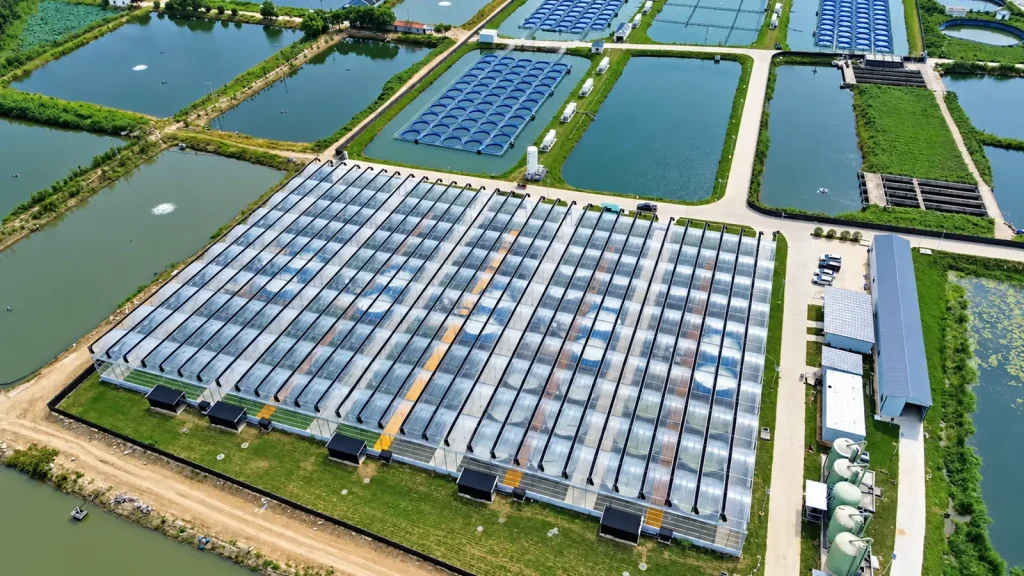
First, traditional aquaculture is not one single method. It certainly doesn't mean a farm operates without equipment. An earthen pond, a flow-through fish farm, and a pond farm with aeration, filtration, and water quality monitoring may all work very differently.
If you already have suitable ponds, a reliable water source, and a team that knows the local farming conditions, making good use of those assets can be a sensible approach. In a pond, the water body, natural processes, and farm management can all play a part in maintaining the rearing environment. A flow-through farm can renew its culture water using a suitable, dependable supply. Neither approach necessarily needs every water treatment function concentrated in one complex treatment loop.
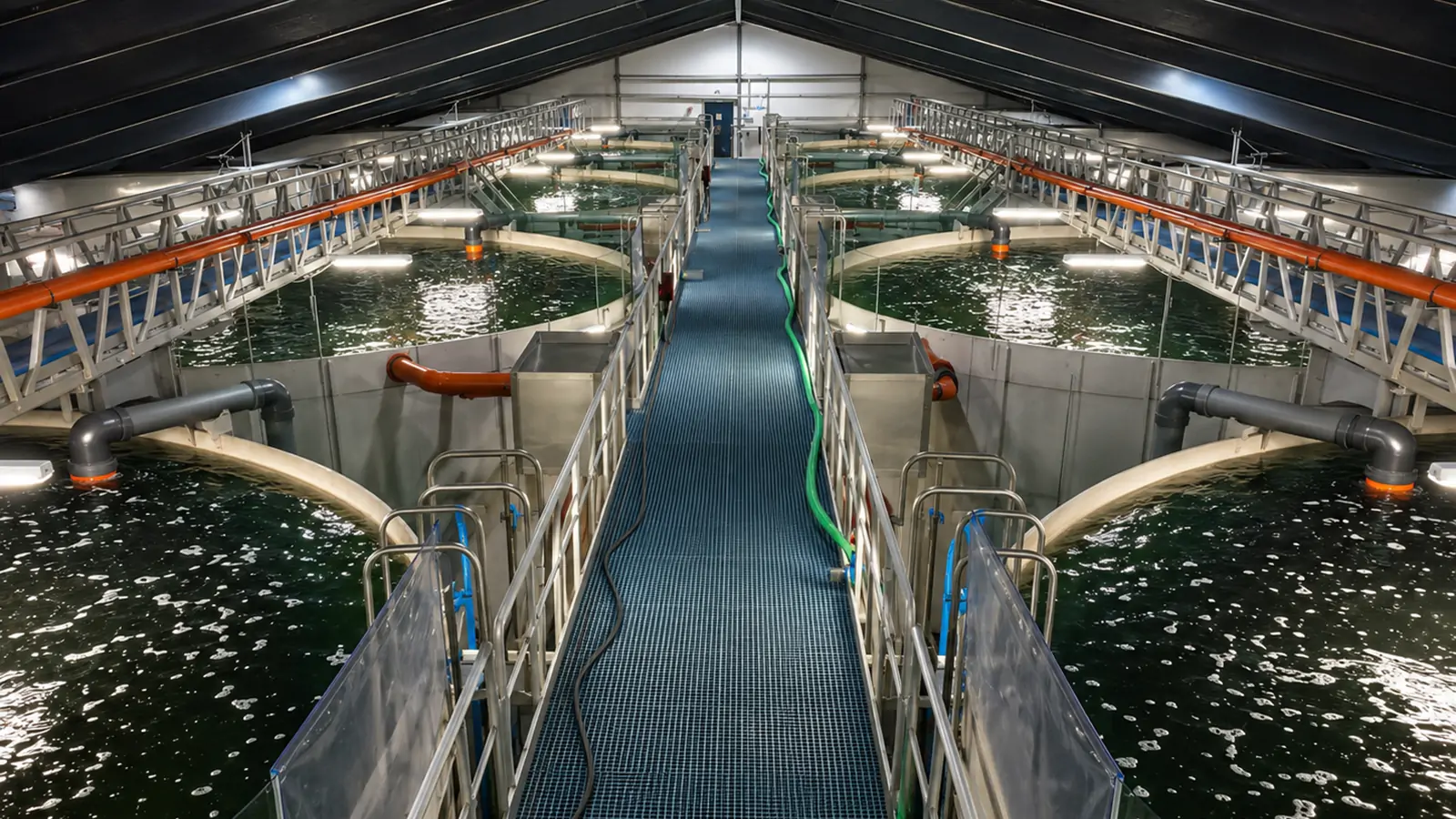
RAS offers a different kind of control. It collects a substantial share of the culture water and sends it through processes such as solids removal, biological treatment, gas management, and oxygenation before returning it to the fish tanks. That gives the farm more ways to manage its water when space, water supply, or environmental conditions are restrictive. It can also reduce the need for continuously replacing large volumes of water.
Both approaches come with responsibilities. Traditional farms need to manage changing source water, temperature, weather, and discharge conditions. RAS needs dependable equipment operation, electricity, maintenance, biofiltration, monitoring, and plans for failures. Calling one “old-fashioned” and the other “advanced” doesn't tell you whether either one suits a particular site.
Can You Use RAS Water Treatment Equipment on an Existing Traditional Farm?
Imagine that you already have fish ponds and a pipe bringing in water from a river or another external source. You want to improve that incoming water. Does it mean you need to tear out the ponds and build a complete RAS? Not necessarily.
Suppose the incoming water carries a lot of suspended solids. Mechanical filtration may be worth looking at. A rotary drum filter, for example, uses a screen to capture particles within a particular size range. Whether it makes sense depends on the particle size and loading, the flow rate, screen opening, backwash requirements, and where the separated waste will go.
In some water conditions, you might also consider a protein skimmer (foam fractionator) to remove some fine particles and substances that can be carried away in foam. But its performance in freshwater depends heavily on water chemistry, surface-active substances, bubble formation, and foam stability. Installing a skimmer after a drum filter does not mean all dissolved contaminants in the incoming water will be removed. The first question is what problem the source water actually has.
Here's another important distinction: a drum filter does not remove dissolved ammonia simply by screening the water, and a protein skimmer does not replace biological treatment or pathogen control. If the source has a specific dissolved contaminant, pathogen risk, gas problem, unsuitable temperature, or salinity issue, those conditions need to be assessed separately.
The same idea applies to solids collection, oxygenation, and local monitoring. You can improve one part of a traditional fish farm without turning the entire facility into a recirculating system just because it now uses a few pieces of equipment often found in RAS.
Does RAS Still Need Fresh Water?
When someone hears “recirculating,” it's easy to picture a closed loop that never needs fresh water again. Actual farm operation is rarely that absolute.
RAS is built around treating and reusing culture water. But solids discharge, filter backwashing, evaporation, and the accumulation of certain dissolved substances can all create a need for regular or occasional make-up water. The achievable reuse level depends on the species, feeding rate, treatment capacity, and operating goals.
This matters particularly when feeding rates and culture loads are high. More feed generally brings more solids, organic matter, and nitrogen-related waste into the system. If the existing treatment process cannot maintain the required water quality under those conditions, adding more suitable fresh water may be one part of the operating strategy. That does not mean every heavily fed RAS must exchange large volumes of water, or that water exchange can take the place of adequate solids removal, biofiltration, and other essential controls.
A reuse percentage by itself doesn't tell you whether a RAS is performing well. What matters is whether the farm can maintain its water quality targets at its actual feeding load, while managing water intake, discharge, energy use, and operating risk.
For a more detailed look at the water flow and treatment stages in RAS, see our What Is a Recirculating Aquaculture System (RAS)? article. Here, we're focusing on how water reuse and water replacement can fit together.
Where Do Traditional Farming and RAS Overlap?
Combining the two approaches doesn't have to mean converting the whole farm to a full recirculating system in one step. There are several ways to think about it.
1. Treat incoming water first. Keep the existing ponds or tanks and add particle filtration, gas treatment, or other pretreatment where the source-water conditions justify it. The treated water enters the fish tanks, and used culture water still leaves through the existing discharge or further treatment route. This is an inlet-water improvement, not water recirculation by itself.
2. Improve solids collection or one treatment stage. You could improve bottom-waste collection, add mechanical filtration on a specific stream, or upgrade oxygenation. That may help address a particular problem, but the design still needs to account for where the collected waste goes and how the equipment connects to the existing water flow.
3. Treat and reuse part of the culture water. Some farms keep a substantial supply of new water while returning part of the treated culture water to the tanks. This is often discussed as partial recirculation or a hybrid aquaculture system (Partial RAS / Hybrid System). Unlike inlet-water filtration alone, it includes a treated return-water loop. It does not necessarily require every treatment stage found in a more fully recirculating facility.
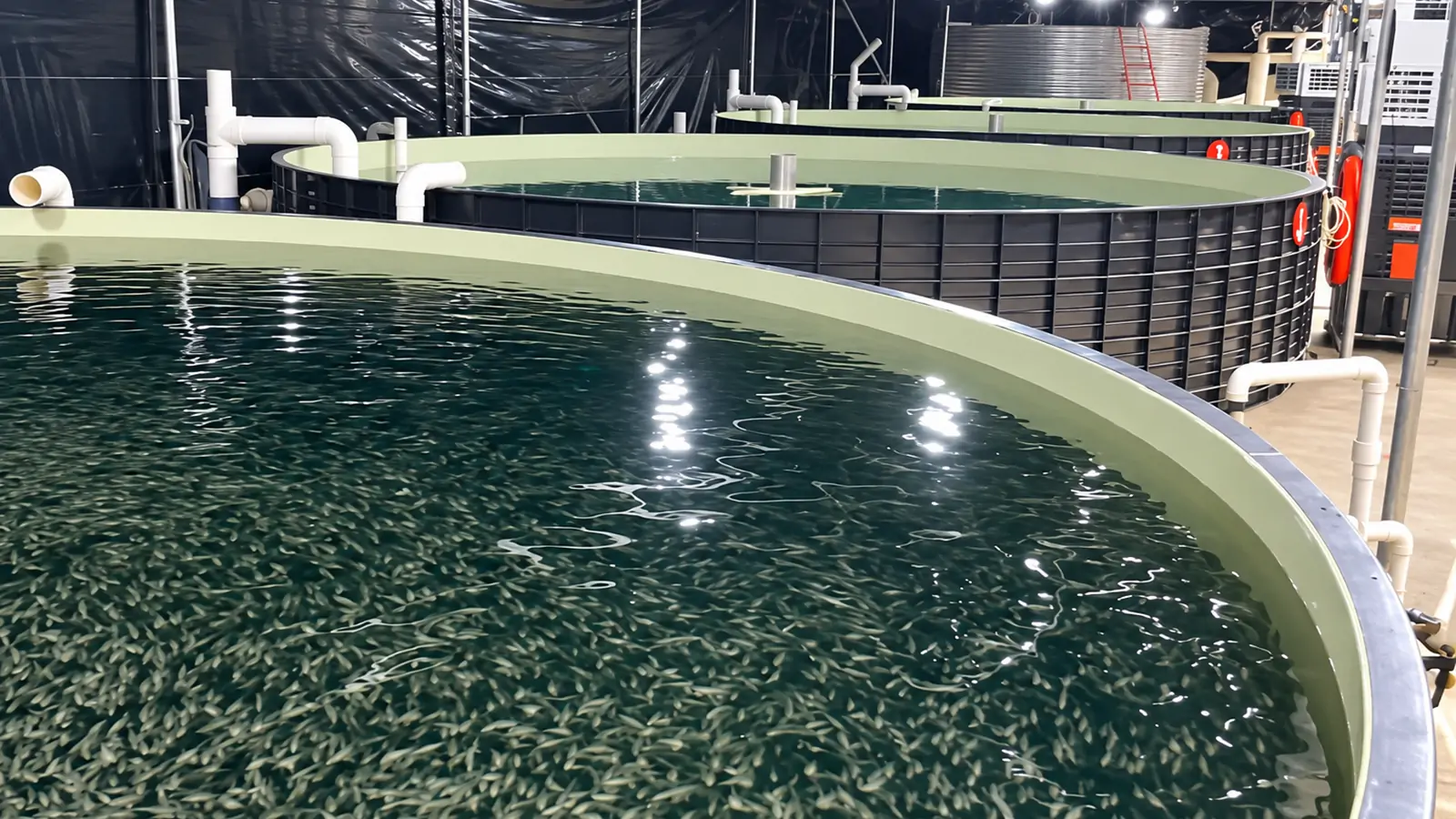
4. Use different systems at different production stages. A farm might use more tightly controlled conditions during juvenile production and then use a different water management approach for grow-out. The entire project doesn't have to follow one water-treatment model from start to finish.
A Real Example: Different Water Systems Within One Salmon Project
Iceland's First Water salmon project helps illustrate this. It is not being planned simply as either “all RAS” or “all flow-through.” The European Investment Bank's project description describes RAS for the smolt production stage and a Hybrid Flow-Through System (HFS) for subsequent grow-out.
The grow-out system is not just a once-through seawater supply either. According to First Water's project overview, fresh seawater is combined with treated, reused water. The company describes roughly two-thirds of grow-out water being reused, with treatment that includes oxygenation, CO₂ removal, and particulate filtration. The local supply of underground seawater is another part of the project's design conditions.
One distinction matters here: the smolt RAS is part of the company's development plan. First Water also describes its existing smolt facility as flow-through and the new RAS smolt facility as a planned development. We shouldn't describe that planned RAS stage as already fully operational.
The lesson isn't that a hybrid system always beats full RAS. It is that the same project can use different water-treatment approaches at different production stages, depending on the fish, the available water, and operating economics. First Water's reuse figure belongs to that project; it isn't a target that every hybrid farm should copy.
And none of these approaches can simply be transplanted into every older farm. Tank structures, drainage, pipe routes, available head, electricity, site layout, and the experience of the operating team all affect what can run reliably over time.
Why Does Equipment Location Matter as Much as Equipment Type?
A question we often discuss is: “I see drum filters, protein skimmers, and oxygenation equipment in RAS. Can I install those on my current farm?”
Before answering, we need to know which water stream the equipment will treat, and what problem it is meant to solve. The same filter installed on an incoming-water line, a tank outlet, or a recirculating return line may face very different conditions.
| Approach or installation point | What it may help with | What it does not solve by itself |
|---|---|---|
| Traditional ponds or flow-through farming | Using existing tanks or ponds, source water, and established farming practices | Water variability, higher waste loads, and discharge still need management |
| Mechanical filtration of incoming water | Removing some suspended solids before water enters the fish tanks | Dissolved substances, pathogens, and gas problems are not all removed by a screen |
| Protein skimming on incoming water or another selected stream | Removing some foam-separable substances under suitable conditions | Freshwater performance varies; this is not a universal inlet-water purification method |
| Partial recirculation / hybrid systems | Combining make-up water with a treated return-water stream | The reused water still needs appropriate treatment; reuse percentage alone is not enough |
| More fully recirculating RAS | Repeatedly managing culture water through a more complete treatment train | Continuous power, monitoring, maintenance, and emergency planning remain essential |
That's why a drum filter can make sense on one traditional farm, while another farm with an extensive recirculating treatment system may still need substantial make-up water. The right question isn't which label the farm fits under. It's whether the water quality problem, equipment function, and operating conditions actually match.
Comparing Construction and Operation: Benefits, Trade-offs, and Fish Health
A traditional farm may benefit from its existing ponds, available water, and experienced staff. It may not need to rebuild its infrastructure simply to adopt a different farming label. But seasonal changes in source water, limits on intake and discharge, or a production stage that needs tighter control can expose the limits of its current setup.
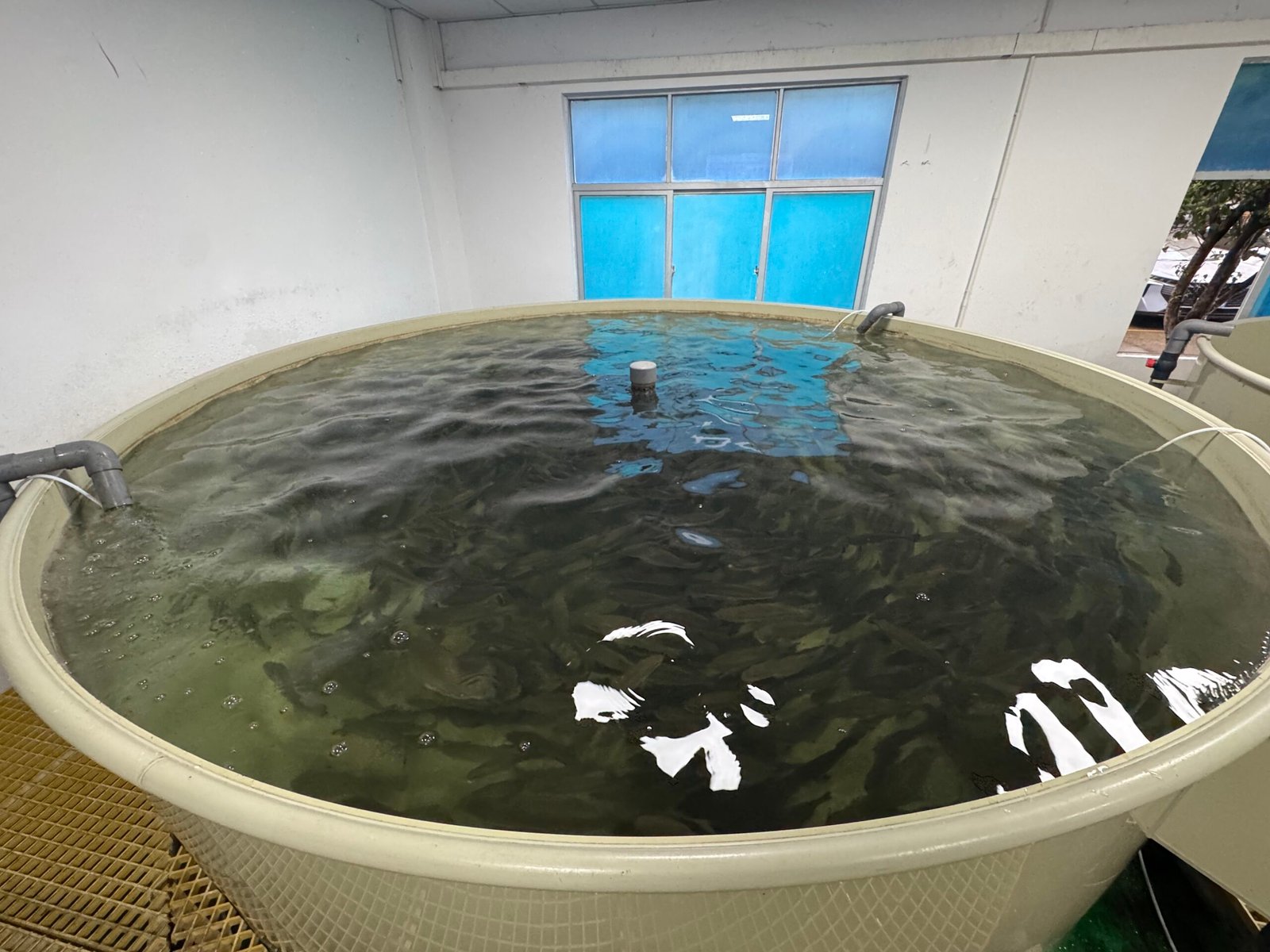
RAS offers more ways to control and treat water, which can be attractive when water supply, site conditions, or production requirements are restrictive. In return, pumps, treatment units, piping, monitoring, backups, and skilled maintenance all have ongoing costs and responsibilities. More control does not automatically mean lower overall cost, higher yields, or freedom from disease.
Hybrid approaches let farms address a pressing problem first and consider additional reuse later. But operating several water paths and treatment stages together also requires clear designs, interfaces, and responsibilities.
Fish Health Risks Are Changing, and RAS Is Not the Only Response
Consider recent Norwegian salmon farming data. An August 2026 industry report said that approximately 2.54 million salmon deaths were reported at marine farming sites in July, 31% fewer fish than in July 2025. That is a year-on-year change in the number of reported dead fish. It does not mean the mortality rate fell by 31 percentage points.
A separate estimate from the Norwegian Veterinary Institute put the cumulative risk of mortality during the marine farming stage at approximately 5.8% for the first half of 2026, compared with 7.3% in the same period of 2025. These are different measures. Algal blooms, disease, and local environmental conditions can also affect individual sites, so one national figure cannot describe every farm.
What does that have to do with RAS? Some salmon producers are looking at growing juveniles to a larger post-smolt size in land-based RAS before moving them to marine cages. The idea is to reduce the time the fish spend in the sea, where they may be exposed to sea lice, disease, and repeated handling. Research on hybrid production arrangements has explored related approaches, but it does not prove that adding a RAS stage will always improve survival. The land-based stage brings its own water quality, pathogen, equipment, electricity, and cost challenges.
This is really a question of which risks matter at which production stage, and whether changing that stage actually addresses them.
When comparing investment, it makes more sense to look at civil works, water intake, discharge, equipment, electricity, labor, maintenance, and operational risk against the same production target. Without comparable project scopes and real operating data, we wouldn't claim a universal payback period or water-saving percentage.
Start With the Problem You Want to Improve — Let's Talk About Your Farm
If you're already running a fish farm, we don't necessarily need to start by asking whether you want to convert it to RAS. We'd rather understand what's happening now. Is there too much sediment in the incoming water? Is waste hard to remove from the tanks? Does water quality become harder to control when you increase feeding? Or are water availability and site constraints limiting expansion?
If you're planning a new farm, we can start with the water source, species, production target, and the conditions your team will be working with. Traditional farming, partial recirculation, and RAS can all be part of that conversation. Using useful new technology doesn't have to mean abandoning everything that already works.
YUTANK works on RAS system design, related equipment manufacturing, and engineering implementation. Our aim is to understand the actual problem first and then discuss which equipment or treatment stages may be useful. You can also explore our RAS system solutions without treating them as the only possible starting point.
Frequently Asked Questions (FAQ)
Does Adding a Drum Filter or Protein Skimmer Make a Traditional Farm a RAS?
Not necessarily. Treating incoming water is different from treating culture water and returning it to the fish tanks. Whether the farm uses recirculation depends on its actual water flow, not simply which equipment appears on the purchase list.
Can I Treat Incoming Water Without Rebuilding My Existing Fish Tanks?
Potentially, yes. First identify whether the source-water problem involves suspended solids, dissolved substances, pathogens, gases, temperature, or something else. Then assess whether mechanical filtration, protein skimming, or another treatment method fits the actual conditions. The same equipment combination won't suit every source.
Can a RAS Still Exchange a Lot of Water?
Some systems may use more new water under particular culture loads, treatment limitations, or operating strategies; others may operate at much lower exchange rates. The word “RAS” alone doesn't tell you how much make-up water the farm needs. And water exchange isn't a substitute for every water quality treatment function.
What Is the Difference Between Partial Recirculation and Full RAS?
Partial recirculation generally reuses a portion of treated culture water while continuing to bring in new water. A more fully recirculating RAS relies more extensively on its treatment train to support repeated water reuse. In practice, there's a spectrum of designs rather than one universally accepted percentage that neatly separates the two.
Can a Protein Skimmer Completely Purify Freshwater Before It Enters a Farm?
No such general claim is justified. Protein skimming can help remove some fine particles and foam-separable substances, but freshwater results depend on chemistry and operation. It doesn't replace appropriate assessment and treatment for ammonia, pathogens, or other specific contaminants.
Is RAS Worth Exploring If My Traditional Farm Is Already Operating?
It may be worth exploring the equipment and treatment ideas without committing to a full conversion. Improving incoming-water treatment, solids removal, oxygenation, or selected water reuse may fit some farms better than rebuilding the whole facility.
Want to Discuss Your Water Treatment Challenge? (CTA)
If you already have fish tanks or you're planning a new farm, tell us about your water source, the species you're raising, and one problem you'd most like to improve. We can start there and discuss what traditional approaches, targeted equipment upgrades, and water recirculation can each contribute. Contact YUTANK to start the conversation.
References
- FAO, Chapter 15: Recirculating Systems and Re-use of Water in Aquaculture: https://www.fao.org/4/x5744e/x5744e0g.htm
- First Water, Project Overview — Flow-through with Re-use (FTS-R): https://www.firstwater.is/ip/project-overview
- European Investment Bank, FIRST WATER ALLOCATION FL 2025-0375 (2026-06-29): https://www.eib.org/en/projects/all/20260380
- University of Florida IFAS, Fish Health Management Considerations in Recirculating Aquaculture Systems—Part 1: https://ask.ifas.ufl.edu/publication/FA099
- Salmon Business (2026-08-21), Norway: biomass rises 3% as July mortality drops 31%: https://www.salmonbusiness.com/norway-salmon-biomass-rises-3-as-july-mortality-drops-31/
- Norwegian Veterinary Institute (2026-08-12), Dødelighet i lakseoppdrett første halvår 2026: https://kommunikasjon.ntb.no/pressemelding/19019629/dodelighet-i-lakseoppdrett-forste-halvar-2026?lang=no&publisherId=17848243
- Pino-Martinez & Handeland (2025), A Case Study Documenting Growth and Welfare of Atlantic Salmon Reared to Market Size in a Novel Commercial Hybrid Flow-Through System in Norway: https://doi.org/10.1155/are/4018594
- Lindholm-Lehto et al. (2025), Monitoring of Water Quality for Reduced Water Use in a Partial Recirculating Aquaculture System: https://doi.org/10.1002/aff2.70080
- de Jesus Gregersen et al. (2021), Foam Fractionation and Ozonation in Freshwater Recirculation Aquaculture Systems: https://doi.org/10.1016/j.aquaeng.2021.102195
- de Jesus Gregersen & Pedersen (2025), Effects of Drum Filters, Swirl Separators and Foam Fractionation on Water Quality in Pilot Scale Recirculating Aquaculture Systems: https://doi.org/10.1016/j.aquaeng.2025.102593