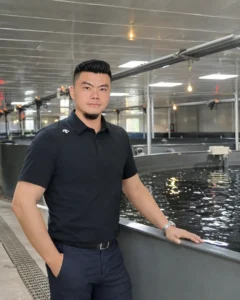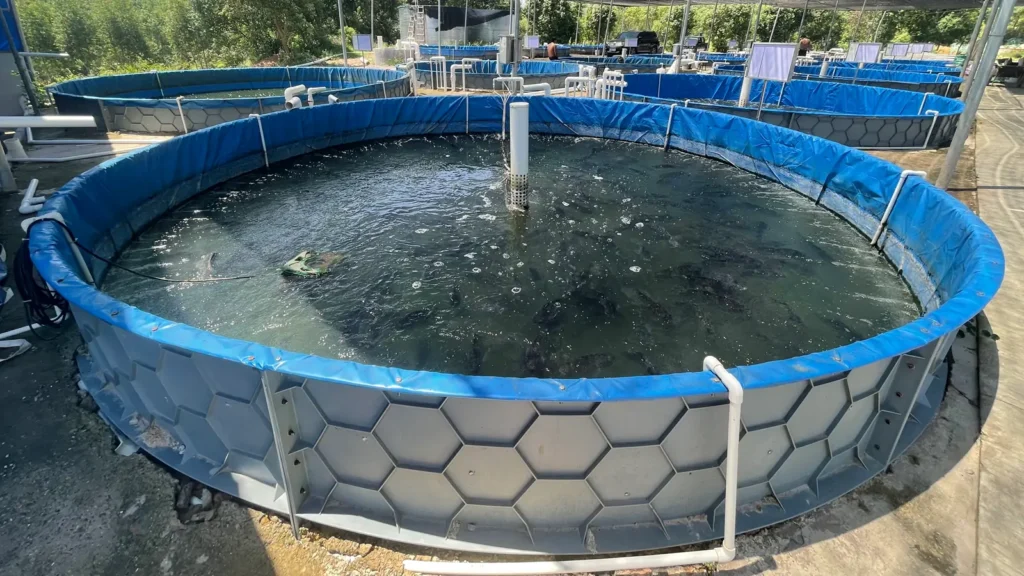
PP aquaculture tanks can be used for hatcheries, temporary holding, and different types of recirculating aquaculture systems (RAS). But when you ask a supplier about a PP tank, it is worth clarifying which type of construction they are offering.
At YUTANK, conventional welded PP tanks and modular reinforced PP tanks are two different options. Both use polypropylene, but their wall structures, manufacturing and installation methods, and critical waterproofing details are not the same.
We usually start by understanding how you plan to use the tanks before discussing which construction may be more suitable. The material alone does not determine whether a tank will work well for your project. Operating water depth, foundation conditions, inlet and outlet arrangements, and on-site installation all matter.
Not All PP Aquaculture Tanks Have the Same Construction
Different types of plastic aquaculture tanks are often grouped under the name "PP tanks." That can make it easy to overlook some important differences when comparing products.
Conventional welded PP tanks are fabricated from polypropylene sheets, with welded joints forming the tank body. They can be designed in circular, square, or rectangular shapes according to project requirements. This flexibility can be useful when your facility needs particular dimensions, layouts, or pipe connections.
Modular reinforced PP tanks use reinforced PP wall panels that are transported in sections and connected on site. YUTANK's modular reinforced PP tanks use a honeycomb-like reinforcement structure and are primarily intended for larger circular tanks and commercial facilities with multiple tanks.
There is one important distinction here: a modular reinforced PP wall provides the tank's wall structure, but that does not automatically tell you how the inside of the tank is waterproofed.
The water-contact surface, waterproofing layer, and wall-to-floor connections must be confirmed for the actual product configuration.
So when a supplier offers a "PP Aquaculture Tank," we would first want to understand what the complete tank construction actually includes.
When Would We Consider a Conventional Welded PP Tank?
Imagine you are planning a hatchery where different areas have already been allocated for specific activities. Some tanks will be used for young fish, others for temporary holding, and some must fit around existing walls or pipework.
In this situation, we would first look at whether a welded PP tank can better accommodate the available space.

One practical advantage is the flexibility to design the tank shape and connections around the project. For example, square or rectangular tanks may be easier to arrange within a restricted building layout, while circular tanks can be designed with their own inlet and waste-discharge arrangements.
However, being able to customize the shape does not mean every shape will deliver the same water movement.
Particularly in hatchery and temporary holding applications, we still need to consider the needs of the cultured species, whether the water movement is appropriate, how the tank will be drained, and how operators will observe, harvest, and clean it.
Manufacturing and transportation are also worth discussing early.
Some welded PP tanks can have much of their fabrication completed at the factory. Others may require additional welding on site because of their dimensions or the conditions at the installation location.
If a complete tank cannot pass through the building entrance, or significant connections must be completed inside the facility, the installation conditions will affect the practical choice.
That is why we would not stop at asking, "Can this tank be made in the required size?"
We would also want to understand how it will be fabricated, transported, supported, and installed.
When Does a Modular Reinforced PP Tank Make More Sense?
Now consider a different situation.
You are developing a commercial RAS facility with several large circular tanks inside the same building. In this case, transportation and installation methods may become important factors in the project.
A modular reinforced PP tank is worth considering.
Its wall panels can be delivered separately and assembled into the tank wall on site. When transporting a complete tank would be difficult because of road access, building entrances, or other logistical restrictions, sectional delivery offers another way to complete the installation.
For facilities with multiple tanks, future expansion and maintenance also deserve attention.
Using tanks with similar structural arrangements can help coordinate layouts, inlet and outlet locations, and installation sequences during planning. However, whether all tanks should have the same dimensions still depends on the water volume and operating requirements of each production stage.

Modular construction does not mean installation is simply a matter of connecting a few panels.
Before choosing this approach, we need to understand how the wall will be supported, how the foundation is prepared, what surface will be in contact with the culture water, and how the panel connections and tank floor will be waterproofed.
Different configurations may require different installation procedures.
If those activities are not clearly included in the supplier's quotation or construction scope, a solution that appears straightforward to assemble may still involve additional coordination and site work.
The Benefits of PP Do Not Replace Structural Design
When customers consider polypropylene tanks, corrosion resistance is often one of their main concerns.
PP can offer useful corrosion resistance in suitable water environments, particularly for equipment and tank surfaces that remain in contact with culture water.
But we would not recommend judging the entire tank solely by this material property.
A water-filled tank depends on its walls, supporting structures, floor, and foundation working together.
For welded PP tanks, we need to consider not only the sheets themselves but also welded connections, reinforcement, and any external loads that may affect the tank.
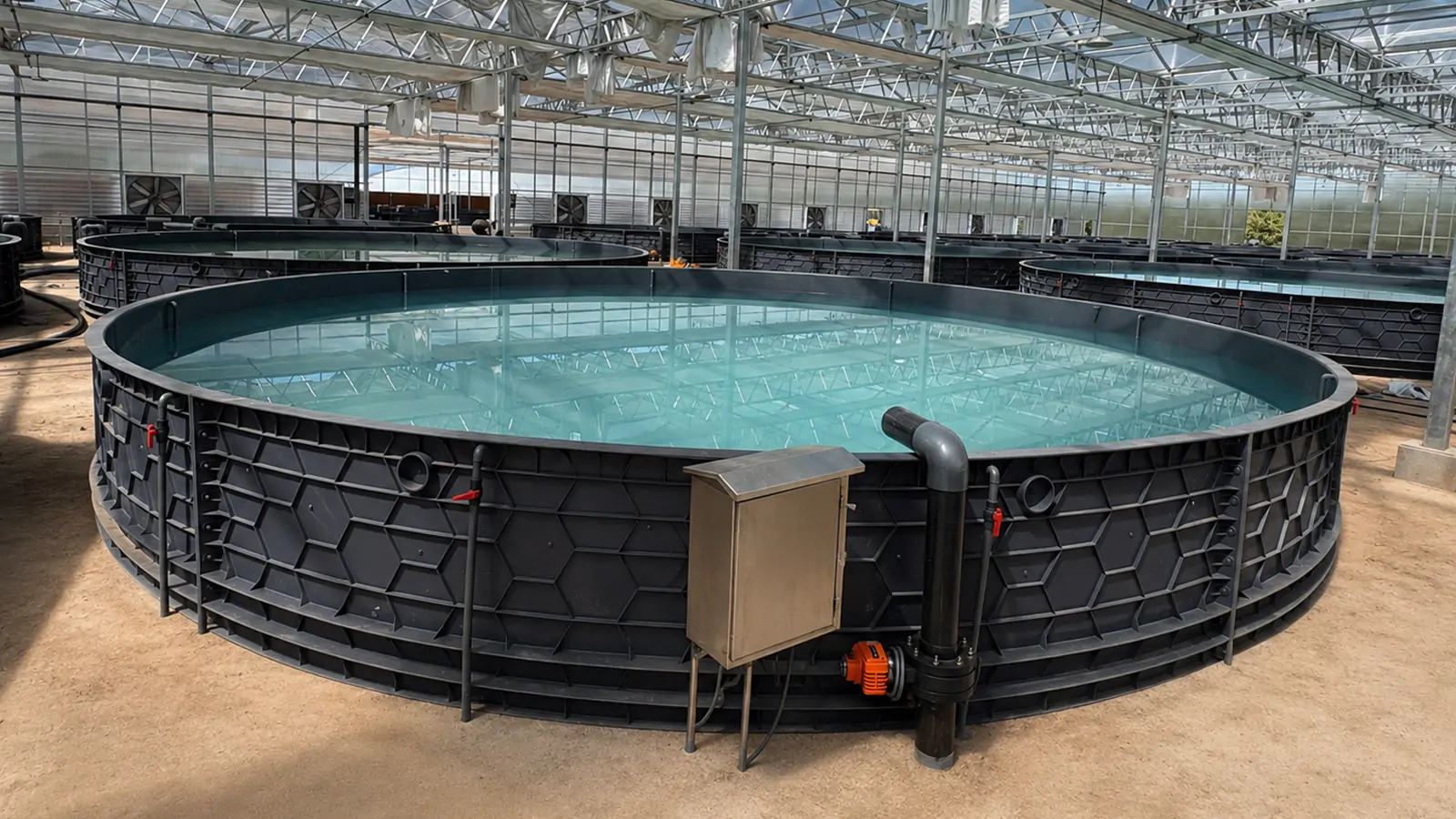
For modular reinforced PP tanks, it is important to evaluate the wall structure separately from the internal waterproofing system.
The ability to assemble panels into a tank wall does not automatically mean that the panel joints, wall-to-floor junction, and pipe penetrations are watertight.
If your project requires a partially buried tank, or if backfill, construction equipment, or other external loads may act on the tank, these conditions need separate evaluation.
This is why we prefer to discuss two questions independently:
First, how will the tank obtain the necessary structural support under its operating water depth and actual site conditions?
Second, which parts of the construction provide watertightness, and how can those parts be inspected and maintained after installation?
These questions usually tell us more about the complete solution than simply asking how thick the PP sheets are.
Final material grades, structural arrangements, and waterproofing methods still need to be confirmed through the relevant product information and engineering design.
Why Should Inlets, Drains, and Wall-to-Floor Connections Be Discussed Early?
Some projects begin by focusing mainly on tank diameter and capacity. Detailed discussions about inlet pipes, bottom drains, and overflow locations only happen when installation is approaching.
We prefer to consider these connections while the tank construction is still being selected.
For example, if a tank requires a bottom waste-discharge pipe, the drain assembly must work with the tank floor. We also need to consider its position, sealing arrangement, maintenance access, and where the discharged water will go.
For a welded PP tank, we would need to confirm how the bottom, walls, and pipe penetrations will be fabricated, and who is responsible for the relevant welding and sealing work.
For a modular reinforced PP tank, the wall-to-floor connection deserves particular attention alongside the pipe connections.
If the tank floor waterproofing depends on the civil foundation, the tank supplier and civil contractor should agree on their respective responsibilities before installation begins.
There is also another point worth understanding: installing a bottom drain does not automatically guarantee effective waste removal.
Inlet positions, water movement, floor geometry, and drainage arrangements must be considered together. Whether solid waste can move toward the discharge area depends on the actual hydraulic conditions during operation.
That is why we prefer to discuss these details before purchasing the tanks.
The purpose is not to ask you to solve every engineering problem in advance. It is to avoid discovering, after fabrication, that the tank connections do not match the intended system or site conditions.
How Do PP Tanks Fit Into a Recirculating Aquaculture System?
When a PP tank is used in a recirculating aquaculture system, it is not simply a standalone water container. It becomes part of the overall water circulation process.

Water must leave the tank, pass through the required treatment stages, and return according to the system design.
Mechanical filtration, biological treatment, oxygenation, and other water treatment equipment may all have corresponding flow and piping requirements.
For example, when tank discharge is connected to a drum filter, the drainage arrangement and pipe layout need to be compatible with the hydraulic design of the system.
If all pipe connections are fabricated solely according to the tank dimensions, without considering the rest of the equipment layout, they may restrict the subsequent system design.
At the same time, the tank must provide enough practical space for farming operations.
Feeding, observation, cleaning, grading or batch management, and access for maintenance personnel can all influence the final arrangement.
For hatchery and temporary holding applications, we may pay more attention to how individual production units are organized and managed.
For a commercial RAS facility with multiple tanks, tank quantity, operating water volume, inlet and outlet arrangements, and the treatment system need to be considered together.
YUTANK provides both aquaculture tank manufacturing and RAS system design and integration services. This allows us to participate in early discussions about how the tank connections and overall system layout should work together.
However, that does not mean one PP tank construction is automatically suitable for every RAS project.
Actual connection dimensions, circulation flow rates, and equipment configurations must still be determined according to the project requirements.
How Should You Compare Two PP Tank Quotations?
When a customer receives quotations for both welded PP tanks and modular reinforced PP tanks, we would rather clarify what each supplier is actually providing before comparing the total prices.
The differences below can help you understand what needs to be checked for each construction.
| Item | Welded PP Tank | Modular Reinforced PP Tank |
|---|---|---|
| Main construction | PP sheets are fabricated and welded to form the tank body | Reinforced PP wall panels are connected on site to form the tank wall |
| Typical shapes | Circular, square, or rectangular designs can be considered | Primarily used for circular tanks |
| Transportation and installation | Confirm factory fabrication, complete-tank transport, and on-site welding requirements | Confirm sectional delivery, panel assembly, and additional waterproofing work |
| Water-contact surface | Check PP sheet surfaces, welded joints, and connections | Confirm the actual internal surface and waterproofing configuration |
| Key details to verify | Weld quality, structural support, operating water depth, and external loads | Panel connections, foundation, wall-to-floor waterproofing, and on-site responsibilities |
This table describes differences in construction and delivery. It does not mean that one option will always cost less, provide greater structural strength, or last longer.
For example, one quotation may already include the required on-site connection work, while another expects the buyer to arrange it separately.
Even when both quotations describe a "PP Aquaculture Tank," they may not cover the same scope of supply.
If you are still comparing different tank materials, you can read our PP vs Galvanized Steel Aquaculture Tanks comparison.
If you have not yet decided on the overall tank construction, our guide to choosing aquaculture tanks for commercial RAS projects covers the broader selection process.
For customers who are already considering PP, our goal is to help narrow down the options: first understand the type of tank construction you need, then confirm how that tank can actually be delivered and installed at your site.
Frequently Asked Questions
Do PP aquaculture tanks always work without a liner?
Not necessarily.
Welded PP tanks and modular reinforced PP tanks may have different internal water-contact constructions.
For modular reinforced PP tanks in particular, the wall panel material alone does not establish whether a separate waterproofing layer or other internal treatment is required.
The actual product configuration and confirmed waterproofing arrangement should determine the answer.
Are modular reinforced PP tanks always better for large aquaculture projects?
No. That depends on the project.
Modular reinforced PP tanks offer sectional transportation and on-site assembly, which can be useful for certain large circular tanks or multi-tank facilities.
Welded PP tanks can also be designed around project requirements.
The final choice should consider tank dimensions, manufacturing methods, site installation conditions, and the supporting structure.
Can PP aquaculture tanks be used for seawater farming?
PP materials can be used in suitable seawater aquaculture environments, but the material name alone is not enough to confirm that an entire tank is suitable.
The actual PP grade, operating temperature, connections, sealing materials, metal accessories, and cleaning and operating conditions should also be evaluated.
How can I tell whether a PP tank quotation is complete?
In addition to the tank body, clarify what is included for structural support, floor construction, waterproofing, inlet and outlet connections, transportation, installation, and on-site assembly.
For modular reinforced PP tanks, it is especially important to confirm whether the quotation includes the internal watertight system and wall-to-floor connections.
A quotation for reinforced wall panels should not automatically be treated as a quotation for a complete, ready-to-operate aquaculture tank.
Considering PP Aquaculture Tanks for Your Project?
If you already have an initial farming plan, you can tell us which species you intend to raise, how many tanks you are considering, what the tanks will be used for, and the general conditions of your site.
You do not need a complete set of engineering drawings for an initial discussion.
We can start by reviewing how conventional welded PP tanks and modular reinforced PP tanks may fit your application, helping you identify which options are worth exploring further and which construction details should be confirmed before purchasing.
You can also explore YUTANK's aquaculture tank products or contact our team to discuss your project.