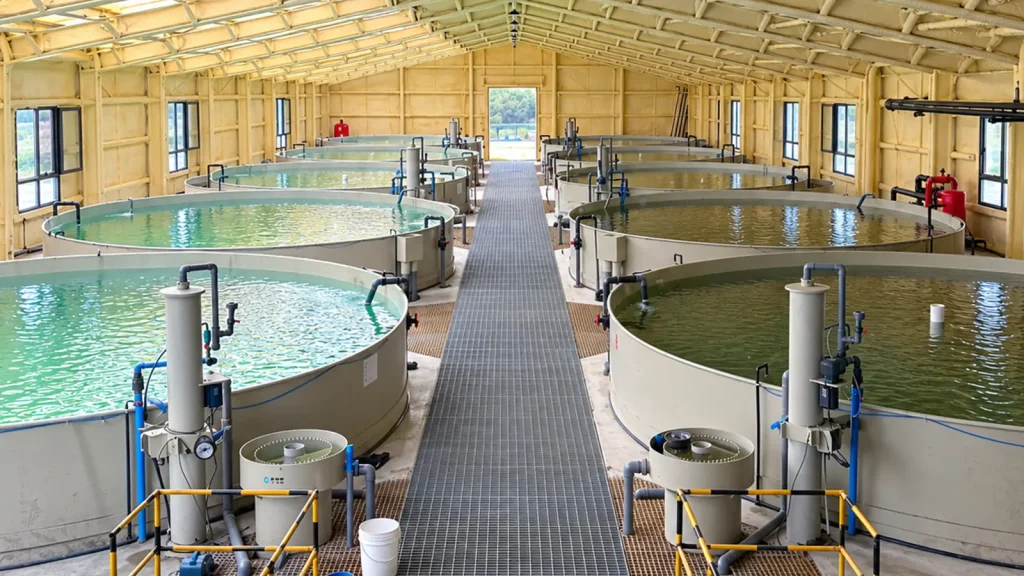
RAS Fundamentals
What Is a Recirculating Aquaculture System (RAS)?
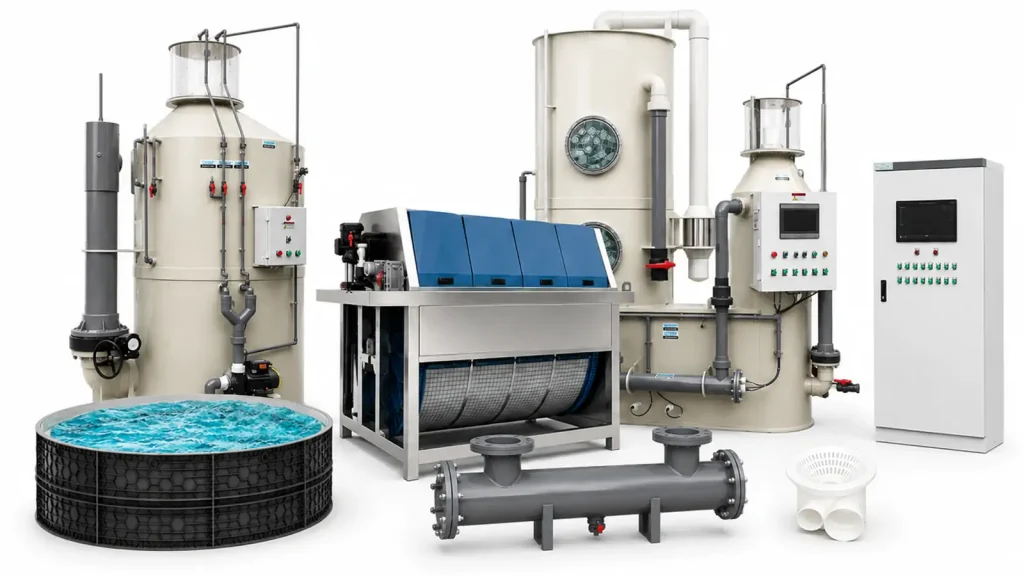
Learn what a recirculating aquaculture system (RAS) is, how water is reused, how fish waste is managed, and what makes a complete RAS in aquaculture.
Practical guidance on RAS planning, water treatment, equipment selection and system operation for commercial aquaculture projects.
Learn what a recirculating aquaculture system (RAS) is, how water is reused, how fish waste is managed, and what makes a complete RAS in aquaculture.
Learn how to select and match RAS equipment based on biomass, feed load, recirculation flow, treatment requirements, and peak operating conditions for a commercial fish farm.
Learn why dissolved oxygen is critical in high-density RAS, what consumes oxygen, why DO fluctuates, and why aeration alone may not meet peak oxygen demand.
Clear-looking RAS water may still contain solids. Understand TSS versus turbidity, sampling methods, drum filter limits and how to interpret a rising trend.
Alkalinity in RAS can decline even when pH looks normal. Learn how nitrification, makeup water and testing methods affect buffering capacity.
Why does pH rise or fall in RAS? See how CO₂, nitrification, alkalinity and ammonia affect readings—and what to check before making changes.
Why can nitrate keep rising when ammonia and nitrite are stable? Understand NO3 versus NO3-N, monitoring trends and possible nitrate-removal options in RAS.
Nitrite rising in your RAS, even when ammonia looks normal? Learn how to verify NO2 readings and review biofilter conditions and fish-risk factors.
Ammonia rising in your RAS? Learn how to read TAN and NH3, check feeding and biofilter conditions, and decide what to investigate first.
Water quality management in a commercial recirculating […]
Start Your RAS Project
Tell us your target species, production capacity, site conditions and project stage. Our team can help you identify the system configuration and equipment required for your project.
You don't need a complete equipment list to get started.