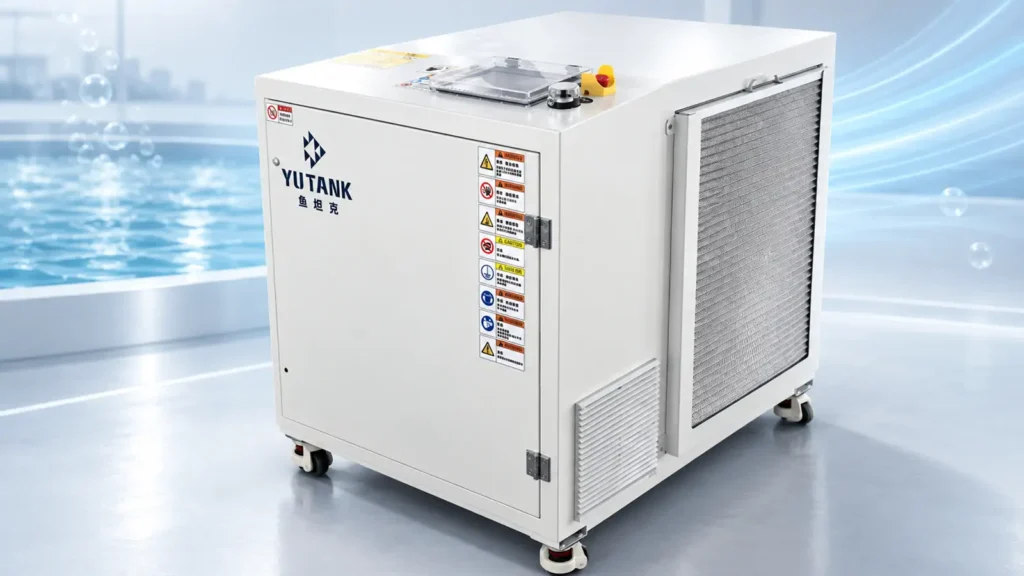
Suppose you're choosing a blower for an MBBR biofilter. You get two options: a Roots blower that costs considerably less, and an air-suspension blower with a much higher purchase price. People may start talking about efficiency, noise, and newer technology. But the question you're probably asking is simpler: “Does my fish farm really need to spend that much more?”
We think that's the right place to start. When you're building a fish farm, you already have plenty to pay for: tanks, water-treatment equipment, pumps, and backup power. If a lower-cost Roots blower can deliver the air your system needs, there's no reason to increase the budget just because another technology sounds more advanced. On the other hand, if the blower will run for long hours every day, electricity use and how you'll operate it also matter.
So when we help you choose a blower, we usually start with three questions: Where does the air need to go? How much airflow and pressure do you need? And what's your budget? Then we can talk about which blower fits, instead of declaring one technology the winner before we understand your farm.
If the price gap is so big, why not just buy the cheaper one?
If your MBBR doesn't need a huge air supply, a Roots blower can deliver the required airflow at the required pressure, and your budget is tight, we'd be happy to consider the Roots option first. A more expensive blower isn't automatically a better fit for your fish farm.
There's another situation, though. Maybe the blower will run almost around the clock, or you need to adjust the airflow at different times. Then we'd look beyond the initial purchase price and talk about electricity costs and control options. An air-suspension blower may be worth considering, but whether it justifies the extra investment depends on how you'll actually use it.
For example, two blowers might both be labeled 4 kW. That doesn't mean they deliver the same amount of air, and it certainly doesn't mean they'll consume the same amount of electricity every hour. Before comparing quotations, we need to check whether the two options are being asked to do the same job. If the less expensive option meets your needs, that's a sensible choice. If the more expensive option can't demonstrate extra value for your application, we won't push it.
First, where are you sending the air?
A RAS may need air in more than one place. Our MBBR biofilters use aeration to help provide oxygen to the microorganisms living on the media and to keep that media moving as intended. Some fish tanks also use air diffusers for aeration.
Both air-suspension and Roots blowers do the same basic job here: they supply air. They're not PSA oxygen generators or oxygen cones. A PSA generator concentrates oxygen from air, while an oxygen cone helps transfer supplied oxygen into water. A blower supplying air to an MBBR serves a different purpose, even though all these systems are connected to oxygen management.
So tell us where you plan to use the blower: for the MBBR, for tank aeration, or for both. That already gives us a useful starting point.
What's actually different about air-suspension and Roots blowers?
A Roots blower is a positive-displacement machine. Its rotating elements move air through the blower. An air-suspension blower usually uses a high-speed centrifugal impeller, air bearings, a high-speed motor, and a control system. They move air in different ways, so it matters where each machine will be operating.

But you don't need to study every internal component before buying one. What matters to your farm is more practical: Can it deliver the airflow you need? Can it work against the required pressure? Will you need to change airflow often? And can your team maintain it properly?
One thing we'd like to clear up: air-suspension doesn't mean maintenance-free. Intake filters still need attention, cooling and pipework still matter, and clogged diffusers can affect how the system runs. Roots blowers have their own maintenance needs too. The right maintenance schedule comes from the specific model you choose—not from the technology name alone.
Why do we keep asking about airflow and pressure?
Let's use some of the blowers we can supply as examples.
Our 2.2 kW air-suspension blower configuration delivers approximately 4.0 m³/min at around 25 kPa. A 4 kW air-suspension configuration delivers approximately 7.8 m³/min at around 25 kPa.
For our SR80 Roots blower, a 4 kW configuration delivers approximately 3.71 or 4.43 m³/min at around 24.5 kPa, depending on the speed configuration.
At first glance, you might think: “So the air-suspension blower gives me similar airflow with fewer kilowatts. It must use less electricity, right?” We understand why it looks that way. But we wouldn't use these figures alone to tell you one machine is more energy-efficient.
The pressure points aren't exactly the same, and the speed settings and airflow measurement conditions may differ. More importantly, the kW figures here describe the equipment's rated motor or configuration power, not measured electrical input for both machines at one identical operating point. Without that like-for-like information, we can't calculate a credible percentage of energy savings.
And the pressure matters for another reason: as the pressure a blower must overcome changes, the airflow it can deliver may change too. If you tell us, “I need 4 m³/min,” our next question will be: “At what pressure does that air need to reach the diffusers?” That's much more useful than choosing by motor kW alone.
If my MBBR tank isn't very deep, does pressure still matter?
Water depth is part of the answer, but air doesn't travel straight from the blower outlet into the water. It has to pass through main pipes, elbows, valves, distribution lines, and diffusers. Each part can add resistance. Diffusers that become fouled over time may add even more.
That's why we wouldn't choose a blower simply because you tell us the MBBR tank's water volume. We'd also ask where the diffusers sit, how deep they are, how the pipes are arranged, and how much air the process needs.
There's something else worth remembering with an MBBR: aeration isn't just about supplying oxygen. It also helps keep the biofilter media moving as designed. Too little air may affect both media movement and biological treatment. But more air doesn't automatically mean better treatment either. We need to look at the MBBR and its aeration system together.
Apart from buying the blower, what else will you pay for?
If both blower types can meet your needs, we'd first make sure the quotations include comparable things. One offer might cover only the blower unit, while another includes a control cabinet, filters, silencers, installation, or commissioning. Looking only at the total price can give you the wrong impression.

We can also help you look at electricity costs, but we need numbers we can trust. We'd want to know how much electrical power each blower actually draws at the same airflow and working pressure, approximately how many hours it will run each year, and your local electricity price. Add the relevant maintenance costs, and then you can start assessing whether a higher initial investment is worthwhile.
At the moment, we don't have measured input-power figures for these blower types under the same operating conditions. That's why we won't tell you that air-suspension blowers “save X%” or that they'll pay for themselves in a certain number of years. An unsupported payback estimate may sound attractive, but it won't help you make a reliable budget decision.
The same goes for noise. If noise around your blower room is a concern, we can include it in the selection requirements. Without noise measurements taken under comparable conditions, though, we won't promise that one type is always quieter.
And don't forget backup air supply. If the blower stops, what happens to your MBBR aeration? On a fish farm running continuously, backup arrangements and a practical response to faults may matter more than the name of the technology.
How can you compare two blower options without getting misled?
If you've already received two proposals, here are the questions we'd go through with you.
| What we'd ask you | Why it matters |
|---|---|
| How much airflow does the biofilter need? | The air supply must support aeration and media movement; tank volume alone isn't enough to decide. |
| What pressure is needed at the diffusers? | Water depth, pipework, and diffusers all affect the required pressure. |
| How much electricity does each blower use at that operating point? | Real power use needs to be compared at the same duty, not inferred from rated motor kW. |
| Do you need to change the airflow during operation? | Your operating pattern affects blower and control-system selection. |
| What's included in each quotation? | The blower, control cabinet, accessories, commissioning, and service scope need to be compared fairly. |
| What about maintenance and backup air supply? | Being able to maintain the system and handle a failure is part of the practical cost. |
If you don't have all these answers yet, that's fine. We can help narrow down the options first. We just won't pretend there's a single “best value” blower before we know what the system needs.
If you're building a RAS, how can we choose together?
We can supply blower options from the ZKK, SR, ZN, and TB series through our manufacturing partners, and we can help you look at them alongside the MBBR, air piping, and diffusers. Our job is to help you choose equipment that fits the project—not to recommend a more expensive blower simply because it has a higher price tag.
You don't need a finished set of engineering drawings to start a conversation. Tell us what you're farming, where the blower will send air, roughly how deep the diffusers will be, how long the blower needs to run each day, and your budget range. If you already know the required airflow and pressure, even better. If not, we can work out what still needs to be checked.
You can also have a look at our MBBR biofilters, aquaculture oxygenation systems, and complete RAS solutions. Let's figure out what your farm actually needs before deciding which blower to buy.
Frequently Asked Questions
Is an air-suspension blower always more energy-efficient than a Roots blower?
Not necessarily. We'd need to compare actual electrical input at the same airflow and pressure. Rated motor kW alone can't tell us a reliable energy-saving percentage.
If my budget is limited, can I just choose a Roots blower?
It's certainly worth considering. If it meets your airflow, pressure, control, and backup requirements, there's no reason to spend more just for a technology label.
If an air-suspension blower costs more, will it definitely pay for itself?
No. Without like-for-like electricity-use data, operating hours, and maintenance costs, we can't promise a payback period.
Why can two 4 kW blowers deliver different airflow?
The operating principle, speed, working pressure, and measurement conditions can differ. The same kW rating doesn't guarantee the same airflow or actual electricity consumption.
Is an MBBR blower the same thing as a PSA oxygen generator?
No. An MBBR blower mainly supplies air for aeration. A PSA generator concentrates oxygen from air. They have different jobs.
Does an air-suspension blower require no maintenance?
No. Intake filtration, cooling, pipework, and diffusers still need attention. Follow the requirements for the specific model.
Can a Roots blower be used in a commercial RAS?
Yes, provided it meets the aeration requirements of the biofilter or fish tanks. The choice should be about the actual duty, not whether the technology sounds newer.
Can I ask about a blower before I have complete MBBR drawings?
Of course. We can start with how you'll use it, water depth, pipework, air demand, and budget, then identify which details still need confirming.
Let’s Talk About Your Aeration Setup
If you're choosing a blower for an MBBR—or wondering whether to replace a Roots blower with an air-suspension model—tell us about your airflow, pressure, operating conditions, and budget. Contact YUTANK, and we'll start by understanding what your system needs before suggesting a suitable option.