When choosing aquaculture tanks, there is no universal answer to whether PP or galvanized steel is better. Galvanized steel tanks often offer the advantages of sectional transport and relatively straightforward assembly. Conventional welded PP tanks provide a more continuous, corrosion-resistant internal surface, but structural support, welding and construction costs still need to be considered. Modular reinforced PP tanks aim to combine some of these advantages, although their waterproofing performance still depends on the specific construction used.
These differences cannot be judged from a material data sheet alone. YUTANK's tank development grew out of early farm experience with metal frames and tarpaulin liners, then evolved through bolted galvanized steel tanks, conventional welded PP tanks and several waterproofing approaches for honeycomb-reinforced PP tanks. Each change was driven by problems that the previous construction had not fully resolved in operation.
This article does not rank every tank by price or material. Instead, it uses that product development experience to explain what you should really compare: the supporting tank wall, the water-contact surface, the seal between the wall and floor, the amount of site work, and the conditions for cleaning and repair after installation.
Why Did YUTANK Start Improving Metal-Frame Tanks With Tarpaulin Liners?
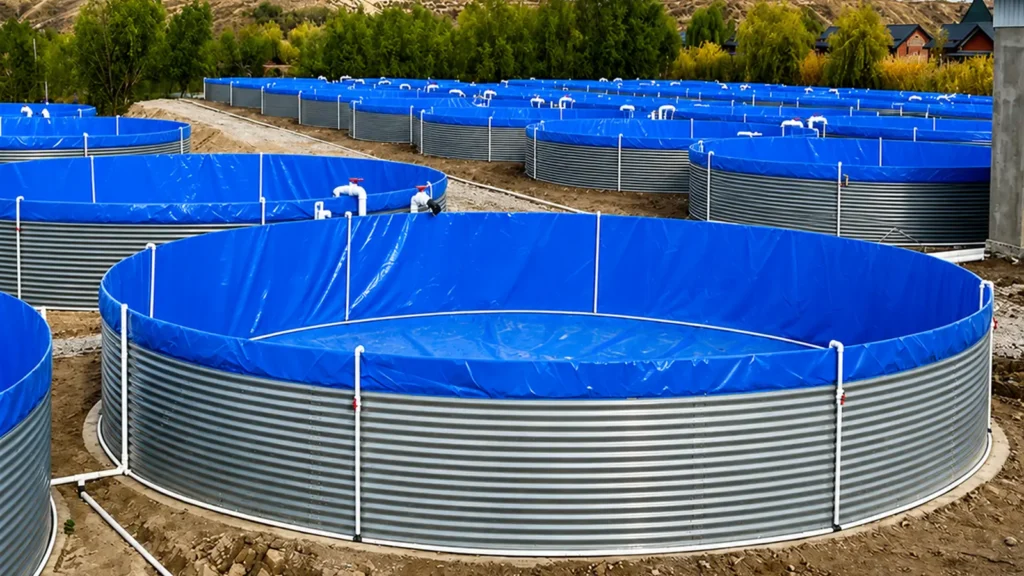
YUTANK's aquaculture tank development can be traced to practical farming experience in 2016. At that time, a metal frame combined with a flexible tarpaulin liner was a common tank arrangement on farms. Its advantages were practical: materials and transport costs were relatively easy to control, components could be delivered in sections, and installation could be quick. For sites that needed farming tanks in place without a long construction process, it was a reasonable option.
The limitations became more apparent during use. A basic frame-and-liner assembly did not always provide the tidy appearance operators wanted. Depending on installation and tank geometry, flexible liners could form folds and wrinkles, especially around corners. Those areas could trap uneaten feed, feces or other deposits and make cleaning more difficult. Some sites also faced the risk of rodents damaging exposed flexible materials.
Subsequent designs took inspiration from the assembled structure of grain silos, using modular metal wall panels to form a more complete tank wall. One lesson from that development remains relevant today: easy transport and installation are worth preserving, but the decision cannot stop at the day the tank is assembled. You also need to consider how easily the tank can be cleaned, inspected and repaired over years of farming.
What Did Galvanized Steel Tanks Improve, and What Problems Remained?
Around 2018, YUTANK's tank range reached an important stage in the development of bolted galvanized steel structures, alongside work relating to the associated patents. Compared with a simpler metal-frame tank with a tarpaulin liner, a bolted galvanized steel tank offered a more complete appearance and a wall with a clearer structural supporting role. It also reduced the exposure of flexible sidewalls to potential external damage. The steel panels could still be transported in sections and assembled on site using fasteners.
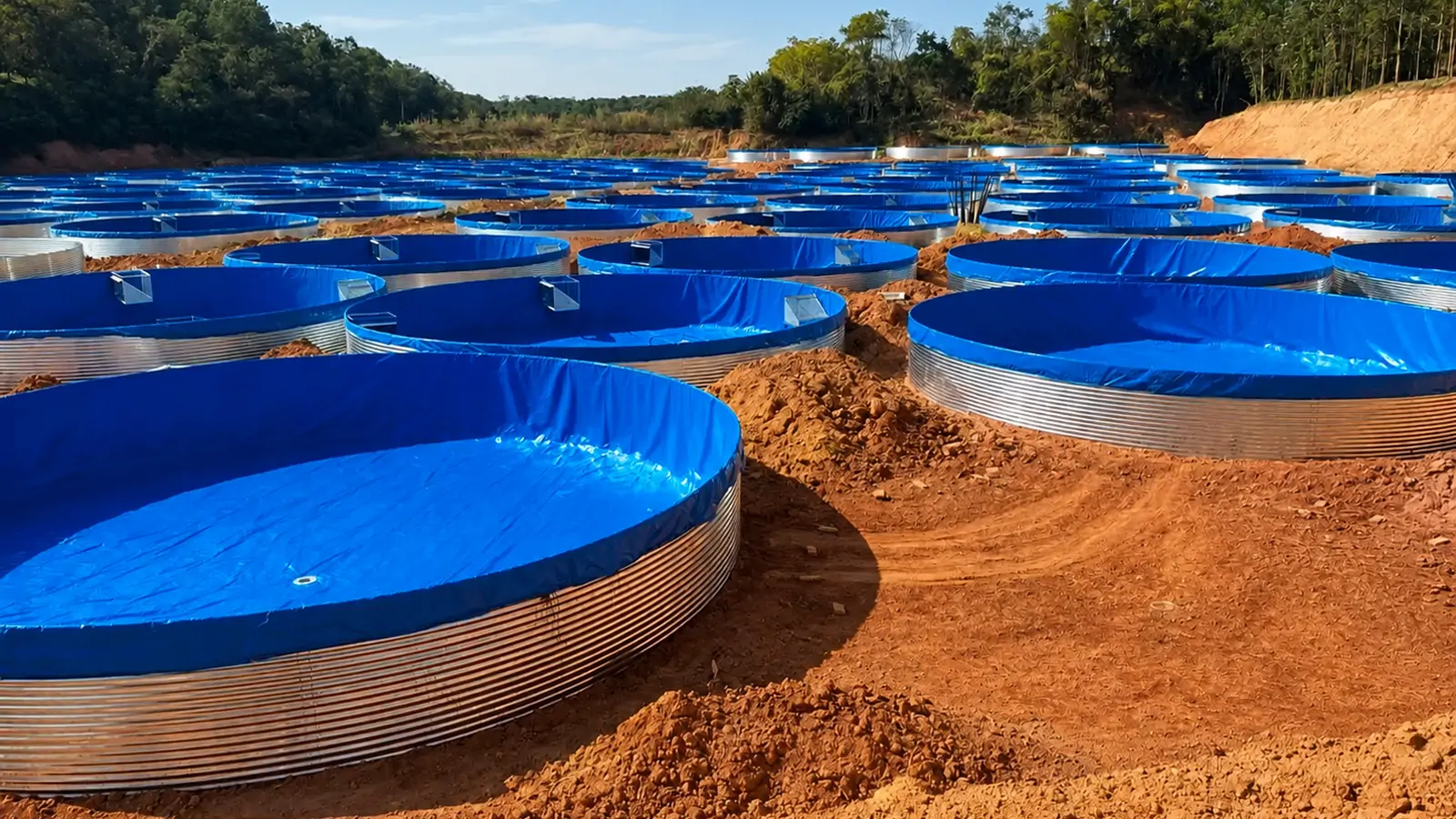
However, a galvanized steel wall addresses the structural side of the tank; it does not automatically solve the liner problem. In the common steel-wall-plus-flexible-liner configuration used by YUTANK, the liner is the primary water-retaining layer. Wrinkles in the installed liner, folds at the wall-to-floor junction and bottom-drain connections remain areas that require attention during inspection and cleaning. A wrinkle does not necessarily stop solids from being removed, but it may create local places where waste collects and cleaning becomes harder. Actual solids movement toward a drain also depends on the tank bottom and the hydraulic design of the inlets and outlets.
Long-term exposure of metal components is another consideration. Even where the liner separates culture water from most of the steel wall, exposed fasteners, damp joints and components subject to salt spray or splashing may require corrosion assessment. For marine aquaculture, particularly in warm, humid or high-salt-spray locations, galvanized steel structures call for more careful evaluation than a simple assumption that freshwater and marine sites present the same maintenance conditions. Galvanized steel is not unsuitable for every marine application, but its exposure risks cannot be ignored.
Why Did Conventional Welded PP Tanks Become Popular, and Why Did They Need Further Improvement?
Compared with a metal structure and flexible liner, one of the attractions of a conventional welded PP tank is the ability to create a relatively continuous internal surface using polypropylene sheets and welded joints. When the PP grade is appropriate for the project, resistance to corrosion in the intended water environment, along with the flexibility to fabricate different shapes and pipe connections, can be valuable. Without the large folds typical of a flexible liner, the inner surface can also be easier to inspect and clean.
Yet the corrosion resistance of PP does not replace structural design. Large tanks are subjected to water pressure over long periods, so sheet thickness, external reinforcement, connections, foundations and long-term material deformation all need to be considered. If foundation settlement, external backfill pressure or construction loads are not properly controlled, the wall panels and welded joints can be affected. YUTANK has also received customer feedback about welded PP tanks that needed partial burial: lateral pressure from earth and stone backfill during installation caused the walls to deform. This illustrates an important point: loads applied during construction, not only water pressure during operation, must be accounted for in the design.
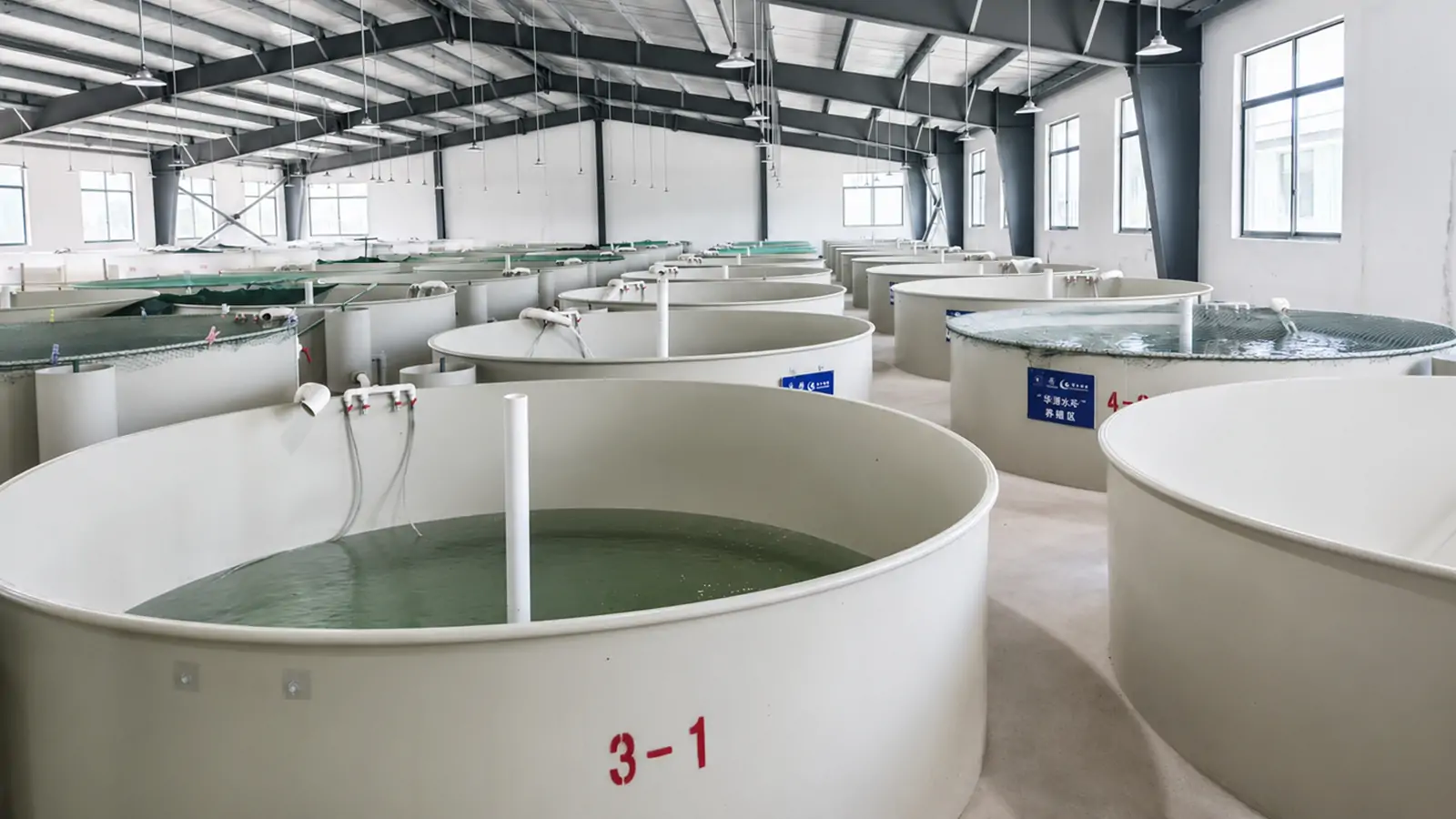
Conventional welded PP tanks may also leave a substantial amount of work to the job site. In YUTANK's historical project experience, completing relevant on-site work for a conventional PP tank around 8 m in diameter required skilled welders working together. Actual construction time varies with the tank structure, amount of welding, equipment and site conditions; one past installation should not be turned into a standard time allowance for every PP tank. For larger tanks, weld quality, weather conditions and the availability of qualified personnel can all affect delivery.
This does not mean that conventional welded PP tanks have been superseded in every application. They remain worth considering where custom shapes, a relatively continuous PP interior or particular corrosion-resistance requirements matter. But when a project involves many large tanks, restricted delivery routes or limited on-site welding resources, other constructions should be compared as well.
How Has Waterproofing Evolved in YUTANK's Honeycomb-Reinforced PP Tanks?
In later development, YUTANK shifted attention away from making a tank wall simply out of thicker, large sheets and toward building that wall from reinforced modular panels. These panels use a honeycomb-like rib structure and reinforced edges, with fasteners connecting the sections. This approach was intended to address some of the transport and assembly challenges of larger conventional welded PP tanks.
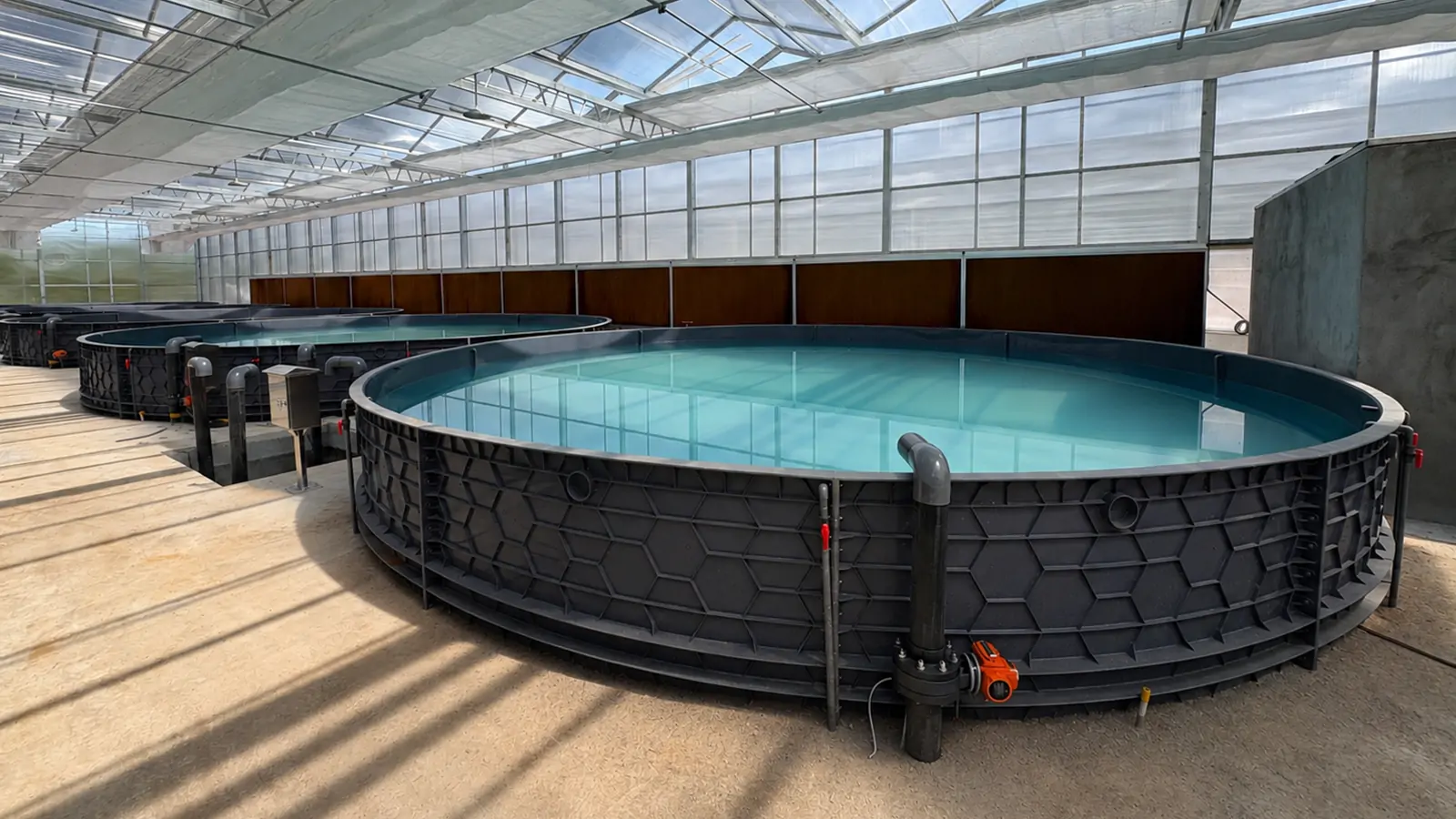
But a modular structural wall does not, by itself, establish how the tank will retain water. That distinction drove several successive changes to the inner waterproofing approach.
| Waterproofing approach explored by YUTANK | Main problem it aimed to solve | Remaining engineering trade-off |
|---|---|---|
| Reinforced PP panels + flexible tarpaulin liner | Improve wall structure, sectional transport and on-site assembly while reducing some corrosion exposure associated with steel walls | The flexible liner could still wrinkle, affecting appearance and local cleaning access |
| Reinforced PP panels + film-based waterproofing | Reduce folds associated with a conventional tarpaulin liner and achieve a neater interior | Film application still involves labor and process requirements; quality depends on the actual method used |
| Reinforced PP panels + welded inner PP sheets | Replace the flexible tarpaulin with a flatter PP water-contact surface | More PP material and welding work; seams, corners and pipe penetrations still need inspection |
| Reinforced PP panels + a designed floor/foundation waterproofing system | Remove the separate flexible liner, reduce wrinkles and reduce some inner-sheet welding work | Waterproofing responsibility shifts to the floor, wall-to-floor joint, waterproofing materials and civil-work interfaces; none of these steps can be omitted |
These developments show that YUTANK's work was not simply about replacing steel with PP. It has involved repeatedly reconsidering which part provides structure, which layer retains the water, and which on-site task may create a future maintenance problem.
It is important to distinguish between waterproofing methods that were tested or used at different stages and the exact construction currently supplied with a particular model. When comparing a quotation, confirm the version being offered. The advantages of one generation should not automatically be attributed to every modular reinforced PP tank.
Why Does Removing a Flexible Liner Still Require Careful Floor Waterproofing?
In a later waterproofing approach, YUTANK explored removing the continuous flexible tarpaulin liner and installing the reinforced PP wall panels on a properly designed and constructed foundation. The tank floor then receives the appropriate waterproofing treatment and surface materials. This can reduce folds and wrinkles at the flexible liner's corners while preserving the transport and assembly advantages of sectional wall panels.
However, “no separate liner” never means “no waterproofing required.” Four details need to be resolved: whether the floor waterproofing layer is suitable for long-term contact with culture water; how a watertight seal is created between the PP wall and the foundation; how bottom drains and other penetrations are sealed; and how the completed work is inspected, maintained and accepted.
This construction relies particularly on the interface between the civil contractor and the tank supplier. If floor strength, flatness, shrinkage or settlement are not properly addressed, watertightness cannot be guaranteed by a ring of PP wall panels alone. The waterproofing coating selected, its curing conditions and its suitability for contact with aquaculture water must also be confirmed for the actual project.
For a large project that already has a suitable foundation, or plans to build one, this approach may reduce maintenance issues associated with flexible liners. But if the site lacks the necessary civil-work capability, or if responsibility for floor waterproofing and the wall-to-floor seal is unclear, it may not be simpler than a design using a separate liner. The choice must be based on actual drawings, foundation conditions and an inspection method that can be carried out on site.
How Should PP and Galvanized Steel Tanks Be Compared for Your Project?
When deciding whether a PP or galvanized steel aquaculture tank is more suitable, start by comparing the complete tank construction, rather than comparing raw material prices alone.
| Comparison point | Galvanized steel wall + flexible liner | Conventional welded PP tank | Honeycomb-reinforced PP tank |
|---|---|---|---|
| Structural construction | Sectional steel panels and fasteners | PP sheets, welded joints and required supports | Sectional reinforced PP panels and connectors |
| Water-contact surface | Primarily provided by the liner | PP sheets and their welded connections | Depends on the selected generation: flexible liner, film, welded inner PP sheet or floor waterproofing system |
| Liner wrinkles | Liner installation and corner folds require attention | No large folds from a conventional flexible liner; inspect welds and corners | Early liner-based versions may still wrinkle; assess other versions individually |
| Corrosion and environment | Assess exposure of steel panels, joints and fasteners | Check PP grade, fittings, temperature, cleaning chemicals and sunlight exposure | Check reinforced PP panels, seals and the actual waterproofing materials |
| Transport and installation | Sectional delivery, site assembly and liner installation | Factory or site welding according to size | Sectional delivery and panel assembly; waterproofing work varies by design |
| Key quality-control points | Liner, pipe penetrations, corrosion protection and structural connections | Welds, long-term wall deformation, foundation and external loading | Panel connections, wall-to-floor seal, inner waterproofing and allocation of civil-work responsibilities |
| Maintenance and repair | Liner inspection, patching or replacement, plus steel-component maintenance | Inspection of welds and sheets and specialist repair | First identify the waterproofing generation, then establish the appropriate inspection and repair access |
For a freshwater project with a tight budget and restricted transport access, galvanized steel with a liner may be worth evaluating first, provided the farm can accommodate liner cleaning and maintenance and the site's corrosion conditions have been reviewed.
For marine water or a site with greater corrosion exposure, PP construction deserves early consideration. The actual water-contact material, connectors and outdoor protection still matter; a PP wall does not mean every part of the tank is free from corrosion-related maintenance needs.
For a project involving multiple large tanks, sectional delivery and a desire to avoid the wrinkles of conventional flexible liners, it may be worthwhile discussing the specific waterproofing versions of honeycomb-reinforced PP tanks. A design without a separate flexible liner, however, depends on reliable civil works and wall-to-floor waterproofing.
Where custom shapes, special pipe connections or a relatively continuous PP interior are priorities, a conventional welded PP tank may remain the more direct approach. Welding, structural supports, transport and installation need to be included in that comparison rather than looking only at the purchase price of PP sheets.
What Project Conditions Can Change the Choice Before You Compare Quotes?
Our product development experience highlights a point that is easy to overlook: a cheaper tank-wall material does not necessarily mean a cheaper complete tank, and easier wall assembly does not automatically mean easier waterproofing work.
For the same diameter, one quotation may include the floor and waterproofing work while another includes only the wall. One may require welding on site, while another includes a flexible liner and the potential work associated with its future replacement. A useful comparison puts working water depth, number of tanks, freshwater or seawater exposure, foundations, delivery routes, pipe penetrations and installation scope on the same basis.
If the site already has a suitable completed foundation, a particular wall-to-floor waterproofing arrangement may become more attractive. If the civil works cannot be changed, begin with the existing floor, drainage locations and available construction methods rather than selecting a design by the name of its waterproofing process. For marine projects, the exposure and accessibility of steel components and fasteners subject to salt spray should also be part of the assessment.
You do not need a complete set of construction drawings for an initial discussion. The species you plan to farm, approximate number and diameter of tanks, water depth, whether the system uses freshwater or seawater, and whether a foundation already exists are enough to begin narrowing the options. YUTANK can help you compare the constructions that may fit those conditions before discussing budgets on a consistent supply and installation basis.
For the broader decisions involving the number of tanks, working water volume and production planning in a complete RAS, see our guide to choosing aquaculture tanks for a commercial RAS. The YUTANK aquaculture tank range provides information on available product types and configurations. This article focuses on why these tank constructions developed, what problems each addressed and how to compare them under real project conditions.
Frequently Asked Questions
Are galvanized steel aquaculture tanks always unsuitable for seawater farming?
Not as an absolute rule based on the material name alone. Marine water and salt spray do, however, make it especially important to review the galvanized wall, exposed fasteners, joints and maintenance plan. In these conditions, YUTANK would also give early consideration to suitable PP structural options. The final assessment still depends on the actual exposure and protection measures.
Does a PP tank mean there is no risk of rust or deformation?
PP itself is not steel and does not rust in the same way. The complete tank may nevertheless contain metal fittings. Long-term deformation of PP, structural support, external backfill loads and foundation conditions also need attention. Corrosion resistance and structural stability are separate questions.
Do honeycomb-reinforced PP tanks need no welding or liner at all?
Not necessarily. YUTANK has used different approaches at different stages, including flexible liners, film-based waterproofing, welded inner PP sheets and a system integrated with the waterproofed tank floor. On-site work differs by version. Confirm the exact current model and waterproofing construction proposed for your project.
If a reinforced PP tank has no flexible liner, what keeps the floor watertight?
Under the YUTANK approach described here, the design needs a suitable foundation/floor waterproofing layer, a seal between the PP wall and floor, and watertight treatment of drains and other penetrations. Removing the separate flexible liner does not remove the need for waterproofing work.
Which costs less to install: a welded PP tank or a reinforced PP tank?
The comparison must use the same diameter, water depth, foundation, transport conditions and scope of supply. Mechanically assembled reinforced panels may reduce certain wall-fabrication tasks on site, while different waterproofing methods create their own work. Without comparable quotations, there is no reliable universal cost multiplier.
What information should I provide when comparing PP and galvanized steel tanks?
Start with your species, freshwater or seawater conditions, number of tanks, approximate sizes or working water depths, and site and delivery constraints. It also helps to clarify whether foundations, floor waterproofing, installation and pipe connections should be included. Unresolved details can be identified and discussed as the project develops.
References
- American Galvanizers Association, Hot-Dip Galvanized Steel Performance in Water Environments. https://galvanizeit.org/hot-dip-galvanizing/how-long-does-hdg-last/in-water
- SIMONA, Technical Handbook: Plastics (background on outdoor exposure and material-design limits for PP). https://www.simona.de/fileadmin/user_upload/Medien/Mediacenter/Technische_Informationen/technical.Handbook_SIMONA_Plastics.pdf
Evidence note: These external sources provide general information on material suitability. They are not evidence of the lifespan, structural capacity or patent priority of a specific YUTANK model. The product-development account is based on YUTANK's engineering and project experience. Certain historical dates, dimensions and quantitative performance claims still require model-specific or documentary verification.
Discuss the Right Aquaculture Tank Construction With YUTANK
If you're comparing galvanized steel tanks, welded PP tanks and honeycomb-reinforced PP tanks, it helps to know the species, freshwater or seawater conditions, approximate tank diameter and working water depth, as well as what matters most to your project: budget, liner cleaning, corrosion resistance or installation arrangements. YUTANK can help narrow the options based on the actual tank construction and waterproofing method, then clarify the configuration and scope of supply against project drawings and site conditions.