

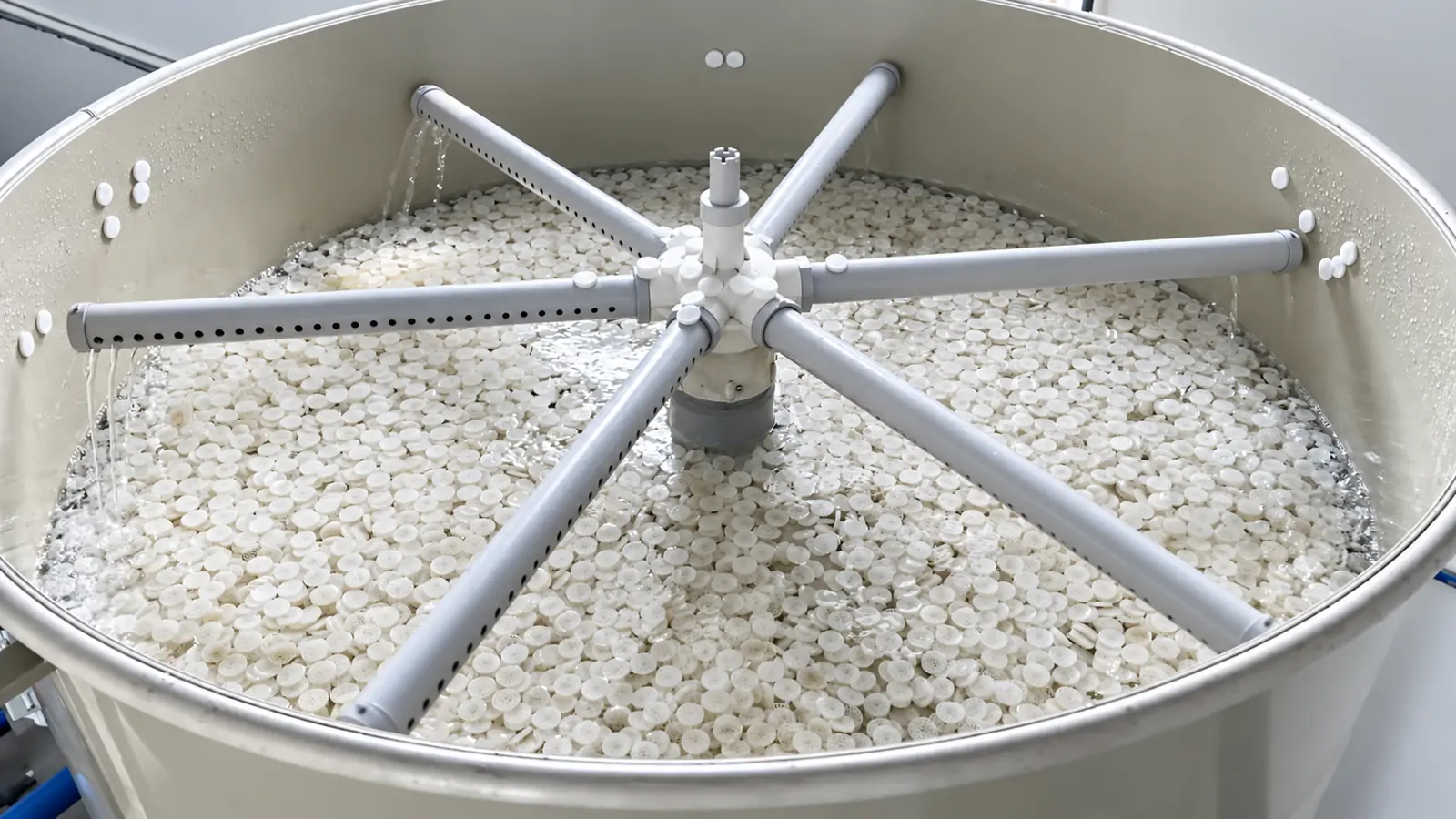
A Moving Bed Biofilm Reactor (MBBR) is a biological treatment process in which microorganisms grow as biofilm on small carrier elements that move freely inside a reactor.
Instead of relying on bacteria suspended only in the water, MBBR technology provides protected surfaces where microorganisms can attach and grow. Water flows through the reactor while aeration supplies oxygen and keeps the carriers moving, continuously bringing the biofilm into contact with dissolved compounds in the water.
In recirculating aquaculture systems (RAS), this principle is commonly used for biological filtration, particularly to support the nitrification process required to control ammonia and nitrite.
What Does MBBR Stand For?
MBBR stands for Moving Bed Biofilm Reactor.
The name describes the three defining elements of the process:
| Term | What It Means |
|---|---|
| Moving Bed | Biofilm carriers move freely through the reactor water |
| Biofilm | Microorganisms grow as an attached biological layer on the carriers |
| Reactor | The tank provides controlled conditions for biological treatment |
The treatment process depends on the interaction between:
Water flow + carrier media + biofilm + mixing + oxygen + microorganisms
Together, these elements create a continuously operating biological reactor.
How Does Moving Bed Biofilm Reactor Technology Work?
The basic MBBR process can be understood as a repeating sequence:
Water enters the reactor → carriers remain in motion → microorganisms grow on the carrier surfaces → dissolved compounds diffuse into the biofilm → microorganisms carry out biological treatment → treated water leaves the reactor
Unlike a conventional stationary media filter, the carriers are not fixed in place.
They remain suspended and mixed throughout the reactor, allowing water to repeatedly contact a large amount of biologically active surface area.
In an aerobic MBBR, air introduced from the bottom of the reactor normally performs two functions at the same time:
- supplying oxygen required by aerobic microorganisms;
- creating the mixing energy needed to move the carriers.

What Are the Main Components of an MBBR?
Although MBBR systems vary in size and configuration, the basic technology depends on several functional components.
| Component | Main Function |
|---|---|
| Reactor tank | Contains the water, carriers and biological process |
| Biofilm carriers | Provide protected surface for attached microorganisms |
| Biofilm | Contains the microorganisms responsible for biological treatment |
| Aeration system | Supplies oxygen and helps keep carriers moving |
| Water inlet and outlet | Maintain continuous hydraulic flow through the reactor |
| Media retention system | Keeps carriers inside the reactor while allowing water to leave |
The reactor therefore works as a system rather than through any one component alone.
A carrier with a large surface area is of little value if it cannot mix correctly. Likewise, strong aeration does not compensate for inadequate biological capacity.
The performance of an MBBR depends on how these components work together.
Biofilm Carriers
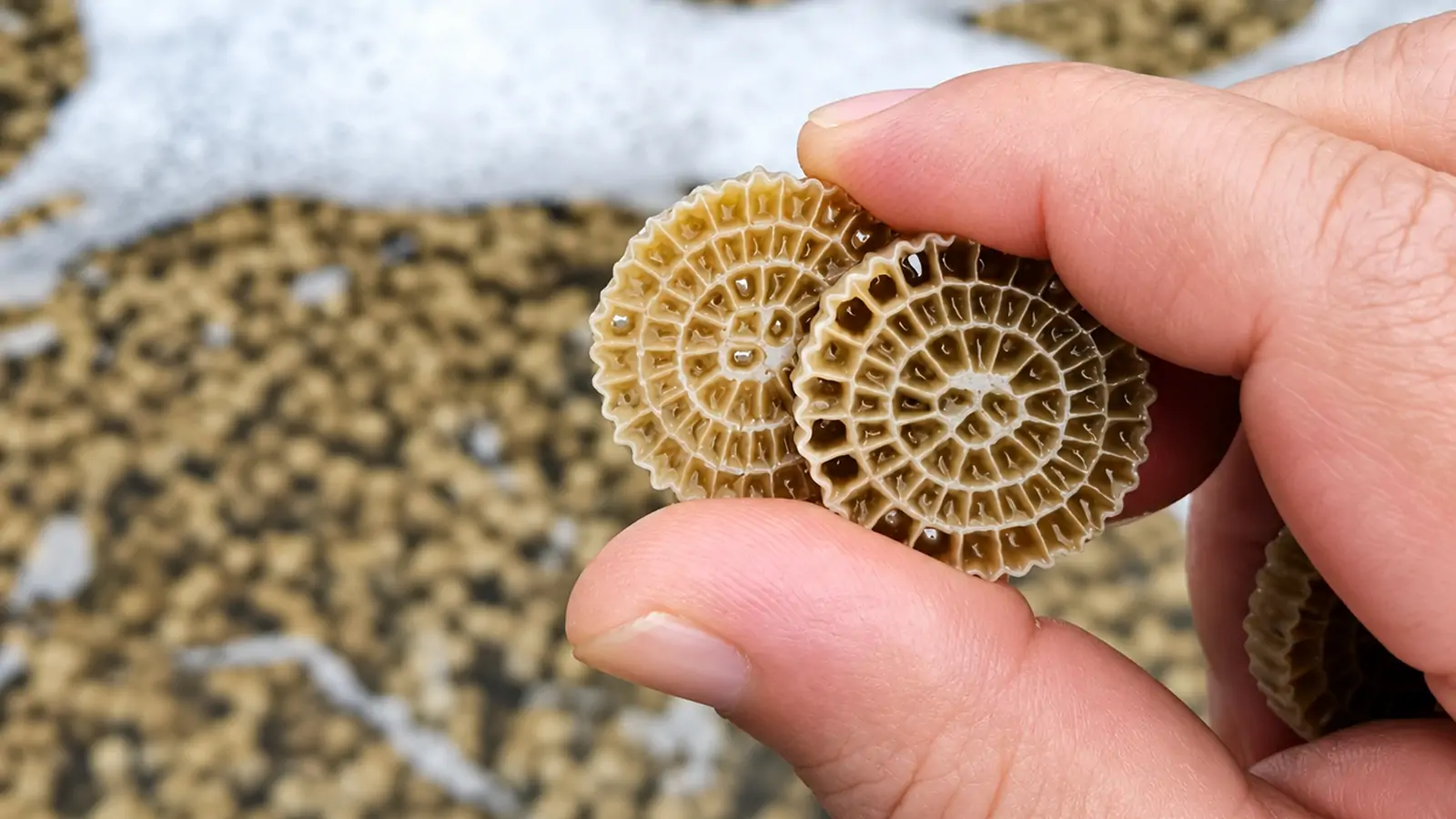
The carriers provide the physical surface on which microorganisms colonize and form biofilm.
Their geometry, protected surface area, buoyancy and movement influence how the biological surface interacts with water and oxygen.
Carrier selection and filling ratio become important design questions in their own right, so they are covered separately in our MBBR Media Guide for Aquaculture.
Why Do the Biofilm Carriers Need to Move?
Carrier movement is one of the features that separates MBBR technology from stationary fixed-bed biological filters.
Movement continuously redistributes the carriers throughout the reactor and improves contact between:
- water;
- dissolved compounds;
- oxygen;
- and active biofilm.
This creates a large biological treatment surface without forcing all of the water through a tightly packed stationary media bed.
Carrier movement also helps prevent the media bed from behaving like a conventional packed filter.
The objective, however, is not simply to make the carriers move as violently as possible.
The reactor must produce effective and reasonably uniform media circulation.
Poor mixing can create areas where carriers accumulate or remain relatively inactive, while excessive aeration can increase energy use without proportionally increasing biological treatment.
Engineering Principle
In an MBBR, visible media movement is not by itself proof of adequate biological performance. Mixing, oxygen availability, biological loading, carrier surface area and water-quality conditions must work together.
Project-specific design values should therefore be verified rather than inferred from carrier movement alone.

What Does Aeration Do in an MBBR?
Aeration has two closely connected roles in an aerobic Moving Bed Biofilm Reactor.
1. It Supplies Oxygen
Aerobic microorganisms require dissolved oxygen to carry out biological processes such as nitrification.
The required oxygen supply therefore depends on the biological load placed on the reactor rather than simply on reactor volume.
2. It Mixes the Carriers
Air rising through the reactor creates water movement that keeps the carriers circulating.
A properly designed aeration pattern should distribute carrier media throughout the active reactor volume rather than allowing large stagnant zones or media accumulation.
This means MBBR aeration must be considered as both a biological requirement and a hydrodynamic requirement.
The actual airflow required for a commercial reactor should therefore be determined during system design.
What Happens Inside the Biofilm?
The carrier itself does not remove ammonia or other dissolved compounds.
The microorganisms living on the carrier are responsible for the biological treatment.
Once a carrier is placed in an operating biological system, microorganisms begin colonizing its surfaces and forming a biofilm.
Water flowing around the carrier brings dissolved substances toward this biological layer. Oxygen and nutrients move into the biofilm, where microorganisms use them in their metabolic processes.
In aerobic aquaculture applications, one of the most important processes is nitrification.
In simplified form:
Ammonia / Ammonium → Nitrite → Nitrate
Different groups of nitrifying microorganisms participate in these oxidation steps.
This is why MBBR reactors are widely used as biological filters in recirculating aquaculture systems.
However, nitrification performance is influenced by conditions including oxygen availability, loading, organic matter, temperature, pH, alkalinity, salinity and the maturity of the biofilm.
For that reason, ammonia removal should not be reduced to the statement that “more media always means more treatment.”
How Is MBBR Technology Used in Aquaculture RAS?
Fish continuously release nitrogenous waste into culture water, including ammonia originating from metabolism and the breakdown of organic material.
Because RAS reuses a large proportion of its water, this dissolved waste cannot be controlled by mechanical filtration alone.
A drum filter can remove suspended solids, for example, but dissolved ammonia requires biological treatment.
That is where the MBBR normally fits into the overall treatment process.
A simplified RAS treatment path may look like:
Fish Tank → Mechanical Solids Removal → MBBR Biological Filtration → Degassing / Oxygenation → Disinfection → Fish Tank
The exact treatment sequence depends on the project.
Within this system, the MBBR has one specific job:
Provide biologically active surface area and suitable reactor conditions for microorganisms that transform dissolved nitrogen compounds.
Documented MBBR Application: Midong
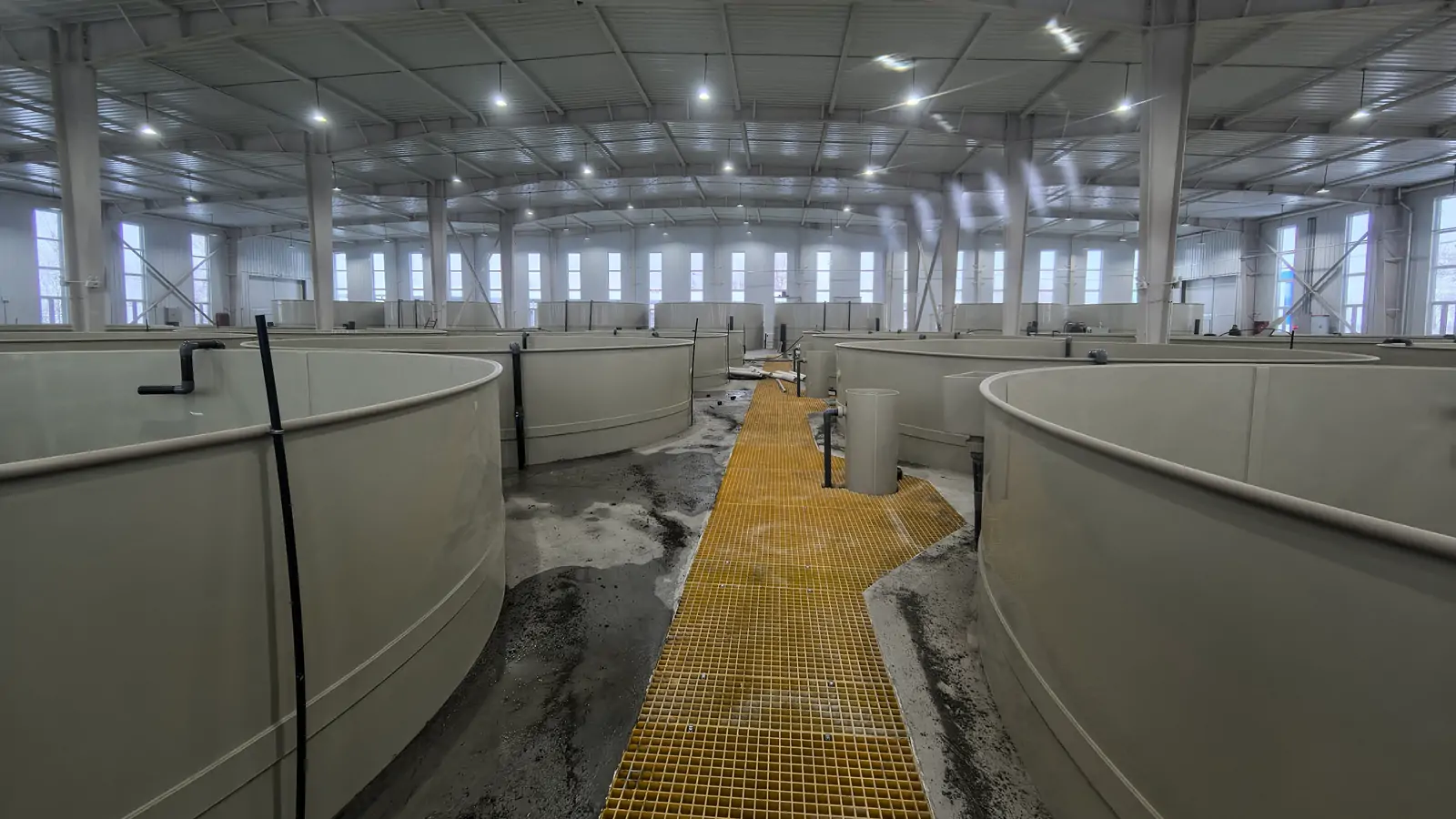
The 1,400 m³ Largemouth Bass RAS Project in Midong, Urumqi, Xinjiang, China has a recorded System Water Volume of 1,400 m³ and 25 culture tanks. Its published equipment list includes:
| Confirmed Equipment | Quantity |
|---|---|
| MBBR Biofilter Tank | 5 |
| Biological Filter Media | Included |
Common Misunderstandings About MBBR Technology
“The plastic media itself removes ammonia.”
False.
The carriers provide attachment surface. Biological treatment is carried out by microorganisms growing as biofilm on those surfaces.
“If the carriers are moving, the MBBR is working correctly.”
Not necessarily.
Carrier motion confirms that mixing is occurring, but biological performance also depends on biofilm maturity, oxygen, water chemistry, loading and other operating conditions.
“More MBBR media always means better treatment.”
Not necessarily.
Increasing carrier volume changes available biofilm area, but reactor hydraulics, mixing, aeration and biological loading must also be considered.
Media quantity should therefore be determined through reactor design rather than maximized without limit.
“An MBBR removes all types of RAS waste.”
No.
MBBR is a biological treatment process.
Suspended solids, excess carbon dioxide, low dissolved oxygen and pathogen control require other treatment functions within a complete RAS.
FAQ About Moving Bed Biofilm Reactor Technology
What does MBBR stand for?
MBBR stands for Moving Bed Biofilm Reactor, a biological treatment process that uses freely moving carriers to provide surface area for attached microbial biofilm.
What is the basic MBBR working principle?
Water flows through a reactor containing moving biofilm carriers. Microorganisms grow on the carrier surfaces, while mixing brings water into contact with the biofilm. In aerobic MBBRs, aeration also supplies oxygen required for biological treatment.
Why is MBBR media kept moving?
Movement distributes carriers through the reactor and improves contact between biofilm, water and oxygen. It also prevents the media from functioning as a tightly packed stationary filter bed.
Does an MBBR need aeration?
Aerobic MBBRs do. Aeration supplies oxygen to microorganisms and normally provides the mixing energy required to keep carriers moving. The required airflow depends on reactor design and biological loading.
Does MBBR remove ammonia?
MBBR can support nitrifying microorganisms that convert ammonia to nitrite and then nitrate. Actual treatment capacity depends on biological loading, media, oxygen, water chemistry and operating conditions.
How much MBBR media is required?
There is no universal media quantity suitable for every RAS. Media requirements should be derived from the expected biological load, required treatment capacity, media characteristics, reactor volume, fill ratio and operating conditions.
Does MBBR media need to be cleaned?
Routine operation is different from a conventional packed filter because the carriers remain in motion rather than acting as a stationary mechanical filter bed. However, system maintenance and media condition still need to be evaluated according to the reactor and operating conditions.
How long does an MBBR take to mature?
A new MBBR does not normally achieve full nitrification immediately because microbial communities must first colonize and develop on the carrier surfaces. Startup time varies with inoculation strategy, temperature, water chemistry, ammonia availability, salinity and operating conditions.
Understanding MBBR as Part of a Complete RAS
Moving Bed Biofilm Reactor technology is best understood as a combination of:
attached biofilm + moving carriers + continuous water contact + controlled aeration and mixing.
The plastic media provides the habitat, the biofilm performs the biological treatment, aeration provides oxygen and movement, and the reactor brings these elements together.
For aquaculture RAS, this makes MBBR particularly useful as a biological filtration technology for managing dissolved nitrogen waste.
But reactor performance cannot be determined from tank volume, carrier type or visible media movement alone. Commercial MBBR design must ultimately be related to the biological load the system is expected to treat.
Looking for an Aquaculture MBBR Biofilter?
If you are moving from understanding MBBR technology to evaluating equipment for a commercial RAS project, reactor selection should consider factors such as fish biomass, feed input, expected TAN load, required treatment capacity, media configuration, aeration and overall RAS process design.
Explore the YUTANK Aquaculture MBBR Biofilter for equipment configurations and integration into commercial recirculating aquaculture systems.
References
- Ødegaard H., Rusten B., Westrum T. A New Moving Bed Biofilm Reactor — Applications and Results. Water Science and Technology.
- Rusten B., Eikebrokk B., Ulgenes Y., Lygren E. Design and Operations of the Kaldnes Moving Bed Biofilm Reactors. Aquacultural Engineering, 2006.
- McQuarrie J.P., Boltz J.P. Moving Bed Biofilm Reactor Technology: Process Applications, Design, and Performance. Water Environment Research, 2011.
See a documented project application: 1,400 m³ Largemouth Bass RAS Project.