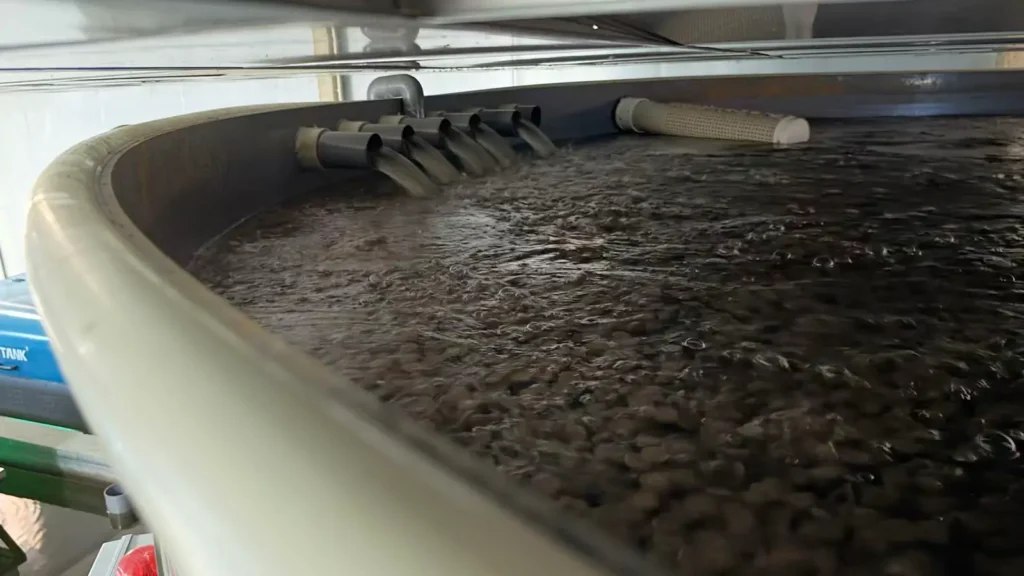
Your recirculating aquaculture system (RAS) may be showing a fairly stable pH while alkalinity tests keep trending downward. Does that mean the water is fine for now? We would not make that judgment from pH alone. pH describes the water's acid–base condition at the time of measurement; alkalinity describes its capacity to neutralize added acid. They are related, but they tell us different things.
In an RAS, nitrification, the chemistry of makeup water, and changes in CO₂ all matter when you interpret alkalinity. We want to understand how that capacity changes over time, not wait until pH suddenly drops before asking why.
Why can pH look normal while alkalinity is being depleted?
It may help to think of pH as a snapshot of the current condition and alkalinity as part of the water's ability to buffer acidification. This is only an analogy; it does not mean that more alkalinity is always better.
Two water samples can have similar pH values but different alkalinity. Given a comparable acid load, the sample with less buffering capacity may experience a larger pH change. So a normal pH reading today is no guarantee that the system will remain stable tomorrow.
For your farm, the useful questions are whether alkalinity suits the fish and biological treatment process, whether consumption is changing, and how the system can consistently replenish what is being used—through makeup water or an appropriate management approach.
Your biofilter consumes alkalinity as it processes ammonia
If your RAS uses an MBBR biofilter, nitrifying microorganisms convert ammonia nitrogen to nitrite and then to nitrate. This process requires oxygen, produces an acidifying effect, and consumes alkalinity.
As feeding rate, fish biomass, or nitrification load changes, the rate of alkalinity consumption may change too. If alkalinity continues to fall, the water may eventually have too little buffering capacity, and pH can drop more sharply. Both the cultured fish and biological treatment may then be affected. UF/IFAS guidance on recirculating aquaculture systems also discusses the connection between alkalinity and nitrification.
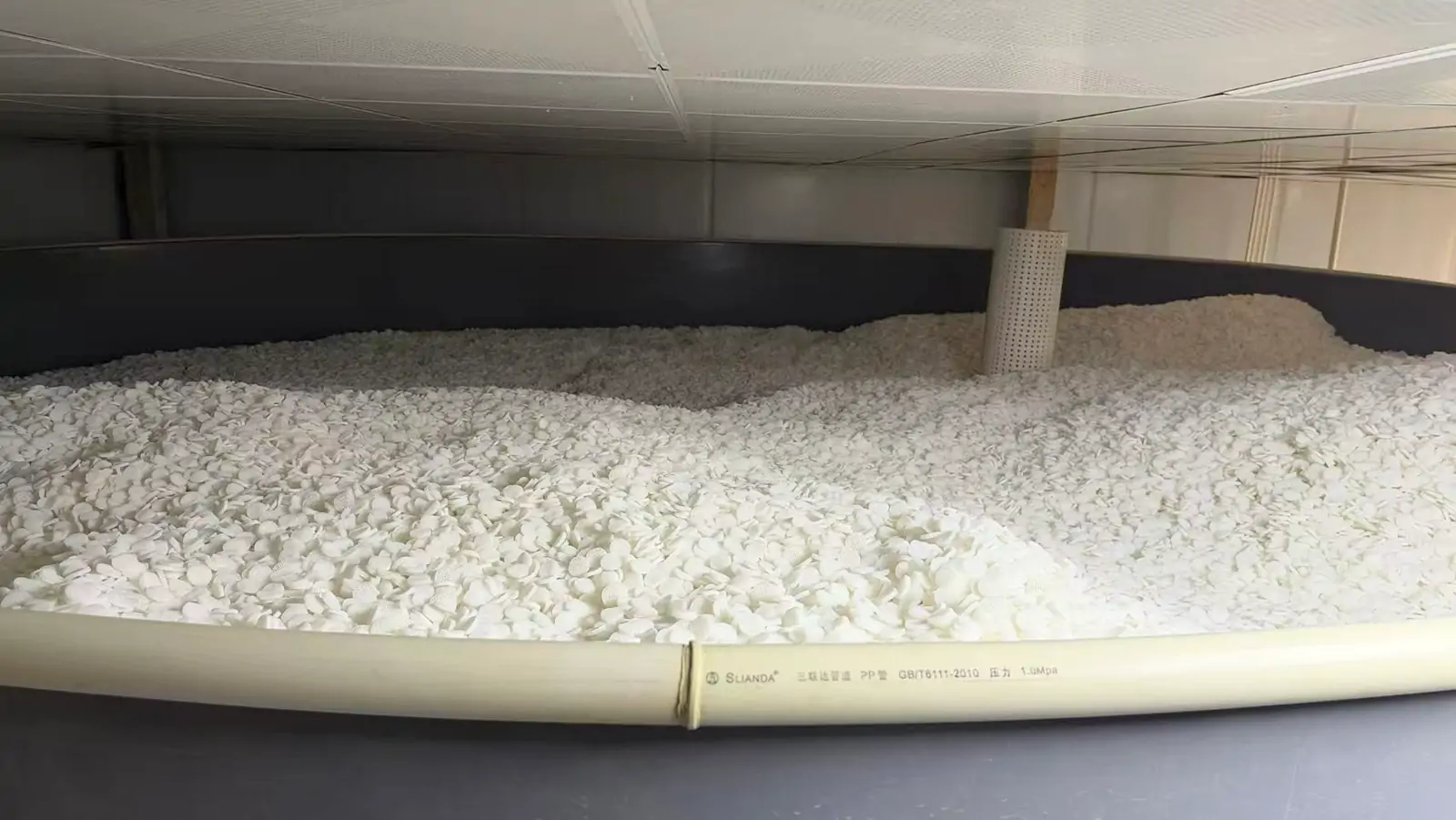
That does not mean that alkalinity consumption indicates a faulty biofilter. Consumption is part of normal nitrification. The real question is whether monitoring and replenishment are appropriate for the current treatment load.
Alkalinity, hardness, and pH are not the same measurement
| Measurement | What it primarily tells you | How it is commonly reported | What it does not prove |
|---|---|---|---|
| pH | Acid–base condition at the time of measurement | A pH value (dimensionless) | How much buffering capacity remains |
| Total alkalinity | Capacity to neutralize acid, related to bicarbonate and other constituents | mg/L as CaCO₃ | That the water literally contains that mass of solid CaCO₃ |
| Total hardness | A property mainly associated with calcium and magnesium ions | Often mg/L as CaCO₃ | That total alkalinity has the same value |
| Dissolved CO₂ | One part of gas exchange and carbonate equilibrium | Reported according to the actual test method | A directly measured CO₂ value from pH alone |
“mg/L as CaCO₃” expresses a reporting equivalent. It is not an instruction to add the same numerical amount of calcium carbonate to the tank. If your test kit, online instrument, and laboratory report use different units, check the reporting basis before comparing trends.
Changing your makeup water can change the alkalinity trend
A system that switches between groundwater, surface water, or water treated by different processes may receive a very different alkalinity load. The volume of makeup water, water discharged with waste, and proportion recirculated all influence the resulting mixture.
The source water might have an unremarkable pH without having suitable alkalinity. When a farm tells us that alkalinity is declining, we would therefore want separate records for source water and circulating water, then compare what happens before and after makeup water enters the system.
Alkalinity is also not an isolated number you should simply push upward. Salinity, water type, CO₂ conditions, and the cultured species can change what appropriate management looks like.
If alkalinity keeps falling, where would we start?
First, confirm that the testing method and units have not changed. Next, look at recent feeding, water exchange, makeup-water quality, and biological treatment conditions. A record that includes alkalinity, pH, TAN, nitrite, and DO is usually more informative than an alkalinity graph on its own.
We would organize the investigation around three questions:
- Has consumption increased? Has feeding or the nitrification load changed recently?
- Has replenishment decreased? Has the source-water chemistry or makeup-water volume changed?
- Are the measurements comparable? Are the sampling point, time, test kit, and reporting units consistent?
If pH falls as well, or TAN and nitrite become abnormal, the investigation needs to expand. Several readings can change together without proving that a particular device has failed.
Is higher alkalinity always better for the biofilter?
No. Alkalinity management needs to suit the species, water type, and actual treatment job. Research on alkalinity control in RAS also examines how changes in alkalinity can influence nitrification conditions and CO₂ management. A number reported in one study should not become a universal requirement for every fish farm.
Alkalinity replenishment may involve suitable buffering materials, but we would not suggest following an internet dosing formula based only on tank volume. Material selection, addition point, dose, and rate must be determined from real water volume, water chemistry, species, and safe operating procedures.
How should you consider alkalinity when planning an RAS?
Before choosing the water-treatment equipment for a new project, it is worth understanding the source-water pH, total alkalinity, hardness, and makeup-water arrangements. These can then be considered alongside expected feeding and nitrification requirements when planning daily monitoring.

Makeup water, the biofilter, and degassing should not be treated as completely unrelated parts of the system. If you are planning or upgrading an RAS, take a look at our recirculating aquaculture system solutions. We can start by discussing which water-quality information matters for your project before deciding what treatment approach makes sense.
Frequently asked questions
Why measure alkalinity if pH is normal?
pH tells you about the current condition. Alkalinity helps you understand whether the water has sufficient capacity to buffer a continuing acid load.
Does low alkalinity mean nitrification has already stopped?
Not necessarily. Review TAN, nitrite, DO, pH, temperature, and the biofilter's operating conditions before reaching that conclusion.
Does high hardness always mean high alkalinity?
No. They describe different water properties, even though both may be reported as CaCO₃ equivalents.
Will more aeration directly replace lost alkalinity?
Generally, no. Gas exchange may change dissolved CO₂ and pH, but it does not create replacement alkalinity for what nitrification has consumed.
Can I calculate the alkalinity adjustment from tank volume alone?
No. You also need to know current alkalinity, makeup-water conditions, the chosen material, water-quality targets, and safe operating constraints. This article does not provide a dosing recipe detached from the site.
References
- UF/IFAS Extension. Fish Health Management Considerations in Recirculating Aquaculture Systems—Part 1. https://ask.ifas.ufl.edu/publication/FA099
- UF/IFAS Extension. Fish Health Management Considerations in Recirculating Aquaculture Systems—Part 3. https://ask.ifas.ufl.edu/publication/FA101
- UF/IFAS Extension. Ammonia in Aquatic Systems. https://ask.ifas.ufl.edu/publication/fa031
- Optimizing Alkalinity Control in Recirculating Aquaculture Systems (RAS): A Dynamic Modelling Approach. Aquacultural Engineering (2025). https://www.sciencedirect.com/science/article/pii/S0144860924001031
Let's review your alkalinity records
If you have pH, alkalinity, makeup-water, or feeding records, we can look at how they relate and discuss whether biological treatment, the water source, or the measurement method deserves attention first. You do not need a complete data package before starting the conversation. Contact YUTANK.