When ammonia readings rise in a recirculating aquaculture system (RAS), that does not automatically mean the biofilter or MBBR has failed. We would start with three questions: Is the measurement reliable? Has the ammonia load changed? And are the conditions supporting biological filtration still appropriate? Looking at those questions together is more useful than blaming one piece of equipment straight away.
We would also check what the test report means by “ammonia.” Total ammonia nitrogen (TAN) is not the same as the more toxic un-ionized ammonia (NH₃), and pH, temperature and reporting units affect how the result should be interpreted. If fish show clear signs of distress or a critical water-quality alarm occurs, activate your farm's established emergency response plan immediately while checking the measurements. The routine checks below are primarily for non-emergency changes.
Why Can Ammonia Rise in an RAS?
Fish release ammonia as a natural waste product when they metabolize feed, with much of it entering the water through the gills. Uneaten feed and other decomposing organic matter can add to the ammonia load. That is why feed input, fish biomass and the biological treatment process need to be considered together. The University of Florida's UF/IFAS guidance on ammonia in aquatic systems explains the sources and transformation of ammonia in aquaculture water.
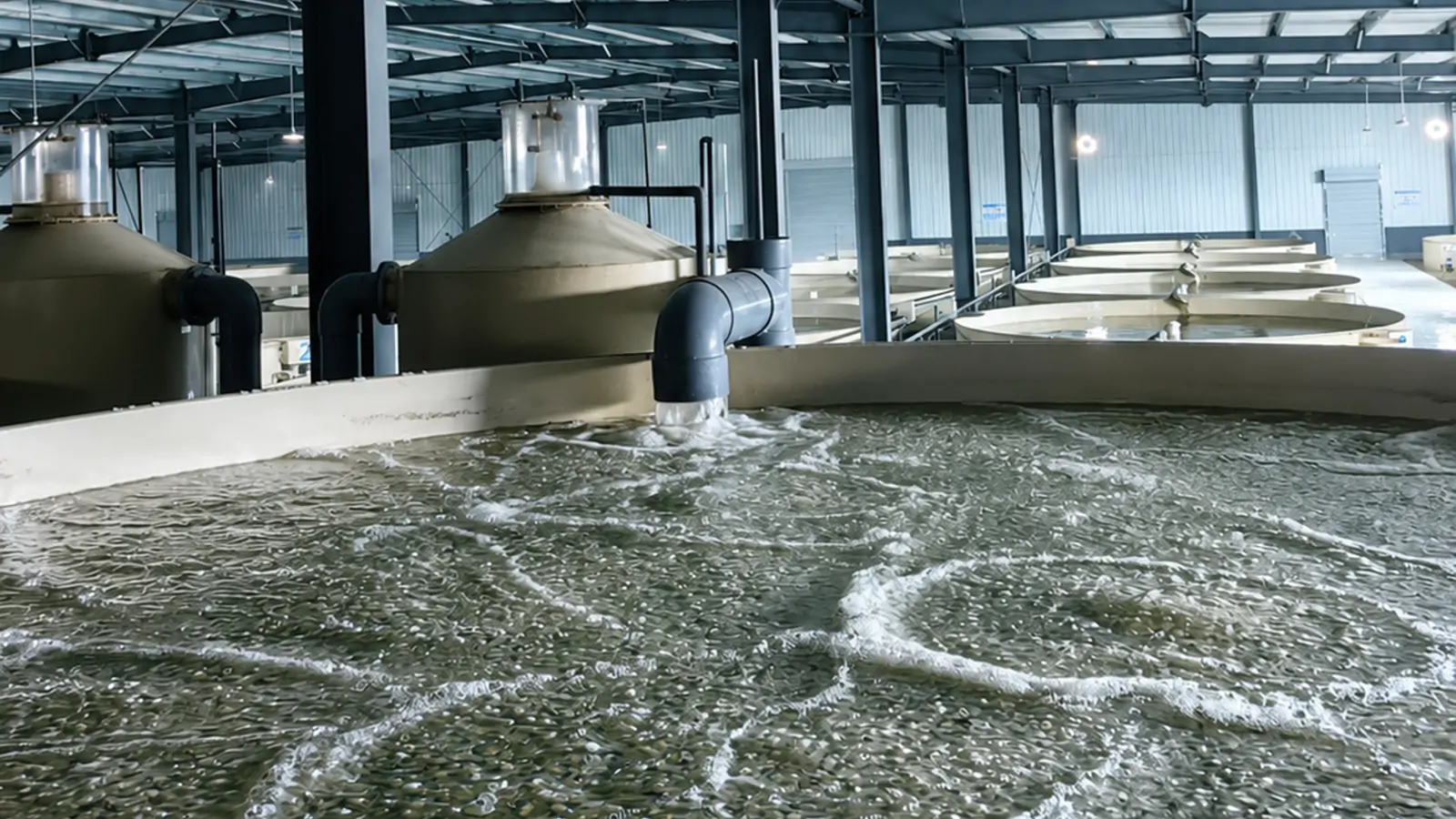
An RAS reuses treated water, but recirculation alone does not prevent fish from producing ammonia. Under suitable conditions, nitrifying microorganisms in the biofilter continuously convert ammonia into other forms of nitrogen. A higher measured TAN concentration may occur when loading increases, when conditions for nitrification change, or when the biological process has not yet reached the capacity needed for the current load.
Imagine that feeding has increased in a previously stable system while the biofilter, water flow and aeration arrangements remain unchanged. We would compare the feeding records, TAN trend and biofilter operating conditions before deciding that the media needs replacing. If feeding has not changed but the reading rises suddenly, the test method, incoming water and recent changes in treatment operation deserve closer attention.
TAN vs. NH₃: What Does Your Test Actually Show?
When a farm reports “high ammonia,” the result often comes from a total ammonia nitrogen (TAN) test. TAN describes the combined ammonia present mainly in two forms:
- Un-ionized ammonia (NH₃), which is generally substantially more toxic to fish.
- Ammonium (NH₄⁺), the other major form in water.
At the same TAN concentration, the proportion present as NH₃ can differ with water conditions. As pH or temperature increases, the fraction present as un-ionized ammonia generally rises. Salinity also influences the equilibrium. This means a TAN reading on its own cannot fully describe ammonia-related risk. UF/IFAS: Ammonia in Aquatic Systems.
It is also important to keep the original reporting basis. A laboratory may report TAN as nitrogen (mg/L as N), while another result may be labelled NH₃, NH₃-N or something else. The chemical species and nitrogen-based reporting conventions are not interchangeable numbers. Keep the full parameter name, unit and test method in your farm record rather than copying the numerical value alone.
This is why our earlier article on water quality monitoring in a commercial RAS recommends reviewing pH, temperature and nitrogen compounds together. They are related measurements, but they do not tell you exactly the same thing.
What Can Rising Ammonia Mean for Fish and RAS Production?
Ammonia is a normal waste product of fish metabolism. But when un-ionized ammonia (NH₃) becomes too concentrated, or fish are exposed to unsuitable ammonia conditions for too long, it can damage the gills and other tissues and interfere with normal respiratory and physiological functions. The severity depends on the exposure level and duration, species and water conditions. UF/IFAS: Ammonia in Aquatic Systems
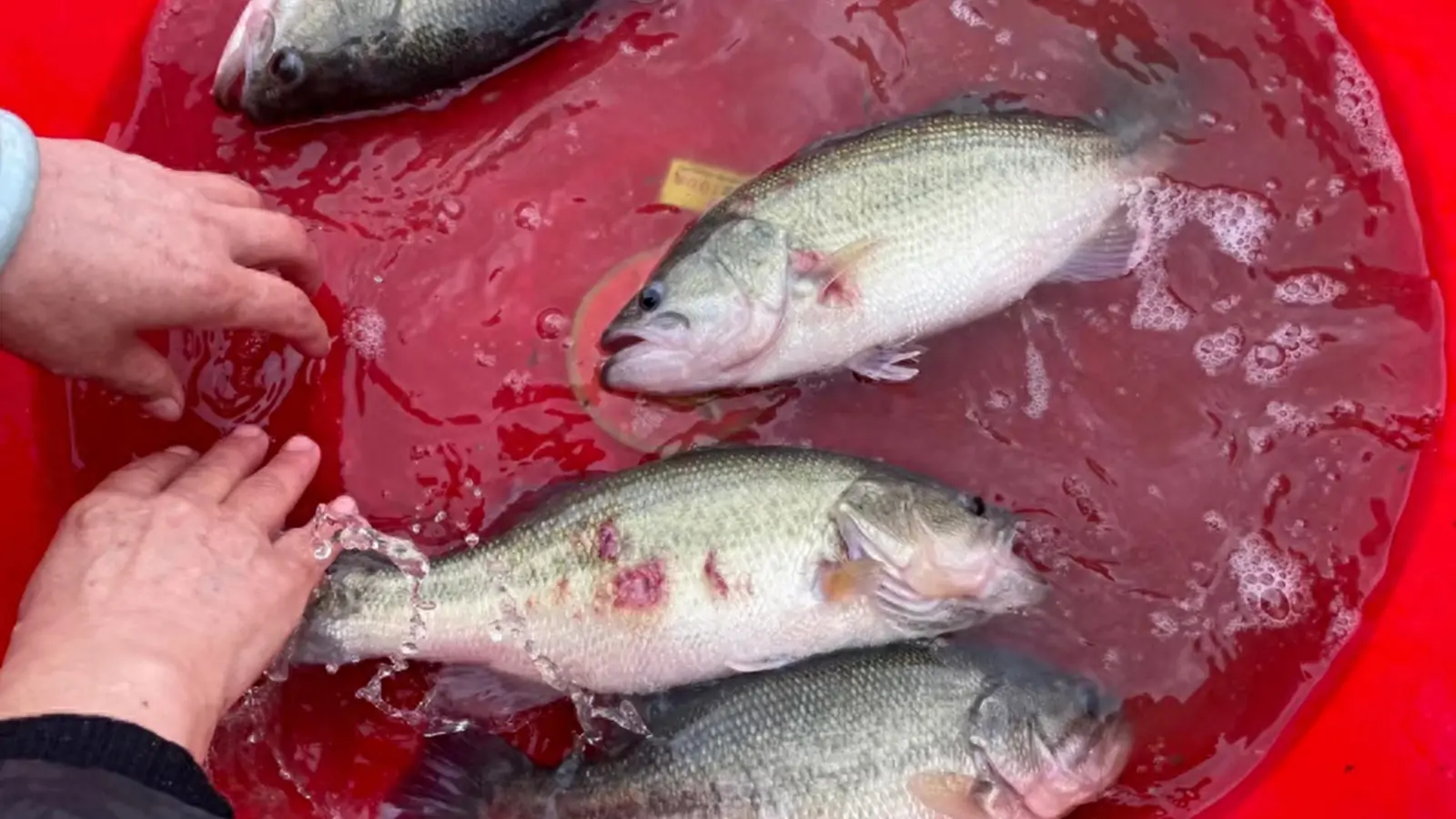
For a fish farm, the first sign is not always mortality. Prolonged ammonia stress may reduce feeding and growth, and make fish more susceptible to infection and other environmental stressors. Severe exposure can be fatal. In a commercial RAS, these effects can put fish welfare and production performance at risk—not just produce an unusual number on a water-quality report. U.S. EPA: Ammonia
A sustained increase in TAN may also signal that farm loading and treatment conditions deserve another look. As fish grow and feeding increases, ammonia production can rise, while the biofilter's effective treatment depends on current flow, oxygen availability, alkalinity and other operating conditions. This is a reason to investigate, not proof that a particular piece of equipment has failed.
Importantly, a higher TAN reading does not by itself mean that fish are already suffering ammonia poisoning. Actual risk must be interpreted in light of pH, temperature, the ammonia form, species and exposure conditions. That is why the next step is to verify the measurement and the farm's operating records before reaching a diagnosis.
What Should You Verify First When Ammonia Rises?
First, check whether this is an urgent fish-health or system-safety event. Obvious changes in fish breathing, swimming or feeding, or a critical alarm, call for the farm's existing emergency procedure immediately. Measurement checks should take place alongside the response, not delay it.
For an unusual reading without clear emergency signs, trained farm staff can work through four practical questions under their normal operating procedures:
- Are we comparing the same measurement? Check that the parameter name, units and reporting basis match the previous results. Do not treat TAN, NH₃ and NH₃-N as the same reading.
- Were the samples taken under comparable conditions? Record the tank or sample point, time of day, and any recent feeding or water-exchange events. A central reading in a shared RAS loop does not automatically represent every culture tank.
- Could the test or sample be affected? Check the meter or kit instructions, calibration, reagents and sample handling. Repeat the measurement with an appropriate reliable method when needed. Some tests can be affected by recently used treatment chemicals or water conditioners, depending on the method.
- Is this one unusual result or a trend? Compare the reading with records from similar operating periods, alongside fish behavior, feed input and equipment status.
These checks do not establish a final diagnosis. They help avoid treating differences in units, sampling conditions or analytical methods as proof that a biofilter has failed. UF/IFAS emphasizes proper ammonia testing, water-quality records and fish observations. Ammonia testing guidance · RAS operational guidance.
Which Operating Changes Might Explain the Trend?
Once we have greater confidence in the reading, we would review two connected questions: Has the load entering the treatment process increased, and have the conditions for treating that load changed?
Feeding, Biomass and Source Water
As fish grow, daily feed input and ammonia production can increase even when the number of culture tanks stays the same. Higher stocking, a feed change, leftover feed accumulation, or a different water-exchange or makeup-water source are all worth comparing with the TAN trend.
Source water should not be overlooked. Some makeup water already contains ammonia, so testing the supply and the culture water separately may help identify where the change begins. None of these observations proves a single cause; they simply narrow the most useful questions for the farm team.
Water Flow, Aeration, DO and Alkalinity
We would also ask whether water is reaching the biofilter as intended and whether aeration, dissolved oxygen (DO), pH, alkalinity or temperature have changed. Nitrifying microorganisms need oxygen, and nitrification consumes alkalinity. Changes to these conditions can affect biological treatment even when the media itself has not been moved or replaced.
A normal DO reading at one culture-tank sensor does not prove that oxygen conditions are suitable throughout the biofilter. Tank readings, biofilter sampling points and actual equipment operation answer different questions. Our RAS oxygenation guide explains why oxygen delivery needs to be considered as part of the wider water-treatment system.
Recent pump or blower downtime, adjustments to bypass lines, cleaning and disinfection, or fish treatments may also provide important context. If an operational fault is found, use the appropriate equipment instructions and farm safety procedures rather than changing chemical additions, aeration or flow settings by trial and error.
Why Can Ammonia Rise Even When You Have an MBBR?
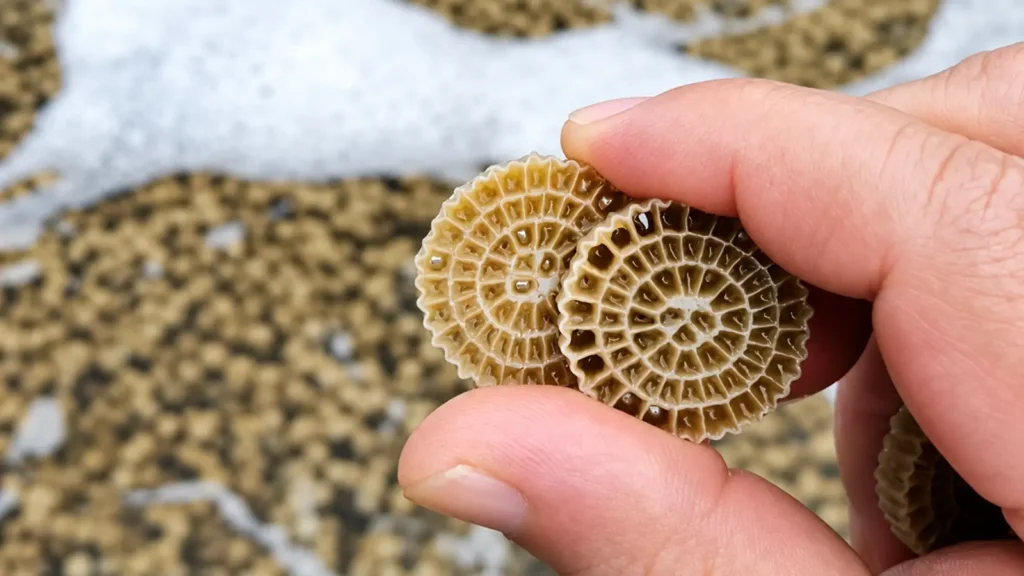
An MBBR does not work like a fine screen that catches dissolved ammonia. Microorganisms grow as biofilm on the carrier media and support nitrification, converting ammonia first into nitrite and then into nitrate. The process relies on suitable oxygen, alkalinity, temperature, hydraulic contact and an active biological community. UF/IFAS: Nitrogen cycle and biofiltration.

That means having an MBBR installed is not the same as knowing it can keep up with today's ammonia load under today's conditions. In a newly commissioned system, nitrifying biofilm may still be developing. In a mature system, a marked increase in feeding or a change in circulation or aeration could affect the relationship between loading and treatment. The appropriate checks depend on what has changed. For a fuller explanation of the equipment and process, see our guide to moving bed biofilm reactor technology.
We would not judge the whole nitrification process from TAN alone. Nitrite and nitrate trends can provide additional clues, provided their test methods and reporting units are understood. Nitrification transforms nitrogen into different chemical forms; it does not mean that all nitrogen has been removed from the recirculating water.
The drum filter has a different role: it mainly captures suspended solids and can reduce some particulate material entering downstream treatment. It cannot simply screen dissolved TAN out of the water. This is why an ammonia issue should not be treated as if the drum filter, MBBR and oxygen-delivery equipment all perform the same job.
A Practical Table: What Should You Check First?
This table is a starting point for discussion with farm staff. It shows relevant checks, not a one-to-one diagnosis of which component is broken.
| What you notice | First things to review | Why it may matter |
|---|---|---|
| TAN rises suddenly, with no obvious operating change | Sampling point and time, parameter units, test method or instrument status, and repeat result | Establish whether the change is real and comparable before drawing conclusions |
| Feed input or fish biomass has recently increased | Feed records, fish condition, TAN and nitrite trends, and current biofilter load | Ammonia production can increase with production load |
| Biofilter aeration, circulation pumps or water routing have changed | Operating logs, flow or bypass conditions, and DO at relevant sampling points | Water and oxygen contact with active biofilm may have changed |
| pH, alkalinity or temperature has shifted | TAN reporting basis, NH₃ risk interpretation, alkalinity trend and biofilter conditions | pH and temperature influence ammonia speciation; alkalinity supports nitrification |
| A new RAS is starting up, or its load has recently increased | Biofilm establishment stage, consecutive TAN/nitrite results and feeding history | Biological capacity may not yet match the current load |
If fish are visibly distressed or critical alarms are active, follow the farm's emergency plan rather than this routine table. For everyday operation, a comparable series of records is more useful than buying or replacing equipment in response to one test. UF/IFAS RAS operation and problem-solving guidance.
When Should You Ask for Technical Support?
If TAN remains elevated after reliable measurements have been checked, or if the farm has recently changed feeding, culture capacity or hydraulic arrangements, it makes sense to review whether the current ammonia load and biological treatment conditions still match. We would first discuss your species and production stage, feeding trend, TAN/pH/temperature records, existing biofiltration process and circulation layout. That helps identify which operating conditions need to be confirmed next.
Where actual biological treatment capacity is in question, we may also need details about the existing media, reactor, flow and aeration conditions. A single laboratory report cannot tell us how much media to add or which piece of equipment to replace. If you are planning an upgrade, we can also review these questions within a complete commercial RAS system rather than treating one component in isolation.
Frequently Asked Questions
Does a higher TAN reading mean NH₃ is definitely at a dangerous level?
Not necessarily. TAN covers both un-ionized ammonia and ammonium. Interpretation also depends on pH, temperature, relevant water conditions and the test's reporting units, as well as the cultured species and exposure conditions.
Why can ammonia rise if DO looks normal?
DO matters, but a normal reading at one tank location does not describe every condition inside a biofilter. Flow, aeration, alkalinity, current loading and recent operating changes may also need reviewing.
Can an RAS still have ammonia problems with an MBBR installed?
Yes. Biological treatment depends on an active biofilm and suitable operating conditions. A new system still developing its biofilter, a higher feed load or changed treatment conditions may affect TAN trends.
Can a drum filter directly remove dissolved ammonia?
Normally, no. A drum filter captures suspended solids, while dissolved ammonia is primarily managed through biological filtration and other appropriate water-treatment processes. The equipment serves different purposes.
Should we investigate a new RAS differently from a long-established one?
Often, yes. With a new system, biofilter development and recent load increases are especially relevant. In a previously stable system, an abrupt change invites a closer look at feed input, source water, equipment, routing and the testing method.
Does higher ammonia mean we should immediately add media or replace the biofilter?
A TAN number alone cannot determine that. First distinguish the measurement, the change in ammonia loading and the conditions for biological treatment. Fish distress or critical alarms still require the farm's immediate established emergency response.
References
- University of Florida IFAS, Ammonia in Aquatic Systems. Ammonia sources, TAN and NH₃, pH/temperature effects, the nitrogen cycle and testing methods.
- Yanong, R. P. E., University of Florida IFAS, Fish Health Management Considerations in Recirculating Aquaculture Systems—Part 3. RAS startup, monitoring, record-keeping and troubleshooting practices.
- Yanong, R. P. E., University of Florida IFAS, Fish Health Management Considerations in Recirculating Aquaculture Systems—Part 1. Production purpose, fish loading and broader RAS management context.
- U.S. Environmental Protection Agency, Ammonia. Effects of ammonia exposure on aquatic organisms, including fish gill function, growth and susceptibility to stress.
Discuss Rising Ammonia in Your RAS With YUTANK
If your farm has recently seen an ammonia increase, you can start with the feeding and water-quality records you already have. Contact YUTANK and tell us the species, operating stage, recent readings and the issue you want to resolve. We can help frame the next engineering questions before considering changes to the biofilter or wider water-treatment system.