
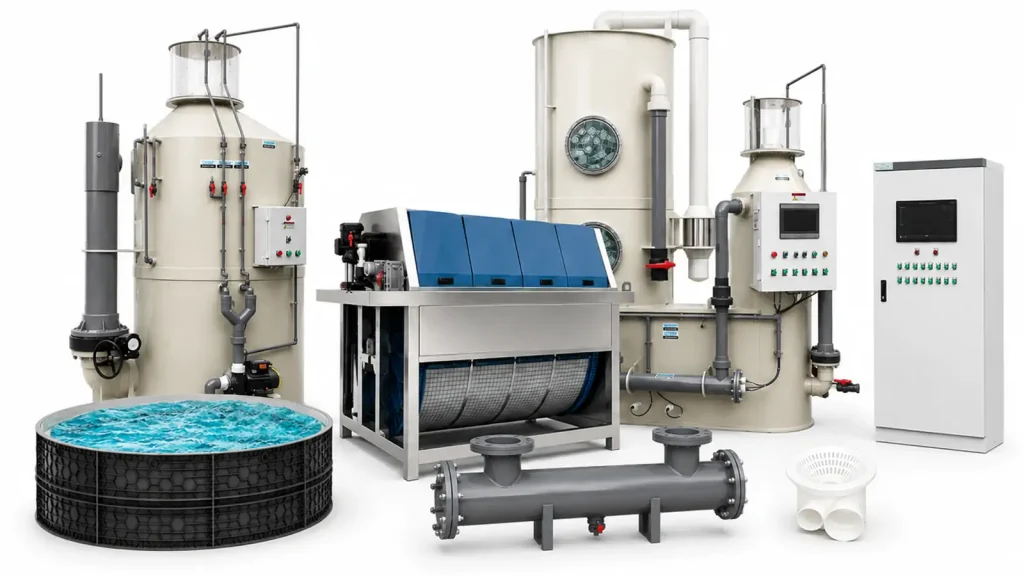
Selecting RAS equipment should start with production load, not individual machine specifications.
First define the fish species, maximum biomass, daily feed load, recirculation flow, and required water quality. These inputs determine the mechanical filtration, biofiltration, oxygenation, degassing, disinfection, and hydraulic capacity the system needs.
The final equipment configuration should then be checked as one integrated treatment system rather than selecting each machine independently.
What Information Do You Need Before Selecting RAS Equipment?
Before comparing equipment models or requesting quotations, first establish the operating conditions the system must support.
| Design Input | Why It Matters |
|---|---|
| Fish species | Defines biological and water-quality requirements |
| Production target | Defines the overall scale of the farm |
| Maximum biomass | Represents peak biological load |
| Daily feed load | Drives solids, nitrogen, oxygen, and CO₂ loads |
| Recirculation flow | Determines hydraulic capacity |
| Water-quality targets | Define required treatment performance |
| Stocking strategy | Influences peak load and operating risk |
| Site and utility conditions | Can affect the final equipment configuration |
Two inputs deserve particular attention: maximum biomass and daily feed load.
Maximum Biomass
Maximum biomass represents the highest total fish weight expected in the system at one time. A simplified calculation is:
Maximum Biomass = Number of Fish × Average Fish Weight
Maximum biomass helps define the biological load the RAS must support.
Daily Feed Load
Daily feed load can be estimated as:
Daily Feed Load = Biomass × Feeding Rate
Feed is especially important because increasing feed input normally increases several treatment demands at the same time:
Feed Input → Solids + Nitrogen Waste + Oxygen Demand + CO₂ Production
This is why two farms with the same total water volume can still require very different RAS equipment capacities.
Engineering Principle: RAS treatment equipment should be selected according to the load it must treat, not from tank volume alone.

How Does Production Load Affect RAS Equipment Requirements?
Different production conditions place different demands on the treatment system.
| Production Change | Main Treatment Impact | Equipment Most Affected |
|---|---|---|
| Higher feed input | More suspended solids | Drum Filter |
| Higher feed input | Higher TAN / nitrogen load | MBBR Biofilter |
| Higher biomass | Higher oxygen demand | Oxygenation System |
| Higher respiration load | More CO₂ | Degassing Tower |
| Higher recirculation requirement | Higher hydraulic load | Filters, pumps, UV and piping |
A higher feed rate does not simply mean that every machine should be larger. Instead, the additional production load must be translated into the specific treatment function responsible for handling it.
For example, greater solids production increases the demand on mechanical filtration, while a higher nitrogen load increases the biological treatment requirement. Likewise, increased biomass can raise oxygen demand and CO₂ production even when the total tank volume remains unchanged.
Which RAS Equipment Handles Each Treatment Requirement?
Once the main treatment requirements are understood, they can be matched to the appropriate RAS equipment.
| Treatment Need | Typical RAS Equipment | Main Selection Basis |
|---|---|---|
| Fish holding and tank hydraulics | Aquaculture Tank | species, biomass, stocking strategy |
| Suspended solids removal | Drum Filter | flow + solids load |
| Biological ammonia removal | MBBR Biofilter | feed load + TAN load |
| Fine organics removal | Protein Skimmer | organic load + water conditions |
| CO₂ removal | Degassing Tower | gas load + flow |
| Oxygen addition | Oxygenation System | oxygen demand |
| Microbial control | UV Sterilizer | flow + required UV dose |
For example, a drum filter may be evaluated primarily against hydraulic flow and solids loading, while an MBBR biofilter is more closely related to biological nitrogen load and operating conditions. The selected capacities must then be checked together as part of the complete treatment train.
Explore the complete RAS Equipment Guide →

How Should RAS Equipment Be Sized and Matched?
A practical commercial RAS equipment-selection process can be reduced to five steps.
Step 1 — Define Species, Biomass and Peak Feed Load
Start with the production conditions the system must support. Determine:
- fish species
- production target
- maximum expected biomass
- peak daily feed load
- stocking and harvest strategy
Equipment should be checked against the expected peak operating condition rather than only average production.
Step 2 — Define Flow and Water-Quality Requirements
Determine the required recirculation flow and the water-quality conditions that need to be maintained. These requirements vary with factors such as species, production stage, stocking density, temperature, salinity, and operating strategy.
Step 3 — Translate Production Into Treatment Loads
Convert the production requirements into the loads that the treatment system must handle:
- suspended solids
- TAN / nitrogen
- oxygen demand
- CO₂ load
- hydraulic flow
This is the key step that connects fish production to equipment capacity.
Step 4 — Select Equipment Capacity
Compare available equipment against the treatment requirement it is expected to handle. Different equipment types require different sizing criteria. A drum filter, biofilter, UV sterilizer, oxygenation unit, and degassing tower should therefore not be selected using the same design input.
Step 5 — Check System Matching, Peak Load and Failure Conditions
Finally, verify that all treatment units can operate together under the intended conditions. Check:
- hydraulic compatibility
- treatment bottlenecks
- peak production load
- maintenance conditions
- critical equipment failure
- required backup capacity
Engineering Insight: Oversizing one piece of equipment does not compensate for an undersized treatment stage elsewhere in the RAS.
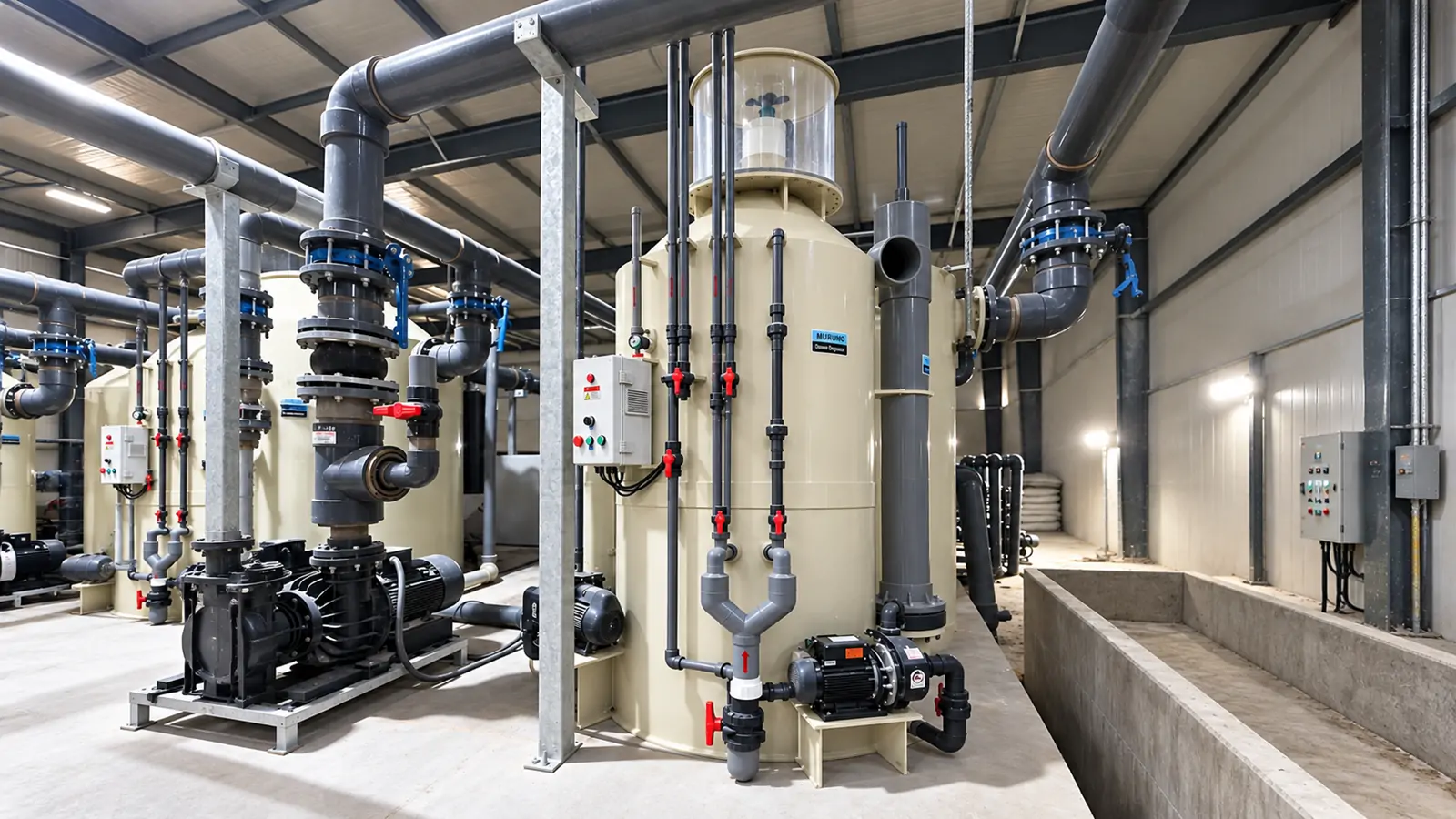
Five Common RAS Equipment Selection Mistakes
1. Selecting Equipment by Tank Volume Alone
Tank volume shows system scale, but it does not fully describe treatment load. Two 400 m³ systems can require very different equipment if their biomass, daily feed load, or recirculation rate is different.
2. Ignoring Peak Daily Feed Load
Average feeding conditions may underestimate the treatment requirement during the most intensive stage of production. Peak feed load should be considered when evaluating mechanical filtration, biofiltration, oxygenation, and degassing capacity.
3. Selecting Each Machine Independently
Individually adequate machines do not automatically create a balanced RAS. Flow, treatment capacity, pressure losses, and process compatibility must also be checked at system level.
4. Designing Only for Normal Operation
Commercial RAS equipment should also be evaluated under peak production, maintenance, and critical failure conditions. Life-support functions such as circulation and oxygen supply may require backup or emergency provisions depending on the project.
5. Comparing Proposals Only by Equipment Price
A lower equipment price does not mean two proposals provide equivalent treatment capacity. The assumptions behind the system should also be compared, including design biomass, feed load, flow, treatment capacity, system matching, maintenance requirements, and failure strategy.
Six Questions to Ask Before Comparing RAS Equipment Proposals
A useful commercial RAS proposal should explain why each equipment capacity was selected.
| Question to Ask | Why It Matters |
|---|---|
| What maximum biomass was assumed? | Defines peak biological load |
| What daily feed load was used? | Drives several major treatment loads |
| What recirculation flow was used? | Defines hydraulic capacity |
| What water-quality targets were used? | Defines required treatment performance |
| How were equipment capacities calculated and matched? | Shows whether selection is system-based |
| What happens at peak load or if critical equipment fails? | Reveals resilience and backup assumptions |
A useful proposal should show a clear relationship:
Design Input → Treatment Requirement → Equipment Capacity
A list of equipment model numbers alone does not explain whether the proposed RAS is appropriately sized.

Commercial RAS Equipment Example: Zhangzhou
The 4,900 m³ Largemouth Bass RAS Project in Zhangzhou, Fujian, China has a recorded System Water Volume of 4,900 m³ and 80 culture tanks. Its published equipment list includes:
| Confirmed Equipment | Quantity |
|---|---|
| Drum Filters | 16 |
| MBBR Biofilter Tank | 16 |
| Degassing Towers | 10 |
| UV Sterilizers | 12 |
| Oxygen Cones | 10 |
The equipment list illustrates how several treatment functions are included in one project. Biomass, daily feed load and design flow must still be established before selecting capacities for a different farm.
Frequently Asked Questions
How do I choose the right RAS equipment?
Start with the fish species, maximum biomass, daily feed load, recirculation flow, and required water quality. These inputs determine the treatment loads that the equipment must handle before individual equipment capacities can be selected.
Is RAS equipment sized by tank volume?
Not by tank volume alone. Biomass, feed load, recirculation flow, treatment targets, and peak operating conditions also affect the required equipment capacity.
Why is feed load important for RAS equipment selection?
Feed input affects several treatment loads at the same time, including solids production, nitrogen waste, oxygen demand, and CO₂ production. This makes feed load an important input when evaluating multiple RAS treatment processes.
How can I compare two RAS equipment proposals?
Compare the assumptions behind the proposals, including maximum biomass, feed load, design flow, water-quality targets, treatment capacity, equipment matching, and failure strategy—not only equipment price.
Planning a Commercial RAS Project?
Commercial RAS equipment selection should be based on the actual production conditions of the farm. Species, biomass, daily feed load, recirculation flow, target water quality, site conditions, and operating strategy all influence the final equipment configuration.
If you are planning a new RAS facility or upgrading an existing fish farm, YUTANK can evaluate these project inputs and develop an integrated equipment configuration based on the required treatment loads.
See a documented project application: 4,900 m³ Largemouth Bass RAS Project.